 FREE MCP|Connect all Data to AINEW!
Find €100k / Day Advertorials Proven Scaling in Ecom Right Now 🚀
522,485+ Advertorials, Sales Pages & Listicles - Searchable by Keywords (with AdSpend & Performance Data)
healthinsider.news
1.8M€
trymiamimd.com
2.2M€
smooche.com
980K€
theskincareinsider.com
2.3M€
serenithy.com
1.1M€
shop.try-spartan.com
1.7M€
offers.hike-footwear.com
2M€
eu.happymammoth.com
1.2M€
im8health.com
1.5M€
norseorganics.co
1.9M€
healthinsider.news
1.8M€trymiamimd.com
2.2M€smooche.com
980K€theskincareinsider.com
2.3M€serenithy.com
1.1M€shop.try-spartan.com
1.7M€offers.hike-footwear.com
2M€eu.happymammoth.com
1.2M€im8health.com
1.5M€norseorganics.co
1.9M€
- ✅€7 Billion AdSpend from Meta Ads, Broken Down by Landing Pages
- ✅#1 Largest DTC Landing Page Database for eCommerce
- ✅Full-Funnel Inspiration for Every Awareness Stage, Angle & Unique Mechanism

Watch demo





Used daily by 8-figure eCom brands & agencies

Direct response funnels for 7-8 figure eCom brands
"Winning angles move fast"
All our winning funnels started in researching with AdSpends. No guessing what might work - I see exactly what is driving traffic right now, and build from there.

Founder of Alpensattel.de
"A pretty unfair advantage"
I tested AdSpends back in beta and now use it almost daily. It saves me a lot of time and gives me a quick overview of everything that works in the market.

Meta ads agency for eCom brands
"Searched for something like this for a long time"
The perfect tool for us as an agency to get a well-prioritized overview of the best ads of individual brands or entire industries with minimal time investment.
Used by 1,200+ brands & agencies










📊 €100k / Day landing pages
Find Advertorials That Secretly Convert Cold-Traffic & Drive New Revenue for eCom-Brands
Learn from the wins of the best marketers as inspiration for your campaigns.









Just Signup for Free
Unlock Full-Funnel Intelligence.
🚀 New ecom landing pages daily
Get New Advertorials & Landing Pages Daily (Before They Scale)
Landing pages whose first ads have just gone live.
New Advertorials
| # | Landing Page | AdSpend | Reach | New Ads | Top Ads | Brand | Language | |
|---|---|---|---|---|---|---|---|---|
1 | €29€29 | 958 | 9 | ✦New |  | |||
2 | €20€20 | 670 | 3 | ✦New | | |||
3 | €20€20 | 656 | 1 | ✦New | | |||
4 | €0€0 | 13 | 6 | ✦New |  | |||
5 | €1€1 | 35 | 10 | ✦New | | |||
6 | €1€1 | 29 | 10 | ✦New | | |||
7 | €0€0 | 0 | 2 | ✦New | | |||
8 | €13€13 | 420 | 1 | ✦New |  | |||
9 | €146€146 | 4.88K | 7 | ✦New | | |||
10 | €136€136 | 4.54K | 7 | ✦New | |











Just Signup for Free
Unlock Full-Funnel Intelligence.
🔎 Monitor brands automatically
The Best Publisher & eCom-Brands, Monitored Daily
AdSpends reveals the full-funnel strategies behind top brands.
843,356 Brands in Live-Tracking
















Create Your Own Swipefiles and Track Every Move Your Competitors Are Doing
Top Health Publisher
| # | Brand | AdSpend | Reichweite | Ads | Neue |
|---|---|---|---|---|---|
1 |  Spiegel der Gesundheit Spiegel der Gesundheit | 8.8M€8.815.235€ | 293.8M | 3K | 104 |
2 |  Sjard Fitness Sjard Fitness | 8.7M€8.776.060€ | 292.5M | 1.9K | 18 |
3 |  Apotheken-Ratgeber Apotheken-Ratgeber | 7.9M€7.939.022€ | 264.6M | 8.9K | 104 |
4 |  Apotheken Gesundheit Apotheken Gesundheit | 7.8M€7.881.538€ | 262.7M | 6.3K | 173 |
5 |  Gesundheitswoche Gesundheitswoche | 7.8M€7.814.658€ | 260.5M | 10.2K | 0 |
6 |  Jasper Caven Jasper Caven | 7.3M€7.342.849€ | 244.8M | 832 | 0 |
7 |  Daily Rituals Daily Rituals | 6.1M€6.160.893€ | 205.4M | 7.8K | 54 |
8 |  Mission Schilddrüse Mission Schilddrüse | 5.9M€5.914.641€ | 197.2M | 12K | 253 |
9 |  Deutsches Gesundheits Journal Deutsches Gesundheits Journal | 5.6M€5.644.955€ | 188.2M | 1.3K | 186 |
10 |  The Healing Magazine The Healing Magazine | 5.2M€5.211.531€ | 173.7M | 10.9K | 0 |
Top Supplement Brands
| # | Brand | AdSpend | Reichweite | Ads | Neue |
|---|---|---|---|---|---|
1 |  Huel Huel | 24.5M€24.599.338€ | 820.0M | 3.9K | 504 |
2 |  Elavate Elavate | 19.7M€19.733.650€ | 657.8M | 6.7K | 241 |
3 |  iHerb iHerb | 14.8M€14.849.632€ | 495.0M | 4.2K | 221 |
4 |  IM8 Health IM8 Health | 12.9M€12.978.008€ | 432.6M | 14.7K | 2810 |
5 |  bulk bulk | 12.9M€12.919.819€ | 430.7M | 3.7K | 778 |
6 |  ESN ESN | 12.9M€12.900.178€ | 430.0M | 6.8K | 1210 |
7 |  Naturtreu - Hochdosierte Vitamine und Mineralien Naturtreu - Hochdosierte Vitamine und Mineralien | 12.8M€12.851.797€ | 428.4M | 13K | 384 |
8 |  MORE Nutrition MORE Nutrition | 11.2M€11.207.953€ | 373.6M | 10.1K | 962 |
9 |  SHEKO SHEKO | 10.6M€10.664.385€ | 355.5M | 12.3K | 954 |
10 |  MetaFlow MetaFlow | 10.6M€10.638.060€ | 354.6M | 2.5K | 240 |

Just Signup for Free
Unlock Full-Funnel Intelligence.
 Full-Funnel Intelligence|Meta Ad-Library
Research the Full-Funnel Strategy for ANY Brand Scaling With Meta Ads
See exactly which ads, hooks & angles perform for every brand.
🌍 Works for ANY Brand
🟢 Fresh Data from the Ad-Library
💰 All Ads with AdSpend (EU-Reach)
Watch demo

Track every move
See when a brand launches new ads, increases its budget or tests fresh landing pages.
Latest Moves
See when brands scale
New ad activity instantly reveals when a brand is stepping on the gas.
The strongest landing pages
See exactly where the traffic goes and which ads link to which landing pages.


Uncover connected brands
See which brands share a Pixel, Google Ads, GTM or Shopify store.

Connected Brands




 K
KAll ads sorted by AdSpend
Two years of ads to filter and sort by AdSpend & performance.







🏆 Find Winning Meta Ads
6.2M+ Clickbait & Native Ads
with €7 Billion AdSpend Tracked in Europe
- WINNER
1
475.744€
16M
100
Happy Mammoth
679dIs joint pain in menopause a thing? 🦴 Unfortunately, yes - and it’s one of the
more debilitating menopause symptoms, as it reduces mobility and flexibility.
Joint pain is an unpleasant reality for more than half of women going through
menopause. 😩 And it’s not only just because of aging. Estrogen fluctuations can
also trigger inflammation in the joints, making even the simplest of movements
painful. But this added discomfort doesn’t need to keep women down any longer.
🤔 Hormone Harmony doesn't only relieve unbearable symptoms of perimenopause and
menopause - it's also a lifesaver for most women suffering from joint pain and
reduced mobility. 🤩 And it’s no wonder why – our formula is packed with 12
potent ingredients that not only address hot flashes, night sweats, mood changes
and weight gain, but also target joint pain and inflammation… Giving most women
the relief they need to move through the day with ease. Ingredients like…
Gelatinized Maca Extract - rich in calcium, which is essential for maintaining
healthy bones and joints. Berberine Bark Extract - has potent pain-relieving and
anti-inflammatory properties. Gymnema Sylvestre Extract - shown to reduce
inflammation and improve arthritis symptoms. American Ginseng Extract - a
valuable ingredient for relieving joint pain, inflammation and discomfort.
Produced in the EU 🇪🇺 And made by Happy Mammoth - a nature-inspired health
brand with over 1.2 million customers in 33 countries. ❤️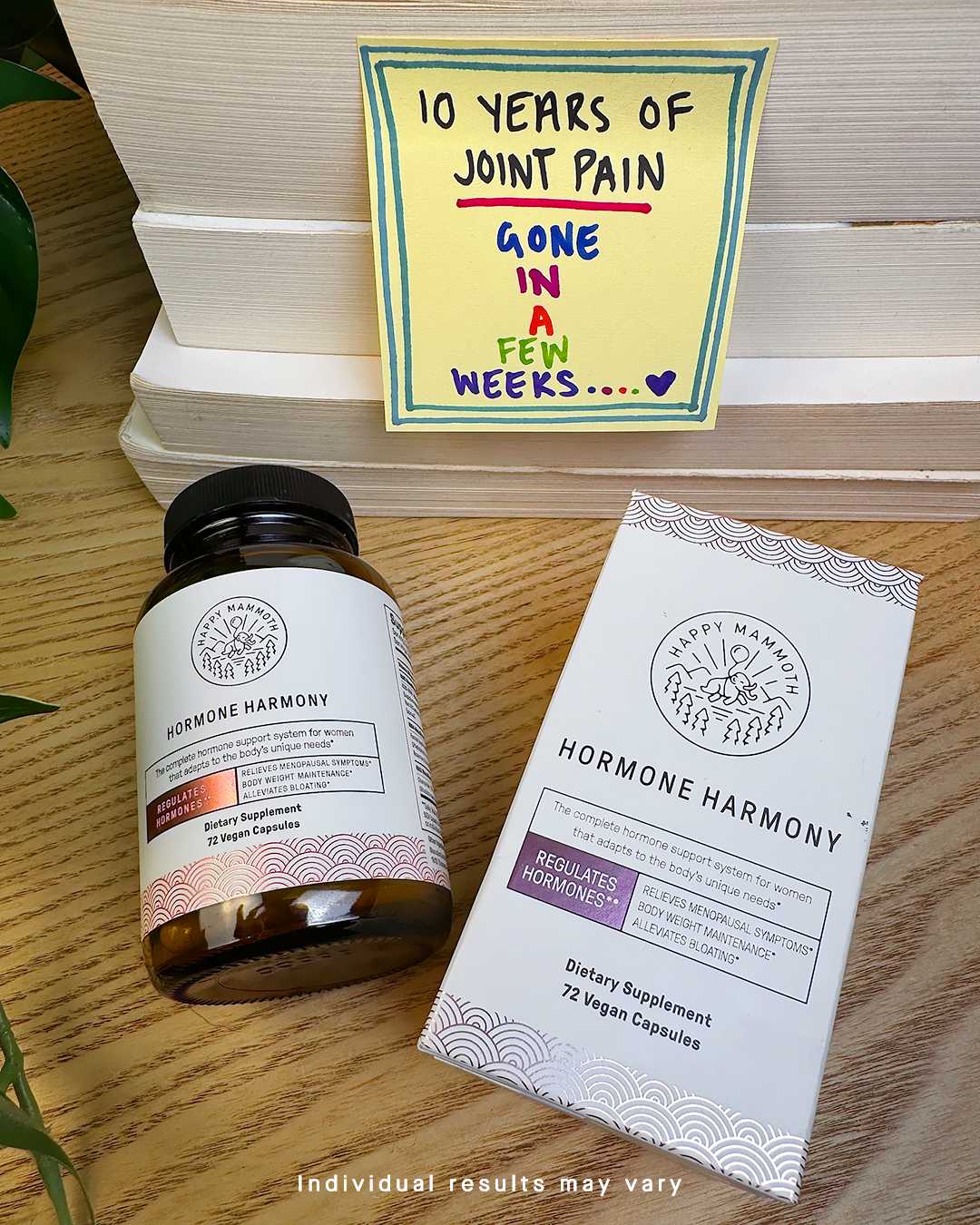 eu.happymammoth.com
It doesn't compare to any supplement I ever tried
- WINNER
2
106.181€
3.5M
54
Nutri Paw
460dDiscover how 200,000+ owners have nourished their itchy dogs and soothed their
scratching, licking & chewing with 1 simple chew that's packed with mother
nature's very best itch-soothing & immune supporting ingredients. In less than
10 seconds every day, you can soothe your dog naturally - that's how long it
takes to give them NutriPaw All-Itch treats. ⭐⭐⭐⭐⭐ "I got the itch ones and they
have helped my dog so much, you can see from the pics. So glad I tried these" -
Amy Learn more: https://nutri-paw.com/products/all-itch-treats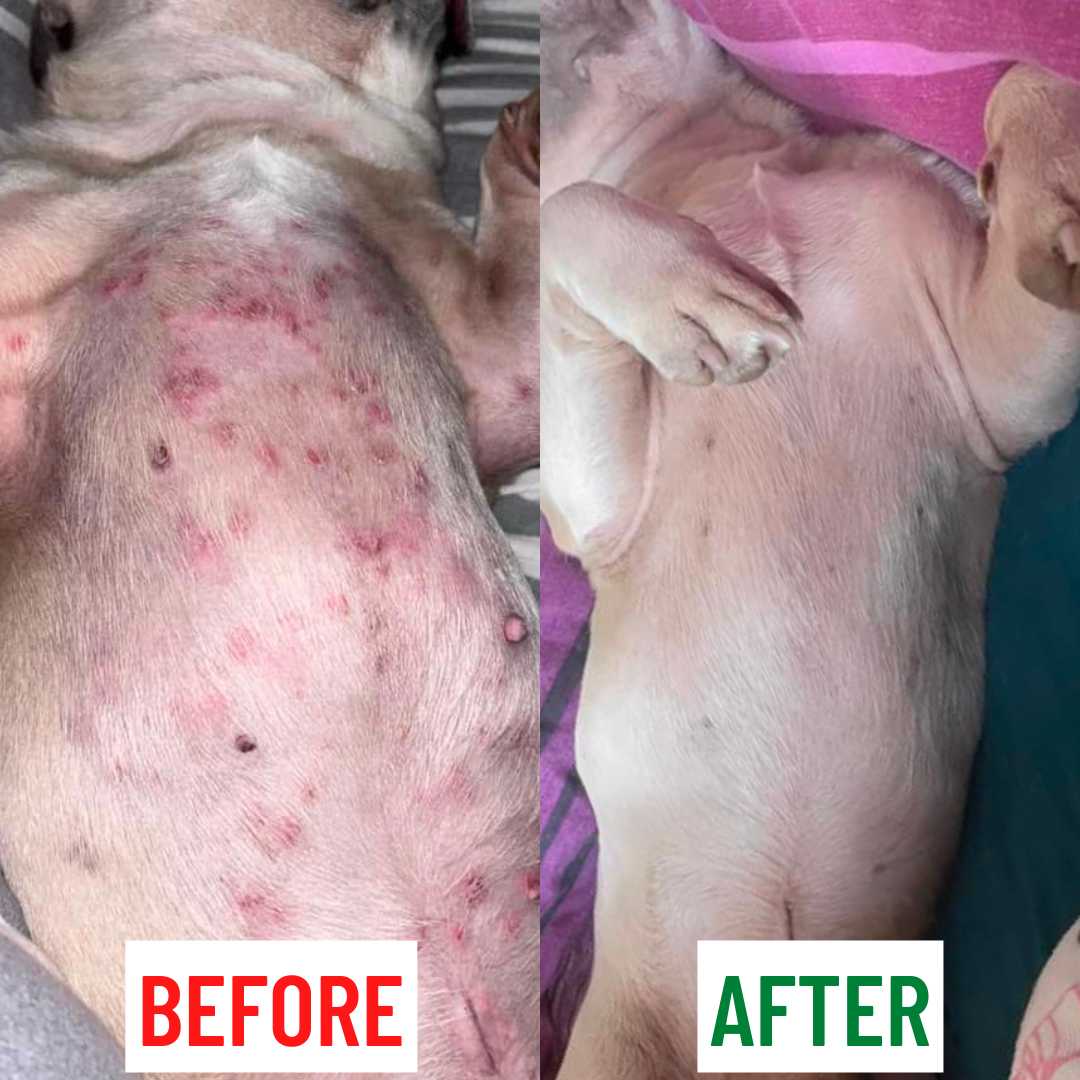 nutri-paw.com
🐕 Soothe your itchy dog today! Try the #1 itch-soothing chew trusted by 200,000+ owners in the UK
- WINNER
3
90.126€
3.0M
4
Stepprs
467d"I’ve tried so many insoles for my plantar fasciitis — nothing ever really
helped… until I found Stepprs. Within a few days, the stabbing heel pain I
usually feel in the morning was nearly gone. I wear them in my work boots for
10-hour shifts, and for the first time in years, I don’t come home with aching
feet. These insoles are a game-changer!" — Michelle, Verified Customer ✅
Cushioning ✅ Breathable ✅ Arch Support ✅ Instant Relief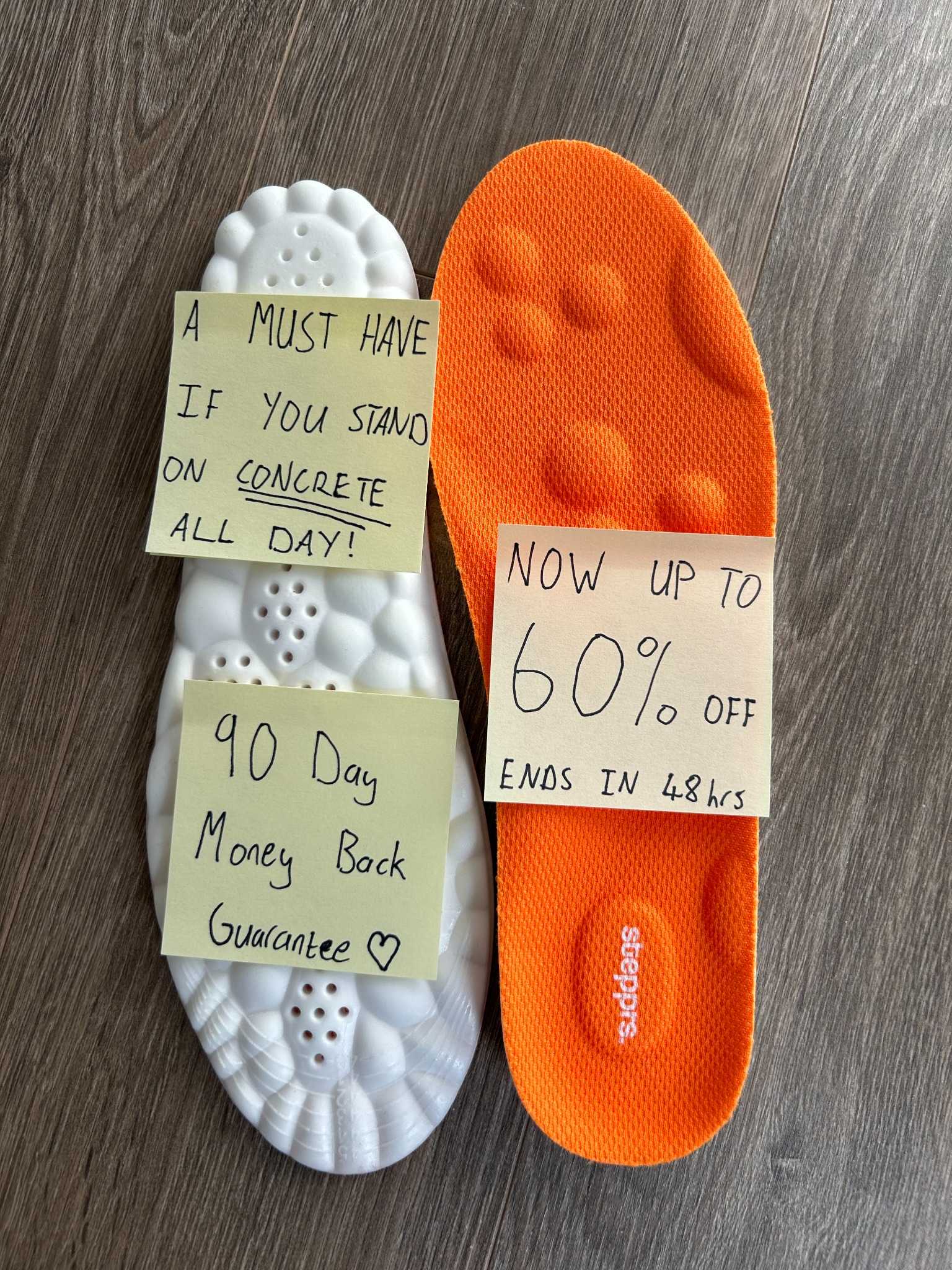 stepprs.com
Walk on Clouds—Or It’s FREE.
- WINNER
4
7.007€
234K
5
Happy Mammoth EU
78dHere’s what happens when the MOST skeptical woman alive tries this… Seriously… I
didn’t expect much. I bought it because my friend wouldn’t shut up about it. And
I figured… fine. One month… At least get my money’s worth out of the bottle… Or
send it back and smugly say “told you so.” 😌 But… 🤯 🤯 🤯 🤯 I haven’t even
finished the bottle and… 💤 I am sleeping better. Like actual deep, restful,
drool-on-the-pillow sleeping ⚡ My energy is back and I am finishing tasks I’d
been “saving” for 6 months 🧠 My moods are better and I’m not spiraling over
dumb stuff anymore 👖 Clothes I could barely button last month are now baggy
(?!?) 🦶And my whole body feels… lighter. From head to toe. So… fine. You win.
The most skeptical woman on earth just ordered a second bottle. So, click below
and try it for yourself… Seriously… if it worked on me, it might actually work
for anyone 😅👇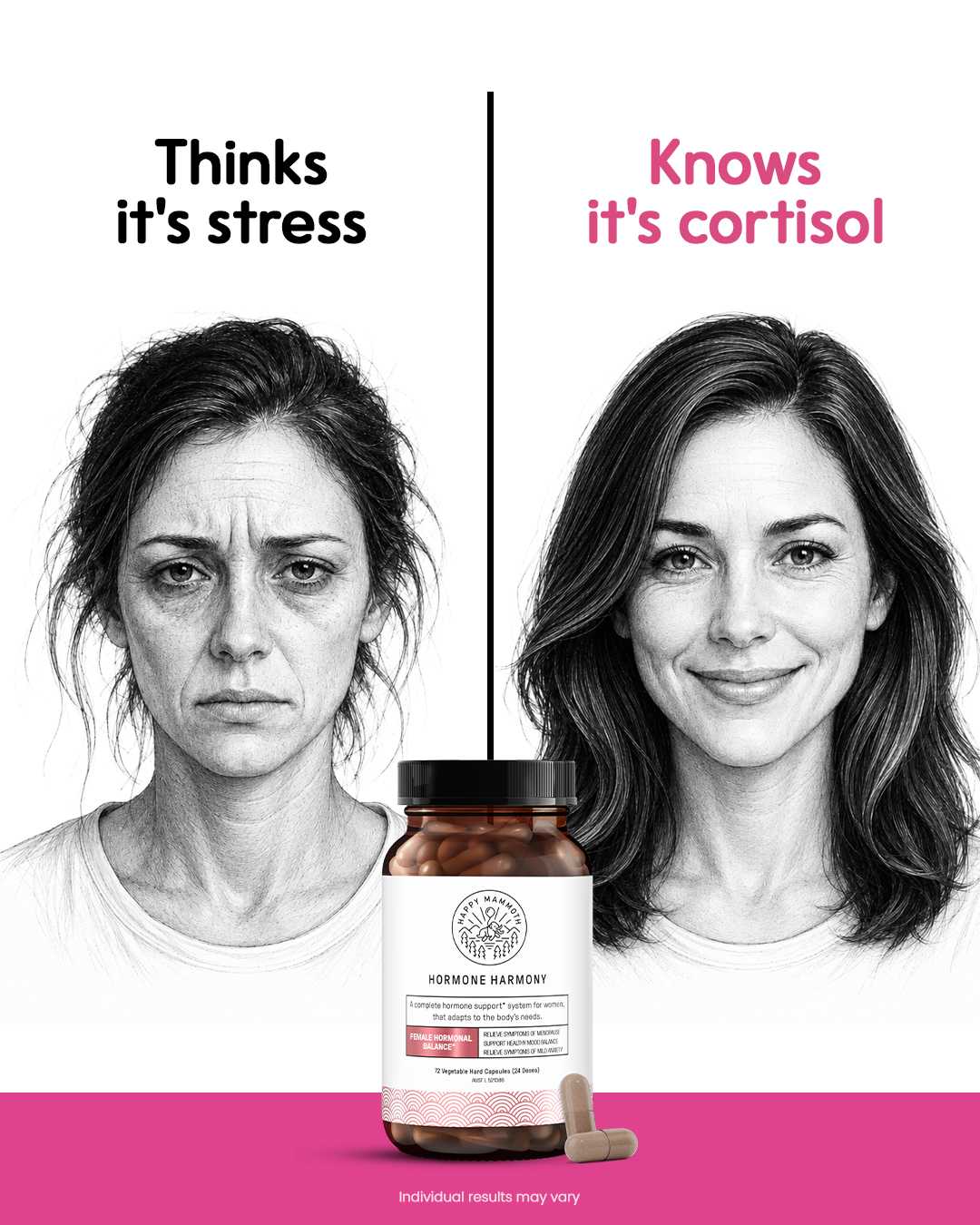 eu.happymammoth.com
The most skeptical woman tries Hormone Harmony
- WINNER
5
4.402€
147K
49
Mars Men
156dYou don't have 8 separate problems. You have one. Puffy face. Stubborn belly
fat. Brain fog. Low libido. Waking up at 3AM staring at the ceiling. Your doctor
might call it stress. Or aging. Or "just how it is after 40." He's wrong. Every
single one of those symptoms traces back to the same root: elevated cortisol
crushing your testosterone. Cortisol is supposed to spike when you're in danger
and drop back down. But modern life — the screens, the deadlines, the terrible
sleep — keeps it jacked up 24/7. And when cortisol stays high, your body
literally prioritizes stress hormones over testosterone production. You're not
falling apart. Your hormones are out of order. Mars Men is the only natural
formula that addresses both sides — supporting healthy T production while
helping bring cortisol back in line. Shilajit at 400mg supports the Leydig cells
that manufacture testosterone. Tongkat Ali at 1,000mg blocks estrogen conversion
and supports cortisol reduction. Together with 6 more clinical-dose ingredients,
it's a system — not a single-ingredient gamble. Joshua D. went from 254 to 861
ng/dL in about 6 weeks. More than 3X his starting level. No TRT. No injections.
429,576+ men are already in the community. 87% reported increased strength in a
1,000-person customer survey. 50% off right now. 90-day money-back guarantee.
Read the full cortisol-testosterone breakdown and see how one natural stack is
helping men reclaim what stress stole — without needles or prescriptions.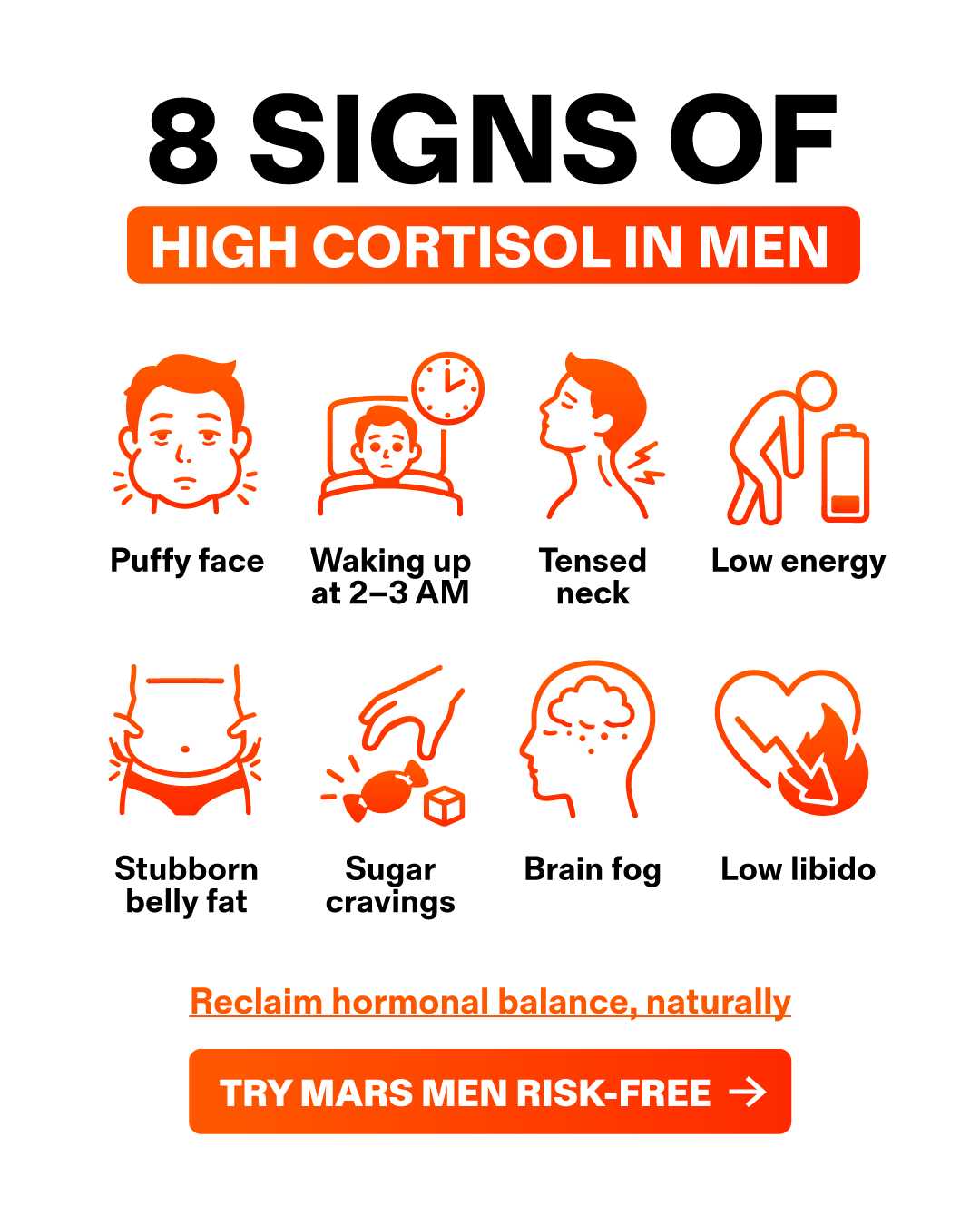 mengotomars.com
Crush Cortisol. Free Your T.
- WINNER
6
9.098€
303K
9
The Health Haven
154dThe person who gave me my husband back wasn't a doctor. It was the kid I'd hired
to pull my weeds. His name's Jake. He was twenty-three, with a rake and a truck
you could hear coming down the street, and the first morning in the driveway I
told him to do what he could with the roses out back and went inside. He was the
last person on earth I'd have trusted with anything that actually mattered — and
he turned out to be the only one who saw what was happening to my husband.
Because my husband had been slipping away for two years — and his doctor kept
looking at a screen and telling me he was fine. I knew better. I just had no one
in the world who'd believe me. That changed on an ordinary evening at my own
kitchen table, four months after I hired him, when that boy looked up at me and
told me he'd seen all of this happen before. But all that came later. That first
month, I only knew the small things. He won't take a glass of water without
asking. He calls my husband "sir," even after Walter's told him four times to
knock it off. By the third week, Walter was bringing two coffees out to the
garden every morning — one for himself, one for the kid — and pretending it was
no trouble. The garden was Walter's. It had been Walter's for thirty years. He'd
built it the way he built everything — slowly, by hand, paying attention. Roses
along the back fence he'd planted the spring our daughter was born. Three fruit
trees, one for each grandchild. A vegetable plot where he grew tomatoes so good
the neighbors used to knock on the door in August asking if he had any to spare.
Then, this past year or two, it started slipping. The roses got leggy and
spotted. The tomato cages came out of the shed in spring and went back in the
fall, empty. He'd go out there less and less, and when he did, he'd stand in the
middle of it looking at the weeds like he wasn't sure how they'd gotten there. I
couldn't bear to see it die. That's the honest reason I hired Jake — not because
I couldn't pull a weed myself, but because I couldn't stand at the kitchen
window watching the thing my husband had built for thirty years come apart a
little more every season, while the man who'd made it could only stand and
watch. And Jake didn't work like a kid earning beer money. He worked like the
garden was his own. He'd kneel in the dirt and coax a plant back instead of
yanking it out. He cleaned his tools before he left. The first Saturday he
stayed two hours past what I'd have paid him for, and wouldn't take the extra. I
asked him one afternoon where a young man learns to handle a garden like that.
His grandfather taught him, he said. His grandfather had raised him — his folks
were "out of the picture," was all he offered, and I didn't push. From the time
he was small it had been the two of them. The old man did yard work all over the
county, and Jake grew up on the back of his truck, learning the name of
everything they put in the ground. "He could fix anything green," Jake said.
"Half-dead tree, didn't matter. He'd talk to it like it owed him money, and it'd
come back." He grinned when he said it. Then the grin went somewhere else. "He
passed a few years back. I took the business over. It's just me now." He didn't
say how. I didn't ask. You learn, at my age, when somebody's handed you the edge
of a thing and isn't ready to give you the rest of it. Walter took to him faster
than I expected — and Walter doesn't take to people. Thirty years of marriage
and I can count his real friends on one hand. But there was something between
those two from the first week. Walter would carry the coffee out in the morning
and end up leaning on the fence for an hour, the two of them going on about
nothing. Engines. Weather. How they don't make tools the way they used to. I
think the boy reminded Walter of the years his own hands still did what he asked
them to. And I think Walter reminded the boy of the old man on the truck. I
didn't see any of it yet. I just thought I'd gotten lucky with the help. What
Walter did, all his life, was fix watches. Forty years of it. People still
brought him the things they couldn't bear to lose — a wristwatch handed down
three generations, a mantel clock that had stopped the day somebody's father
died. He could take a movement apart, a hundred pieces smaller than grains of
rice, lay them on a white cloth in an order only he understood, and put it back
together so it kept time to the second. Under a loupe. By hand. So when Jake
mentioned at the fence, the third or fourth week, that his watch had quit — a
cheap old thing, but it had been his grandfather's, the only piece of the old
man he still wore — Walter told him to bring it in. That evening I found the two
of them in the spare room where Walter keeps his bench. Jake up on a stool.
Walter under the loupe with the back of the watch open, narrating each step the
way he used to for our grandkids. Jake didn't say a word. He just watched
Walter's hands — that look a boy gets when he grew up at the elbow of a man
whose hands could do what most people's couldn't. "My grandpa's hands were like
that," Jake said. "Not watches. Plants. But like that." Walter didn't look up.
"Then he was a craftsman, son. Doesn't matter what the material is." Jake went
quiet a moment. "Yeah," he said. "He was." After that night, Jake stopped being
the kid I'd hired to do the yard. He'd come in the back door without knocking.
Walter started saving him the crossword. Some evenings they'd just sit in the
spare room, Walter at the bench, Jake keeping him company. Walter never did
finish that watch. He kept it on the bench, open, worked at it on and off, told
Jake he wanted a little more time with it — tricky movement, he said. It sat
there, stopped, for two months. I didn't say anything about it. By then there
were a lot of things I wasn't saying anything about. Walter had been on a
cholesterol pill for eight years. Atorvastatin. His numbers were a little high,
the doctor said — nothing alarming, but it would protect his heart and keep him
around a good long while. Walter doesn't argue with doctors. He took it every
night with a glass of water, the way you take what they give you. But something
was wrong with my husband. I'd known it for a while. I just didn't have a name
for it. His doctor had a name for it. Aging. I didn't believe him. The man I
married was disappearing, a little at a time, and I was the only one who could
see it. It started with his hands. For forty years those hands could do the most
delicate work a person can do — set a part you can barely see with the naked
eye, under a loupe, and never so much as twitch. Steady as a table. Then they
weren't. He started waking up with them clenched. I'd find him on the edge of
the bed in the morning, opening and closing his fists, slow, working them like a
man trying to start a cold engine. He said they were just stiff. He said it the
way you say a thing you're hoping is true. In the shop it got worse. He'd reach
for the tweezers and I'd see the tremor — small, but on parts that size, small
is everything. He'd hold his breath to steady them. It didn't help. He dropped a
screw one afternoon, the kind he used to find by feel, and spent twenty minutes
on his knees with the magnifier and never found it. He didn't say a word about
it. He just closed the shop early. He stopped taking the hard jobs. The heirloom
pieces, the ones people drove an hour to bring him — he started telling them he
was backed up, or that they'd be better off replacing the movement. He wasn't
backed up. His hands wouldn't do it anymore, and he couldn't say so out loud.
That's why Jake's watch sat open on the bench for two months. It wasn't a tricky
movement. It was that he couldn't trust his own fingers with it — and he
couldn't bear to hand it back unfinished. It wasn't only his hands. By
seven-thirty most evenings he was asleep in his chair with the news still going.
He'd push himself up out of it with both arms, like the chair had gotten deeper.
The stairs he took one at a time now, a hand on the rail, like his legs didn't
quite trust the next one. Getting dressed wore him out — I'd find him stopped
halfway through it, a sock in his hand, and the second he saw me he'd start
moving again like he'd only paused to think. And he'd go away in the middle of
things. Mid-sentence, sometimes — the words just stopped, and I'd watch him
stand there hunting for the one he'd lost. He asked me twice in one week which
grandchild had the recital. He'd always been the one who remembered everything.
He hid all of it. Turned his back when his hands shook. Made a joke. Said he was
tired, said he was getting old — said it so often I think he was trying to
convince himself. And every time I took him to the doctor, the doctor said the
same thing. His numbers looked great. His heart was strong. This was all just
part of getting older. I'd sit in that office and listen to him call my husband
fine, while my husband sat right beside me getting worse by the month. I knew he
was wrong. I just couldn't prove it. The next appointment, I decided I'd say
something. I'd watched it long enough. So when the doctor came in and started
reading the numbers off the screen — cholesterol down, blood pressure fine,
everything right where he wanted it — I told him. I told him about the hands.
About a man who couldn't finish a job he'd have done in his sleep two years ago.
Who fell asleep before the dishes were dry. Who'd started losing the thread of
his own sentences. I said it plain: this is not the man I married. Something is
wrong with him. He listened the way they listen — nodding, not really hearing
it. And when I finished he smiled at me, kind enough, and told me the numbers
were excellent. The medication was doing exactly what it was supposed to do.
Walter's heart was in fine shape for a man his age. Then he looked at me — at
me, not Walter — and said, gently, that it can be hard to watch a husband get
older. That sometimes the worry is harder on the wife than anything that's
actually wrong with him. He never once looked at Walter the way I was looking at
him. He looked at the screen. The numbers were good, so the man was good. That
was the whole of it. He told us to keep taking the Atorvastatin. Whatever was
wrong with Walter, he said, it had nothing to do with the medication. What was I
going to say to that? That I could feel it in my bones? You can't put that on a
chart. Walter was quiet the whole way home. Then, near the house, he said it.
"Maybe he's right. Maybe I'm just getting old, and we both have to make our
peace with it." That was the worst part. Not the doctor. Walter. The doctor I
could argue with. But when my husband stopped fighting — when the most stubborn
man I'd ever known sat in that seat and gave up on himself — I had no one left
on my side. I got home and I honestly didn't know what to do. I had a sick
husband, a doctor who wouldn't hear me, and a certainty in my chest I couldn't
prove to a single living soul. And it would be a twenty-three-year-old kid, at
my own kitchen table, who finally told me what no one with a medical degree had
been willing to. Jake stayed for supper that evening, the way he did most weeks
by then. Walter didn't eat much. Halfway through he set his fork down — his hand
wasn't cooperating — and pushed back from the table and said he was going to
turn in. It was barely past seven. He put a hand on Jake's shoulder on his way
past, the way you'd say goodnight to your own boy, and went up the stairs one at
a time. Jake watched him go. He didn't touch the rest of his plate either. I
don't know what made me say it. I think I was just tired of carrying it by
myself. "He wasn't always like this," I said. "Two years ago that man could —"
and I couldn't get the rest out. Jake was quiet a long moment. Then, not really
to me, he said: "My grandpa's hands went first, too." I looked up. He kept his
eyes on the table, and he told me. His grandfather started dropping things —
couldn't grip the tools he'd held his whole life. Got tired in a way sleep
didn't touch, asleep in his chair by the evening news. The words started to go;
the man who'd taught Jake the name of every plant in the county would stand
there and not be able to come up with "trowel." "He'd go out to the garden,"
Jake said, "and just stand in it. Like he couldn't remember how he got there."
The hair went up on my arms. That was the exact thing I'd watched Walter do a
hundred times — stand in the middle of his own garden, lost in it. I had never
told Jake that. I'd never told anyone that. "Jake," I said. "That's Walter.
That's — that's him exactly. Every word of it." He finally looked at me. And
there was something in his face I'd never seen on a boy his age — like he'd been
carrying something heavy a long time and had just set part of it down. "I know
it is," he said. "I've been watching it happen to him for four months. It's why
I —" He stopped, started again. "There's something I never told you about my
grandfather. About how he died. I should've said it weeks ago. I just didn't
know how to." He pushed his chair back. "Can I bring something in from my truck?
I'd rather show you than try to say it. You'll think I'm crazy otherwise." I
said yes before I'd finished thinking about it. He came back with a folder — not
a new one. A thick, worn thing, the corners gone soft, the kind of folder a
person has opened a thousand times. He set it on the table between us and laid
his hand flat on top of it a second, like he wasn't quite ready. "My grandma
keeps telling me I should've been a doctor," he said, with a small, sad
almost-laugh. "I'm not. I'm just a kid who couldn't save his grandfather, and
spent three years trying to understand why." Then he opened it. Inside that
folder was three years of one young man's life. Printouts from medical journals,
the long words underlined. Pages from library books, photocopied, the margins
filled in pencil — his own handwriting, working it out, question marks and
arrows and notes to himself. A few pages so soft and creased they'd been folded
and unfolded a hundred times. And clipped to the inside cover, a photograph of
an old man in a garden, squinting into the sun, his hands black with dirt.
"That's him," Jake said. "That's my grandpa." He told me about him. A big, slow,
gentle man who'd raised him when no one else would. Strong as a mule — at sixty
he could still dig a bed all morning and not feel it the next day. Then a doctor
told him his cholesterol was a little high. Nothing alarming. Just a pill, to
protect his heart. Keep him around a good long while. I felt something cold go
down my back before Jake even said it. "It was the same one," he said quietly.
"Atorvastatin. The exact same pill Walter takes." For eight years he took it
every night. And for eight years he came apart, slowly, the same way I'd been
watching Walter come apart — the hands, the tiredness, the fog. And every time
they went in, the doctor looked at the chart and said what everyone kept saying.
His numbers were great. His heart was strong. This was just getting old. He died
at sixty-eight. A heart attack, in the garden, on an ordinary afternoon. Jake
was twenty. He was the one who found him. And here's the part that broke
something in that boy and never healed over. When the numbers came back — the
cholesterol they'd spent eight years managing — they were perfect. Textbook. The
pill had done everything it promised. The number on the chart was beautiful. And
the man was dead of a heart attack at sixty-eight. The doctors had no answer for
him. They said sometimes it just happens. Bad luck. Genetics. They signed the
paperwork and moved on to the next patient, same as always. But a
twenty-year-old who'd just buried the only parent he'd ever known couldn't live
with "sometimes it just happens." How does a man with perfect numbers, on a pill
to protect his heart, die of a heart attack? It didn't add up, and he couldn't
make it add up, and it ate at him. So he went looking. Not for a week — for
years. The county library. The university medical library two towns over, where
they'll let anybody read if you're quiet about it. He read papers he had to
puzzle out a word at a time. Slowly, over the years, it started to make sense —
and all of it ended up here, in the folder open between us. He was trying to
answer one question. Not for a grade. Not for anybody. Just: why did my
grandfather die? And then, this spring, he took a job pulling weeds for a
stranger — and walked into a garden kept by another man on that same pill,
fading the same way, with a doctor saying all the same words. "I almost didn't
say anything," he told me. "I know how it sounds. I'm the yard kid. He's got a
doctor. Who am I?" He put his hand flat on the folder again. "But I already
watched it happen once. I'm not going to stand here and watch it happen again
and say nothing — not when I think I finally understand what's actually going
on." I asked him the only thing I could get out. "Then tell me. What is actually
going on?" And he did. He started with the number. "Everybody watches one
number," he said. "Your LDL — that's the one they circle on the sheet. The
doctor watches it, you watch it — the whole thing's built around getting it
down. Drive it down far enough and they tell you you're protected." He turned a
page in the folder. "But that number was never the thing that hurts you."
Cholesterol isn't poison, he told me. Your body makes it on purpose — you'd die
without it. It only turns dangerous when it gets damaged. Oxidized, was his
word. "You ever cut an apple and leave it on the counter? Comes back brown.
That's the air getting at it — oxidizing it. Same thing happens to the
cholesterol in your blood. It goes rancid, basically. And that damaged
cholesterol turns sticky — it works its way into the wall of the artery and
packs in, year after year, building up into a hard little deposit — plaque. Then
one day a piece of that buildup tears open, and the artery jams shut. That's the
heart attack. Not the amount of cholesterol floating around. The oxidized stuff,
embedding in the walls. The damage." "And here's the thing," he said. "The pill
lowers the amount. The number on the chart. It doesn't do one single thing about
the oxidation. So you can drive your number down to perfect — beautiful,
textbook, like my grandpa's LDL — and the real damage is still going the whole
time, right where nobody's looking." I thought about a beautiful number on a
chart and a dead man in a garden. "But that's only half of it." And this was the
part he leaned in for. The way the pill drives the number down, he said, is it
shuts off a switch in your body. And that switch doesn't only make cholesterol.
It makes something called CoQ10. "I'd never heard of it either. CoQ10 is the
spark. It's what every muscle you've got uses to turn fuel into motion. You can
have a full tank — if there's no spark, nothing moves. Like a mower with a dead
plug. Just sits there." He spread his fingers flat on the table. "The hands. The
legs. The tiredness that sleep won't fix. The fog. That's not the pill having
some rare reaction in unlucky people. That's the pill doing exactly what it's
built to do. It cannot lower that number the way it does without draining the
spark out of every muscle in your body at the same time. It's the same switch.
You can't throw one without the other." He looked at me. "They call it a side
effect. It's not a side effect. It's the mechanism. It's the machine working
exactly right." He closed the folder. And then he said the thing I haven't been
able to set down since. "My grandfather didn't die with high cholesterol. He
died with perfect cholesterol. That's the part nobody will say out loud." I sat
there and did the math I didn't want to do. Walter had been taking that pill for
eight years. The man in that photograph had taken it for eight years too — and
then his heart stopped in his garden on an ordinary afternoon. I reached across
the table. "Jake. Is there anything that helps? Anything at all?" He nodded,
slow. "There is. Took me two years to find it — and when I did, I almost
couldn't believe it was that simple." In all the reading he'd done, he said, one
thing kept surfacing. A compound that did the exact thing the pill couldn't —
went after the oxidation, the rancid stuff embedding in the wall, and left the
spark alone. The one job without the other. "And the second I read what it
actually was," he said, "I knew it cold. Because it's not a drug. It's a plant.
It's the thing I do." Beets. One specific kind. "You know that deep red that
stains everything when you cut a beet open?" he said. "That color is a pigment
called betalain. It's an antioxidant — but not like any antioxidant you've ever
heard of. It does two things nothing else does." "First — most antioxidants are
a carpet bomb. They knock out every free radical in you, even the ones your body
needs to fight off infection. Betalain's a smart missile. It goes after only the
exact free radicals that turn your cholesterol rancid, and it leaves the rest
alone." "Second — it actually gets in. Through the gut, into the blood, right
inside the cholesterol particle itself, into the wall of the artery — the exact
spot where the oxidation starts. A statin can't reach in there. Fish oil can't.
Nothing on a shelf can. Betalain goes in and neutralizes the damage right at the
source." He spread his fingers flat on the table. "And it does all of that
without touching the CoQ10. It stops the oxidation the pill ignores, and it
leaves the spark the pill drains. The one thing the pill can't do, this does.
The one thing the pill does to you, it doesn't." I said something about how hard
it was to believe a beet could matter that much. "I thought it was fringe too,"
he said. "It's not. There's more real research behind this than behind half of
what's in a pharmacy. I read it till my eyes crossed." I asked him — if it's
just beets, why doesn't everybody already know. He almost smiled. "Because the
beet in the store isn't that plant anymore. They've spent a hundred years
breeding it bigger, sweeter, easier to ship. And every time you breed a beet for
sugar, you breed the betalain down. The beet that used to be medicine became
candy. There's one old strain the Amish never touched — Blutwurzel, blood root,
they've been saving the seed by hand for a hundred and fifty years. It's still
got ten, twenty times what a grocery beet has." Even the beet powders on the
shelf were mostly useless, he said — they're spray-dried at high heat, and heat
destroys betalain. "You can boil a beet till it's grey," he said. "Same thing
happens in a factory. Most of what they sell is red dust. Dead before the jar's
even sealed." The only way it survives, he told me, is the old way —
hand-harvested after the first frost, when the plant pulls everything back down
into the root, then dried slow in the shade, never heated. A family in Lancaster
County still grows that heirloom line and dries it that way, and a small outfit
bottles it under one name — Rosabella. 1,300 milligrams a capsule, sent out to
an independent lab so you know exactly what's in it. Not a grocery beet. Not red
dust. The real thing. I must have looked exactly the way you'd expect — a young
man at my kitchen table telling me a beet was going to do what a cardiologist
couldn't. He saw it on my face. "I know how it sounds," he said. "So I'm not
going to ask you to take my word for it." He took out his phone. "My
grandmother's seventy-three. After my grandfather died, the doctor wanted to put
her on the same pill — her cholesterol's high too. She wouldn't do it. She'd
watched what eight years of it did to him, and she said she'd sooner take her
chances. So I gave her this instead. Eight months ago." He turned the phone
around. A woman kneeling in a garden, sleeves shoved to the elbow, dirt on her
hands, laughing at whoever was holding the camera. "That was Sunday," he said.
"Her last bloodwork came back better than it's been in years, and her doctor
can't make sense of it. I can." He set the phone face-down on the table. "I
couldn't save him. I'm not losing her too. And I'm not going to sit in your
kitchen and watch the same thing start on Walter when there's a bottle of it out
in my truck." Jake went out to his truck and came back with the bottle. He set
it on the table in front of me — not where Walter had been sitting. In front of
me. Like he already knew which one of us was going to have to carry this. "I
brought it tonight because I was hoping I'd get to the part where I could hand
it to you," he said. "Two a day, with water. That's all there is to it." I
looked at it. A pink bottle, smaller than I'd pictured. After everything — the
appointments, the years of being told I was imagining things — what I'd been
waiting for turned out to be beet capsules from a twenty-three-year-old who cut
my grass. I picked it up anyway. I couldn't tell you exactly why. Maybe because
he'd never once tried to sell it to me. Maybe because of that photograph of his
grandmother in the dirt. Maybe just because, for the first time in two years,
somebody had sat across from me and said I see it too — and then put something
in front of me I could actually do. For two years all I'd been able to do was
watch. Now there was a bottle in my hand. Jake left soon after. I stood in the
kitchen a long while with it in my palm, listening to Walter breathe upstairs. I
waited until morning. I made the coffee and carried it up, and I sat on the edge
of the bed where I'd watched him work his fists open and closed a hundred times,
and I told him about Jake's grandfather. The same pill. The same garden. The
perfect numbers and the heart attack at sixty-eight. Walter listened. Then he
said what I knew he'd say. "Honey. He's a kid. I've got a doctor." "I know," I
said. "I'm not asking you to believe it. I'm asking you to take it. For me." He
looked at me a long moment. My husband, who'd already made his peace with
disappearing. Then he held out his hand. He didn't take it because of oxidation,
or CoQ10, or anything that boy had penciled into that folder. He took it because
I asked him to, and in thirty years he had never once been able to tell me no
when it actually mattered. He swallowed the two capsules with the coffee I'd
brought him and said, "There. Happy?" — and I let him have the joke, because
he'd said yes, and yes was the only thing I'd gone up there for. I didn't expect
anything. You stop expecting things, after two years. I went down and started
the dishes. It wasn't twenty minutes later that he came into the kitchen. He was
flexing his right hand. Opening it, closing it, turning it over, staring at it
the way you'd stare at something that had no business working. "What is it?" I
said. "Nothing. It's —" He kept opening and closing the fist. "My hands are
warm." I didn't understand. "They've been cold for about two years," he said.
"I'd stopped noticing it. You stop noticing." He looked up at me, and there was
something on his face I hadn't seen in longer than I could say. "They're warm."
I had to turn back to the sink so he wouldn't see what that did to me. After
that first morning, I started watching him the way you watch a kettle. By the
fifth or sixth day, the thing he did with his hands — the slow opening and
closing on the edge of the bed, the cold-engine thing he'd done every single
morning for two years — he just didn't. He sat up, swung his feet down, and
stood. I lay there pretending to be asleep, watching him not do it, afraid that
if I said one word out loud it would stop being true. About a week in, I found
him in the spare room, at the bench. He hadn't sat at it in months. He had the
tweezers in his hand and a watch back open in front of him, and he was holding
them over it, steady, the way you'd hold a pencil. Not working yet. Just seeing
if he could. He saw me in the doorway and set them down quick, like a boy caught
at something. But I'd seen his hand. It wasn't shaking. By the second week it
was his head. The sentences stopped falling out from under him halfway through.
One night at supper he told a whole story about a clock he'd repaired back in
1985 — the whole thing, every turn, the man's name, the year — and I realized I
hadn't heard him do that in longer than I wanted to admit. He remembered the
grandkids' recital before I did. He started doing the crossword again. In pen.
By the third week he was up past the news. Then up past nine. He went up the
stairs one evening without touching the rail and didn't even notice he'd done
it. I noticed for the both of us. And he went back out to the garden. Not to
stand in it. To work it. I watched from the kitchen window — the same window
where I'd stood watching it die — and there he was, down on his knees in the
dirt, pulling weeds, tying back a tomato vine, doing the very thing Jake had
only been keeping alive for him. Jake came by that Saturday and the two of them
worked it together, and at some point I heard them laughing about something out
there, and I had to sit down at the table for a minute. In the fifth week, he
finished the watch. Jake's grandfather's watch. The one that had sat open on
that bench for two months because Walter couldn't trust his fingers with it and
couldn't stand to hand it back undone. One evening he just sat down and did it —
a hundred pieces smaller than grains of rice, every one back where it belonged,
under the loupe, by hand. Then he wound it. And it ran. He didn't make a thing
of it. He waited until Jake stopped by, set it on the kitchen table in front of
him, ticking, and said, "Took me long enough." I watched that boy pick up the
only piece of his grandfather he had left in the world, running again after all
this time, and I watched him work very hard to keep his face still. He shook
Walter's hand. He held on a second too long. Walter said he felt like a man
twenty years younger. I didn't tell him he looked it too. I didn't need to. And
somewhere in those weeks he said the thing I'd been waiting two years to hear.
"I want to go back and get my bloodwork done," he said. "I want to see this on
paper." He'd stopped the Atorvastatin the same week he started the capsules.
I'll be honest — that frightened me more than I let on. It was the one thing
every doctor had been certain about for eight years, and here we were setting it
aside on the word of a kid with a folder. But I'd watched what that pill did to
my husband over eight years, and I'd watched what the other thing did in eight
weeks. Somewhere in there the fear just ran out. So when we went back for the
bloodwork, I won't pretend I wasn't braced for a lecture. Same room. Same
doctor. He pulled the new panel up on the screen — and I watched his face do
something I had never once seen it do. He stopped talking. He studied it.
Scrolled. Studied it again. Then he put the old panel up beside the new one and
started reading the numbers off almost to himself, the way you read something
that won't quite sit right. As far as the doctor knew, Walter was still taking
the same pill he'd taken every night for eight years. So nothing on that screen
should have moved the way it had. His LDL — the number they'd circled and
managed for eight years — had gone up. 118, from 101. "Higher," he murmured.
"Still in range, but… higher." He frowned at it. I knew why it was higher. He
didn't — not yet. The number they'd spent eight years driving down had drifted
back up the moment Walter stopped the pill that was holding it there. And the
man it belonged to was healthier than he'd been in a decade. His triglycerides
were down — almost a third. Then he stopped on the one he couldn't make fit at
all. "Your HDL is 61. It was 39." He looked up at us. "That's 22 points. That's
the protective one — and in eight years on the medication, it never moved. Not
once." He sat back. "I've been doing this thirty years. I don't see jumps like
that. Not from anything I prescribe." He glanced from the screen to Walter.
"Your numbers are better than they've been in a decade. What are you doing
differently?" Walter told him. All of it — the beetroot, the kid, the whole
thing. And that he'd been off the Atorvastatin for two months. I waited for the
pushback. The warning. It didn't come. He looked at the screen one more time,
and then — for the first time in all the years we'd been coming to him — he
looked at Walter. Really looked. The steady hands resting in his lap. The color
back in his face. A man sitting up straight in the chair instead of folding down
into it. "I'll be honest with you," he said. "I don't entirely understand what
I'm looking at. But I'm not going to argue with it." He didn't reach for the
pad. He didn't write a thing. "Whatever you've changed — keep doing it." On the
way out he caught my eye, just for a second, and gave me a small nod. After the
last time I'd sat in that room, I let it be enough. We didn't talk much in the
car. Near the house, Walter reached over and laid his hand on mine — steady,
warm, a hand that worked — and he didn't say anything either. He didn't have to.
The last time we'd driven home from there, he'd told me he was just getting old,
and the two of us would have to make our peace with it. He didn't make his peace
with anything. He got it back. It's September now. These days I find myself at
that same kitchen window — the one I used to stand at and watch it all come
apart. Out past the glass the roses are back along the fence. The tomato cages
are full again. And my husband is out there on his knees in the last of the
evening light, dirt to his wrists, doing the thing he's done every summer for
thirty years. I told you at the start that the one who gave me my husband back
wasn't a doctor — it was the boy I'd hired to pull my weeds. That's the truth of
it, right down to the word. And that boy never did save the garden. He only kept
it breathing through the worst of it — held the line until the man who built it
could come back to it. And he came back to it. The garden you'd see out my
window tonight, Walter grew. With the same two hands a doctor told me to expect
to lose. Jake still comes by on Saturdays. Says it's to check the beds. Mostly
the two of them just stand around in the dirt arguing about engines until it
gets dark. I think about how close we came to never getting here. How many small
things had to fall exactly right. If I hadn't been too proud to let that garden
die, I'd never have hired anyone at all. If the young man who showed up had been
any other young man, he'd have cut the roses back, taken his pay, and gone home.
If his grandfather had been handed any other pill — or if Jake had been the kind
of person who throws a dead man's folder away instead of carrying it around for
three years — there'd have been nothing in that truck to bring inside. And if I
hadn't been tired enough, that one night, to finally say out loud the thing I'd
been swallowing for two years, he might never have opened it. Any one of those
falls the other way, and Walter is still in that chair by seven-thirty, getting
smaller, and I'm still standing at this window watching it happen and calling it
age. That's the part that keeps me up now. Not what happened. What almost
didn't. Which is why I can't finish this without turning to you. Because if
you've stayed with me all the way to here, I don't think it's because you were
curious about an old man's watches. I think somewhere in this you've been seeing
someone. A husband. A father. Maybe yourself. I think you know a man whose hands
don't do what they used to. Who's asleep in his chair before the news is over.
Who reaches for a word and can't find it, and laughs it off, and says he's just
getting old. And I think you've sat in an office and listened to someone call
his numbers excellent while you watched him get smaller in the chair beside you
— and then you drove home and told yourself you must be imagining it. You're not
imagining it. So before you close this, look at him. Really look — the way I
finally taught myself to. Do his hands cramp in the morning? Does he open and
close them like he's working a stiff hinge? Has the grip gone — jar lids,
buttons, the small things he used to do without thinking? Is he tired in a way
sleep doesn't touch? Down in the chair by seven-thirty, taking the stairs one at
a time? Does he lose the thread in the middle of a sentence — forget the things
he never used to forget? And has he been on a cholesterol pill the whole time
it's been happening — five years, eight, ten? If you just nodded at more than
one of those, I'm not going to sit here and tell you what it is. I'm not a
doctor, and neither was the boy who saved my husband. But I'll tell you what he
told me, and what eight years and a beautiful chart and a dead man in a garden
made me believe: it isn't bad luck, and it isn't just age. The damage is the
mechanism. Here's the one thing I'd keep, if I could only keep one. His doctor
watched the chart for eight years. I watched the man. And it turned out the
woman watching the man was closer to the truth the whole time than the doctor
watching the screen ever was. Watch your man. You are closer to the truth than
any number on a monitor. The thing Jake left on my kitchen table is called
Rosabella. It's the heirloom beetroot — the real one, the shade-dried one, 1,300
milligrams a capsule with an independent lab report standing behind it. Not the
red dust on the shelf. Two a day, with a glass of water. That's the whole of it.
It didn't add anything to my husband's life. It gave him back the one he already
had. I don't know your man's chart. But I know you've been watching him, and I
know what that feels like when no one will listen. If the man I've described is
the man you've been watching — don't wait for the next appointment to tell you
his numbers look great. You already know what the numbers won't.
https://track.tryrosabella.com/bfcb877b-9f52-4175-9be6-9bc1a89ce3a8 P.S. If you
take only one thing from a stranger's long story, take this: what you feel in
your bones about the man you love is real. It is not hysteria, and it is not
"the worry being harder on the wife." I spent two years being talked out of what
I could see with my own eyes, and I was right the entire time. Don't let anyone
— not even a good doctor — talk you out of yours. P.P.S. You should know how
Jake's grandmother is doing, because she's the reason I believed any of this.
She's seventy-three. She turned that same pill down flat after she buried her
husband — and when Jake finally tracked the beetroot down, he put her on that
instead. That was eight months ago. He brought her by the house in August. She
spent the whole visit on her knees in my garden telling Walter everything he was
doing wrong with his tomatoes, and the two of them dug in the dirt until it got
dark. At her last checkup her own doctor told her he didn't know what she was
doing, but she should keep doing it. I've heard that line somewhere before.
P.P.P.S. When you start, here's what to expect. Two capsules with a glass of
water in the morning. A lot of people feel something the very first day — for
Walter it was the warmth coming back into his hands, inside the first hour,
after they'd been cold for two years. Don't worry if you don't feel a thing
right away; some people don't. The real proof is the weeks. Watch the hands.
Watch the chair at seven-thirty. Watch the words he reaches for. That's where
you'll see it. P.P.P.P.S. The pill my husband took for eight years never came
with a guarantee. It came with a list of things it might do to him — and then it
did them. This works the other way around. There's a ninety-day promise behind
it: take it for three months, and if the man across your table is no different,
send back the empty bottles and get your money back. Nobody refunds you for a
wasted year. They'll refund you for this. P.P.P.P.P.S. One honest word of
caution. It's a single family in Lancaster County, growing one old strain of
seed, harvesting by hand after the first frost and drying it slow in the shade.
That's the whole reason it works — and it's also the reason there's never much
of it. When a season's batch is gone, it's gone. If it's in stock the day you
read this, I wouldn't wait. P.P.P.P.P.P.S. I'll say the guarantee part one more
time, because I know what it is to be afraid to hope again. You are not risking
anything but ninety days and the price of a bottle. What you stand to get back
is the man you've been watching disappear. I got mine back. I'd have paid
anything — I'd have stood in any line there was — to be where I am tonight: at
the window, watching him out in the garden, the light going gold.
https://track.tryrosabella.com/bfcb877b-9f52-4175-9be6-9bc1a89ce3a8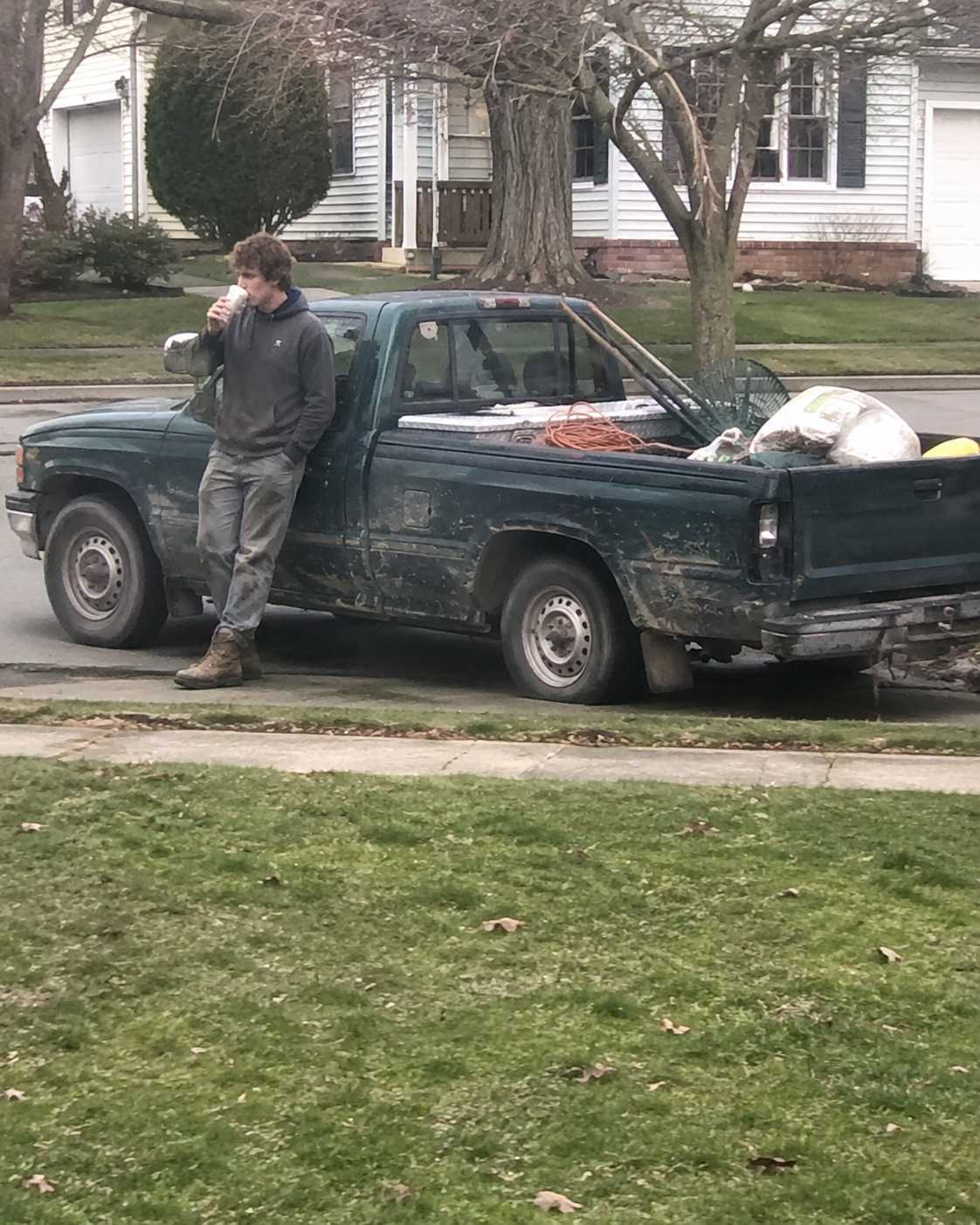 get.tryrosabella.com
Support stamina and heart health every day
- WINNER
7
Non EU

Jason Whitaker
131dI saw a statistic that made me sick. 1 in 3 men with gout will have a fatal
heart event before he turns 70. Even on allopurinol. Even with his uric acid "in
range" the whole time. Not 1 in 20. Not 1 in 10. 1 in 3. The medication keeps
your uric-acid number looking pretty on paper. It just doesn't stop the thing
that's actually killing you — while it quietly takes everything else from you in
the meantime. My brother Dale was one of those men. 16 years on allopurinol.
Heart attack killed him at 58. His uric acid was perfect the whole time. I'm 61.
Last month my own doctor told me the same thing she told my brother at 52. My
blood pressure is creeping up. She wants to add a second pill on top of my
allopurinol. The same two pills Dale took every morning for the last years of
his life. I refused. And what I found instead — in a hill-country farming
settlement in southern Missouri — brought my uric acid from 9.4 to 5.1 in twelve
weeks. Without a single new pill. But to understand why I was willing to drive
five hours to a stranger's farm at 6 AM on a Wednesday morning, you have to know
what I watched that combination do to my brother first. For 16 years — and I
mean sixteen straight years — Dale was on the standard gout playbook. It started
simple. Allopurinol 100 mg. The rheumatologist called it "the gold standard."
Said his dose would creep up over time but that was normal. Said the flares
would stop in a few months. Within the first year, the flares kept coming. Not
the old once-a-year flare. I'm talking about a man who used to coach my son's
Little League team. Who could stand at first base all afternoon. Who'd help me
re-roof a shed on a Saturday. He started waking up at 4 AM with his big toe on
fire. Soaking his foot in a bucket before work. Saying things like "I just need
to keep it up for a minute" and not getting his boot back on for two days. His
joints went next. By year three, the flares moved. The man who laid brick for
thirty years suddenly couldn't kneel on a job he'd done his whole life. He'd
stand at the edge of the driveway holding the rail, working up the nerve to come
down the two steps. By year five, he stopped coming to the family cookouts. We
moved them to my place. He'd come but he'd be sitting in a lawn chair with his
foot up by 3 PM. Year seven, the weight started piling on. He was eating cleaner
than he ever had in his life. Off the beer the way the doctor told him. The
scale just kept climbing. He gained 40 pounds in three years he could not lose
no matter what he tried. Year eight, his grandson Cody's first T-ball game. Dale
couldn't make the 45-minute drive across the county. Said he was "just too sore
to sit in the truck that long." It was the first one he ever missed. It wouldn't
be the last. Year ten, the heart stuff began. Pressure in his chest climbing the
porch steps. Pounding so hard at night he couldn't sleep through it. He told his
rheumatologist. His rheumatologist sent him to a cardiologist. The cardiologist
ran a stress test, said his heart looked fine, called it stress, and wrote him a
script for a low-dose blood-pressure pill. Year twelve, his blood pressure came
back at 158 over 96. The doctor added a second pill. "Just to be safe." Year
thirteen, he stopped getting off the couch most days. He'd sit in front of the
television with his foot propped up and sleep through whatever was on. Year
fifteen, I started driving to his house twice a week to help him get to the
bathroom because he couldn't stand long enough on his own. And every single time
we asked why this was happening, every single time we said "this isn't normal,
he's a different person" — they said the same things they'd been saying for
sixteen years. "His uric acid's in range." "Some flares are normal with gout."
"It's just his weight." "Has he tried cutting out red meat?" "Some of this is
just aging." "Your brother's got high blood pressure. That's a separate thing."
"The benefits of the medication outweigh the risks." Never once — not in sixteen
years of appointments — did any one of them say: maybe we should look at what's
actually causing this. Maybe the medication isn't the whole answer. Maybe
there's something nobody is testing for. Then one Sunday morning, Dale was
sitting in his recliner, and his heart stopped. He was 58 years old. Sixteen
years on allopurinol. Four years on a blood-pressure pill. His uric acid was
"well-controlled" the whole time. None of it saved him. It just took everything
from him piece by piece first. At the funeral, my mother held my hand and said
something I will never forget. "The pills didn't save him, Ray. They just turned
him into a shadow first." Three months ago, I sat in a doctor's office for my
annual physical. I'm 61 years old. I walk the dog every morning. I cut the beer
out in my fifties. I take my allopurinol every morning at 6 AM with water, the
way I've been doing for nineteen years. I do everything I'm supposed to do. I
walked in feeling fine. The nurse drew my blood. Three days later, my phone
rang. "Mr. Mercer, Dr. Reyes needs to see you about your results." I sat in the
exam room. The door clicked shut. She pulled up my chart. Looked at me. "Ray,
your uric acid came back at 9.4. Given your gout, your age, and your brother's
history, I think it's time we raise the allopurinol and add a second pill. Just
to be safe." Just to be safe. The same four words my brother heard nine years
before me. The room got small. "No," I said. Dr. Reyes looked up from her notes.
"Ray, I understand the concern. But uncontrolled uric acid at your level—" "My
brother was on allopurinol for sixteen years. They added a second pill at 52. He
died at 58. I watched him become someone none of us recognized for a decade
before the heart attack got him. I'm not following that path. Not with your gold
standard. Not with anyone's." She was quiet for a moment. "Give me three
months." She hesitated. Then nodded. "Three months. Diet, water, the works.
We'll re-test. But Ray — if it doesn't come down meaningfully, we are raising
the dose. With your family history, this isn't optional forever." For three
months, I did everything she told me to do. Cut out everything with purines in
it. Cherries on the cereal every morning. Water until I sloshed. Walked the dog
twice as long. Lost four pounds. Three months later, I went back. Uric acid:
9.2. Barely moved. Dr. Reyes pulled out the prescription pad. "Ray, I really do
think it's time." I stared at that pad and felt rage building in my chest. I had
done everything they tell men like me to do. Everything the medical world says
works. And it wasn't enough. And the only solution they had for me was the same
one that erased my brother. "Three more months." "Ray—" "Three more months." She
sighed. Wrote something in my chart. I didn't care what she wrote. That night I
couldn't sleep. 11 PM. 1 AM. 3 AM. I sat at my kitchen table with my laptop
open. Dale's photo was still on the corner of the screen where my phone had
backed it up the year before. I started typing. Why do men with gout keep dying
of heart attacks? What is the connection between gout and the heart? Why didn't
the medication save my brother? Every mainstream site said the same things. Cut
out beer. Drink water. Lose weight. Take the medication. My brother did all of
that for sixteen years. He still died at 58. I kept digging. Somewhere around 3
AM, I came across a thread that I almost scrolled past. The title was something
like: Why are men in these old farming settlements so rarely dying of heart
attacks? It sounded like one of those crackpot wellness things. I almost kept
scrolling. But something made me click. The Ozark hill country, southern
Missouri. Cardiovascular event rates in those old settlement families
dramatically lower than the broader American population. Studies linked.
Comments from researchers. Someone had posted a photo of a family orchard. A
note saying "her family has been growing tart cherries and putting them up the
old way for six generations." I looked at the clock. 3:47 AM. By 6 AM, I was in
my car. By noon, I was driving down a gravel road in the hill country looking
for a hand-painted "Cherries" sign someone had described in the comments. I
found it on the third try. I parked beside a small white farmhouse and got out.
An elderly woman was working in a long garden bed to the side of the house,
kneeling on a folded cloth in the dirt, pulling weeds with steady efficient
hands. She had to be in her eighties. Her hair was tied back under a simple
cloth scarf. She looked up as I approached. Set down her trowel. Stood up from
her kneeling position in one smooth motion, no hand on her knee, no pause. I had
walked maybe forty feet from my car. I was a little out of breath. She was
eighty-four years old. She straightened up from the dirt like she was thirty.
"Can I help you?" I stood there. 61 years old. Winded from a short walk across
her yard. Three weeks away from a dose increase I'd watched destroy my brother.
I didn't even know how to begin. "My brother had gout," I said. "He was on
allopurinol for sixteen years. They added a second pill at 52. He died at 58.
Now my doctor wants to do the same thing to me. I read about your people online.
About the heart rates out here. I don't know what I'm doing. I just got in the
truck." She nodded slowly. Like she'd heard this before. "Come," she said. "Sit
on the porch with me. I'll tell you a little." We sat down on a wooden bench.
She poured me a glass of water from a pitcher on the small table between us. Her
hands didn't shake. "Your doctor," she said. "She's fighting the wrong enemy." I
didn't say anything. "Gout isn't only in the toe. The fire that lights up that
joint runs through the whole body. But the place it does the most damage — the
place nobody is looking — is the heart." She took a slow sip of water. "Listen
to me. There are two kinds of uric acid. The kind floating in your blood —
that's the kind your doctor measures. And the kind that's already turned to
crystal and lodged in your joints. The blood test never sees the second one."
She set her glass down. "Your allopurinol only does one thing. It turns down how
much uric acid your body makes. It's a faucet. But the flood is already on the
floor. The crystals already settled in your joints don't dissolve just because
the number in your blood comes down. They sit there for years. And every time
they get stirred up, they light the fire again." She looked at me. "That fire
doesn't stay in the joint. It runs in your blood. It stiffens your arteries.
That's where your brother's blood pressure came from. That's the strain that
finally stopped his heart. Same fire in the toe, same fire in the artery — just
a different room." I sat there for a long moment. "Why didn't anyone tell my
brother?" I finally said. She gave a small sad smile. "There's no medicine you
can write a prescription for to clear the crystals or put out that fire. There's
nothing to sell. So nobody looks at it. Sixteen years of appointments, and not
one of them measured the thing that was actually killing him." She stood up.
Beckoned me to follow her back toward a row of trees beyond the garden bed. She
reached up and ran her fingers through the leaves of a low tree heavy with small
dark-red fruit. "Tart cherry," she said. "We've been growing these here from the
same root stock since my husband's great-grandmother set out the first trees.
Six generations on this land." She pulled one off and split it open with her
thumbnail. The dark juice ran down her hand. "The medicine is in the color. The
deep red. Anthocyanins. It's what quiets that fire and helps the body carry the
crystals out. People have been using these cherries for as long as anyone here
can remember." She closed her hand around the fruit. "But the tart cherry you
find in stores is not this. The big companies cook it. They spray-dry the juice
with high heat to make a powder fast and cheap. Heat destroys the color —
destroys almost all of the anthocyanins. The pills and the juice you buy still
say tart cherry on the label. But there's almost nothing left in them. You take
it for a year. Nothing happens. Because what you bought was the husk." She
straightened up. Brushed her hands on her apron. "My grandson works with one
company that does it right. They take the fruit and they pull the extract out
cold, so the anthocyanins survive. They put it in one capsule, standardized, so
every dose carries the same clinical strength the studies used. Not a
watered-down juice. Not a heat-dried dust. The real thing, in a capsule, once a
day." She wrote one word on the back of a small index card she pulled from her
apron pocket. GoodGrove. "That's the only one I tell people about." I ordered it
on my phone before I drove out of her driveway. The bottle arrived three days
later. One capsule a day, with water. I took the first one on my back porch. Sat
down with a glass of water. Waited. By that evening, something shifted. It was
subtle. The dull ache in my foot I'd stopped even noticing had quieted. A kind
of ease I hadn't felt in years. The low-grade soreness I didn't realize I'd been
living with thinned just a little. I walked back into the house and sat down at
the kitchen table. My wife looked up from her book. "You okay?" "I think so," I
said. "I think this might actually be working." I tracked every week. Week 1:
Uric acid 8.9. Slept through the night for the first time in months — no 4 AM
flare. Week 2: 8.1. Got my boot on both feet without sitting down. Week 3: 7.2.
Carried two bags of feed up the porch steps without stopping. Stood there for a
minute trying to remember the last time that had happened. Week 4: 6.5. My son
brought my grandson Cody over and I got down on the floor and built a block
tower with that boy and I got back up on my own. Week 6: 5.8. Knelt down to fix
the mower and stood right back up. Week 8: 5.1. Three days later, Dr. Reyes
called me into her office. She had my chart pulled up. She was looking at it the
way you look at something you've read three times. "Ray," she said. "Your uric
acid is 5.1." She looked at me. "From 9.4 to 5.1 in twelve weeks. With no
medication change." I told her. The 3 AM thread. The five-hour drive. The
eighty-four-year-old woman who got out of the dirt easier than I got out of my
truck. The mechanism. The product. She typed notes. Nodded slowly. Then she said
something I didn't expect. "Ray, I want to run one more test. It's not routine
for a gout re-check. But with this kind of improvement, I'm curious. Have you
ever had your CRP measured?" "My what?" "C-reactive protein. It's an
inflammation marker. If it's elevated, there's a fire running through your
system. Most doctors don't order it unless we're already suspecting something.
But if what you're telling me is right — if what really happened is the
inflammation coming down — your CRP should reflect that." She added the test to
the order. A week later, the results came back. CRP: 0.8 mg/L. Well in the
normal range. She pulled up an old labwork panel from three years before. There
it was, in a column nobody had ever flagged. CRP: 6.1. Elevated. She looked at
me over her laptop. "Three years ago, you had real systemic inflammation. Nobody
caught it because we were watching the uric-acid number and the blood pressure.
Now it's gone. Whatever you're doing isn't just lowering your uric acid. It's
putting out the fire that was straining your heart." She closed her laptop. "No
dose increase necessary." Four words I had been waiting for since the day I sat
in a black suit next to my mother and watched them lower my brother into the
ground. I walked out to my truck. Sat there. Called my son. "5.1," I said. Long
silence. "Dad. Are you serious?" "No dose increase. No new pill. I did it." He
was quiet for a beat. Then he started crying. So did I. Last Saturday, I drove
forty-five minutes across the county to my grandson Cody's third birthday party.
The drive Dale stopped making when Cody's dad was still a boy. I held that
little guy on my lap half the afternoon. I sang Happy Birthday. I cut the cake.
I stayed until the last truck pulled out and helped my son fold up the tables. I
didn't sit down once. I am 61 years old. Three years younger than my brother was
when he stopped going to those parties. Three years older than he was when he
died. I am the age he should still be. If you're reading this, you see yourself
in my story. Your uric acid is high. Maybe your doctor's mentioned raising the
dose. Maybe you're already on allopurinol. You've been on it for years and your
labs say you're "in range" while you still wake up at 4 AM with your toe on fire
and your heart pounding climbing the stairs. You've watched a brother or a
father or a friend with gout slowly fade out while doctors told them everything
was fine. You've felt the pressure in your chest climbing the steps. You've been
told it's just your weight. You've been told it's just stress. You've been told
to cut out red meat. Maybe you've tried other things. Cherry juice. Tart cherry
pills. The bottle from the health food store that sat in your cabinet for six
months because it didn't seem to do anything. You weren't taking tart cherry.
You were taking the husk — heat-dried powder with the color cooked out of it.
Here is what I want you to know. If I hadn't gotten in my truck at 6 AM on a
Wednesday morning, I'd be on a higher dose and a second pill right now. For
life. Watching myself slowly become the man my brother became. Wondering every
morning if today was the day the slow disappearance was going to start. But I
had a choice nobody had told me existed. There are three reasons GoodGrove
worked when the tart cherry in my cabinet didn't. One. Cold-extracted instead of
heat-destroyed. Most tart cherry on the market is spray-dried with high heat —
fast, cheap, and almost worthless. Heat destroys the anthocyanins, the actual
compound that quiets the inflammation and supports clearing the crystals. By the
time it's in the bottle, almost nothing is left. GoodGrove is cold-extracted.
The anthocyanins survive. They reach the tissue. They work. I felt the
difference the first evening. Two. Standardized clinical strength instead of
watered-down dust. Most tart cherry on the shelf is a few percent anthocyanin if
you're lucky — and the label never tells you. The big supplement companies
measure how cheap the powder is and how long it lasts on a shelf. They don't
measure the one thing that matters. GoodGrove is standardized to 25%
anthocyanins — the same concentration the clinical studies used. Several times
more than anything you'll find in a typical bottle. And every lot has a
Certificate of Analysis you can pull up yourself. It's the same fruit her
great-great-grandmother grew. Nothing has been cooked out of it. Three. One
capsule. Not a juice. Not a powder. You don't have to drink a quart of sugary
juice. You don't have to choke down a scoop of bitter powder. The whole clinical
dose is in a single capsule. GoodGrove is one capsule a day, with water. That's
it. The same anthocyanins the studies ran on, in the same strength, every single
day — without the heat, without the sugar, without the guesswork. You don't have
to take any of this on faith. You'll feel something the first day or two. A
small ease. A little less soreness. By week two, you'll start sleeping through
the night. By week four, your numbers start moving for the first time in years.
By week eight, your bloodwork will look like someone else's. If it doesn't, you
don't pay. Try GoodGrove for up to 90 days. If you don't feel the soreness ease.
If you don't see your uric acid start moving. If you don't believe in your bones
that this is what you've been looking for — for any reason at all — write to
customer service. We refund every penny. The empty bottle is fine. We don't need
it back. You risk absolutely nothing. You are at a crossroads right now. Path
one. Raise the dose. Stack a second pill on the allopurinol. Trust the same two
medications that were supposed to protect my brother. Watch yourself piece by
piece for the next decade. Hope you are not the one in three. Path two. Do what
I did. Try something that puts out the fire that's actually killing you. Give it
ninety days. Track your numbers. If it works, keep going. If it doesn't, you get
your money back. I chose path two. It kept me off the higher dose. It gave me my
joints back. It let me drive forty-five minutes to my grandson's birthday party
and stay until the end. Dale stopped making those drives when he was 50. I'm 61.
I'm not stopping. Every day you wait is another day the crystals keep sitting in
joints you cannot see. Another day the fire keeps running through arteries no
one is testing. Another day closer to becoming the man in your family no one
recognizes anymore. 1 in 3 men with gout will not see his 70th birthday. Almost
none of them are ever told that number. My brother wasn't. He didn't get a
second chance. Most men with gout never do. Even if you're skeptical —
especially if you're skeptical — order one bottle. Take it for ninety days.
Track your sleep. Track your flares. Track your uric acid at your next visit. If
it doesn't work, you get your money back. If it does, you get your life back.
And your son gets his father back. And your grandson gets the years you were
quietly afraid you weren't going to be here for. The system isn't coming to save
you. They make too much money keeping you on prescriptions for life. You're
going to have to save yourself. — Ray Mercer
https://trygoodgrove.com/tart-cherry P.S. I felt the soreness ease the first
evening. The sleep came back by week two. My uric acid started moving by week
four. It dropped from 9.4 to 5.1 in twelve weeks. My CRP — the inflammation
marker nobody had ever thought to test — dropped from 6.1 to 0.8. Your timeline
may be different. You won't know unless you try. P.P.S. My son Mark started
taking GoodGrove two months ago. His uric acid had been creeping up the same way
mine had. His doctor was about to start him on the same medication that took my
brother. He just got his latest labs back. Down almost three points. He called
me last Sunday and said, "I'm not ending up like Uncle Dale." Neither am I.
Neither should you.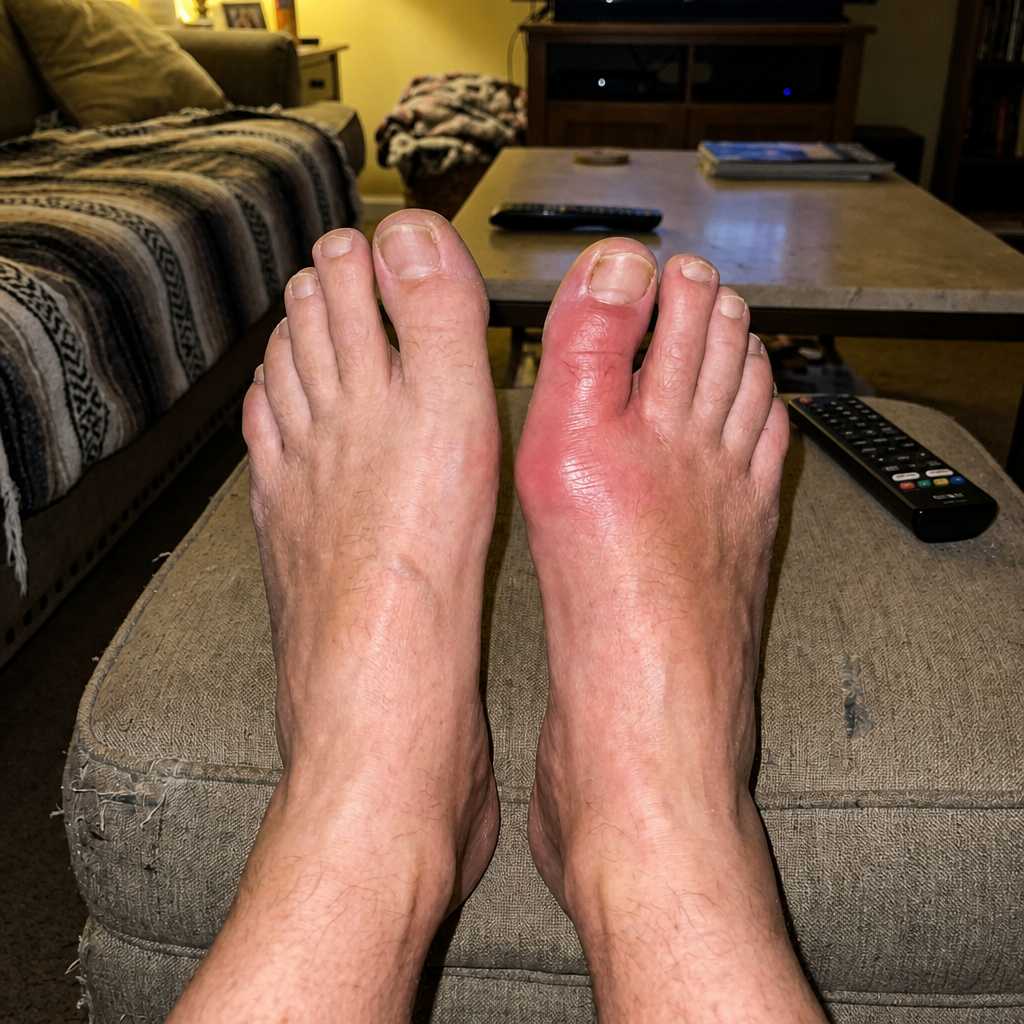 trygoodgrove.com
Everyone with gout flare-ups needs to see this ☝️
- WINNER
8
90.275€
3.0M
77
Health Insider
532dYou notice every shift in someone’s tone. You replay messages in your head. You
can’t stop thinking — but you can’t fully relax either. Sound familiar? That’s
overthinking.�And there is an approach goes deeper than “just relax.” It helps
you get to the real root of why your brain works this way — and how to gently
shift out of it. healthinsider.news
It’s Not Anxiety — It’s Overthinking. And There’s a Way Out.
- WINNER
9
1.873€
62.4K
100
Chris Walters
293dYou don't have "sinusitis," you don't have "allergies," you don't have all these
sinus problems. What you experience is called a Sinus Inflammation Loop. To most
people, sinus congestion is just a "stuffy nose." Something that comes and goes
with the seasons, but no, chronic sinus issues are different than that. You go
to the doctor with facial pressure, headaches, brain fog, constant congestion…
And what do they say? "Must be allergies" or "Here's another round of
antibiotics." But the truth is, most of these symptoms come down to silent
inflammation deep in your sinus tissues… and at the root of it all? Swollen,
irritated sinus membranes that never get the chance to heal. So, how does this
happen? When you live with chronic sinus pressure, your body stays in a constant
state of low-grade inflammation. Your immune system keeps fighting. Your sinuses
keep swelling. The mucus keeps building. But here's the problem: that
inflammation doesn't just "go away" when you rinse your nose or take a
decongestant. It stays. Day after day. Month after month. And while your sinuses
are inflamed, three things are happening: Your sinus passages are narrowing —
Inflammation causes the tissue to swell inward, blocking airflow and trapping
mucus in places it can't drain. Your blood flow is restricted — Without proper
circulation, your sinus tissues can't deliver the nutrients and oxygen needed to
heal. The inflammation gets worse. Your mucus is thickening — Chronic
inflammation changes the consistency of your mucus, making it sticky and
difficult to clear, creating the perfect environment for bacterial growth. And
then the loop begins. Every time your sinuses swell, drainage gets blocked.
Every time drainage gets blocked, pressure builds. Every time pressure builds,
inflammation increases. And the congestion never stops… That's why nasal sprays
don't work long-term and why antibiotics only provide temporary relief. Now, I
know what you may be thinking. "Okay, so what do I do? Another rinse? More
pills?" No. Here's the part nobody talks about… When you apply consistent,
therapeutic warmth to your sinus areas, something remarkable happens. Your blood
vessels dilate. Circulation increases. Your sinus membranes receive the oxygen
and nutrients they've been starving for. And for the first time in months —
maybe years — your body can finally start healing itself. I had a 54-year-old
woman come to me, exhausted and frustrated. She'd been dealing with chronic
sinus pressure and headaches for 8 years. She'd tried everything. Neti pots.
Steroid sprays. Three rounds of antibiotics. Even talked to a surgeon about
sinus surgery. Nothing worked for more than a few days. She was exhausted. She
couldn't sleep. Her husband told me she'd become irritable and withdrawn —
because the constant pressure had taken over her entire life. So I said, "Let's
try something different." I told her about a new device designed specifically to
interrupt the sinus inflammation loop — using precise, consistent therapeutic
heat. She was skeptical. She had tried heat before. But I said, "Use it for 15
minutes tonight. Just one night. That's all." The next morning, something
changed. She called me before 8 AM. Her voice was different. Lighter. "Doctor,"
she said, "I woke up and could breathe through my nose. I haven't done that in
years." She came back to see me a week later. The pressure behind her eyes had
eased. She could think clearly again. By the third week, she was sleeping
through the night, something she hadn't done in over two years. She looked me in
the eye and said, "I feel like my sinuses finally calmed down. Like they
remembered they didn't have to be inflamed all the time." Two months later,
she's still breathing freely, sleeping through the night, and living without
constant pressure. No surgery. No pills. Just breaking the loop. And that's why
I recommend the only at-home device I trust for this: The ThermoRelief Heated
Sinus Mask. It's designed with precision heating technology that maintains the
exact therapeutic temperature range — something no other method can do. Here's
what most people don't know: For warmth to actually reduce sinus inflammation,
it needs to stay between 108–113°F (42–45°C) for at least 10–15 minutes. That's
the "therapeutic zone" where blood flow increases, swelling subsides, and
tissues start to heal naturally. The problem is, nothing you have at home stays
there. Hot towels cool off in minutes. Microwaved compresses spike too hot, then
fall below therapeutic range almost instantly. Steam fades before it can reach
the deeper sinus cavities. ThermoRelief is different. It's the only device that
maintains precise, consistent warmth directly across your sinus areas — not too
hot, never too cold — for as long as you need it. Here's what just 15 minutes a
day with this device can help you do: 🔥 Break the Sinus Inflammation Loop
that's feeding your congestion 💤 Sleep through the night without waking up
stuffed ❤️ Restore blood flow to your starving sinus tissues ⚡ Open your sinus
passages and release trapped pressure 💧 Support healthy mucus drainage
naturally 😌 Calm chronic inflammation at the source 🧠 Clear brain fog and
restore mental clarity 🌿 Drug-free relief without rebounds or side effects It's
safe. It's effortless. And when it's done right — it works. 👉
https://soovera.com/pages/listicle-in-1 But here's the problem… Most sinus
relief products online don't work. They either provide temporary relief, cause
rebound congestion, or never address the inflammation itself. And that's the
critical difference. Because inflammation doesn't drop from a quick steam
session. Your sinuses don't heal from a nasal spray. Your passages don't open
from blowing your nose harder. You need consistent, therapeutic warmth long
enough to send that signal to your body: "The inflammation can stop now. You can
heal." The ThermoRelief Heated Sinus Mask is different. It delivers: ✅ Precision
Temperature Control — Maintains the exact 108–113°F therapeutic zone, dilating
blood vessels and reducing inflammation at the source. ✅ Full Sinus Coverage —
Ergonomically designed to deliver warmth across all sinus areas: forehead, eyes,
cheeks, and nose bridge. ✅ Extended Therapy Sessions — Unlike towels or
compresses that cool in minutes, ThermoRelief maintains therapeutic warmth for
as long as you need. And here's what happens next: As circulation increases →
inflammation decreases. As inflammation decreases → swelling goes down. As
swelling goes down → drainage improves. As drainage improves → pressure fades.
And your sinuses can finally heal. Your sleep improves. Your energy returns.
Even your mood lifts. That's why thousands of people refuse to use anything
else. 💬 If you read the reviews on their website, you'll see why. That's why I
use it. That's why I recommend it to everyone I care about who's dealing with
chronic sinus issues. Most people pay full price. But right now, they're running
a rare 50% off with a 60-day money-back guarantee. That means you have nothing
to lose… and potentially years of pressure and frustration to let go of. The
only catch? They're a small company, and they sell out fast — especially when
they run these promotions. So I want to apologize ahead of time, because if you
click the link and see that they're out of stock… it's already too late. But if
you're lucky enough to find some still available… 👉 Don't wait. Grab yours now.
This could be the night your sinuses finally remember they don't have to be
inflamed anymore. 👉 https://soovera.com/pages/listicle-in-1 soovera.com
Sinusitis? Read This
- WINNER
1
475.744€
16M
100Happy Mammoth
679dIs joint pain in menopause a thing? 🦴 Unfortunately, yes - and it’s one of the
more debilitating menopause symptoms, as it reduces mobility and flexibility.
Joint pain is an unpleasant reality for more than half of women going through
menopause. 😩 And it’s not only just because of aging. Estrogen fluctuations can
also trigger inflammation in the joints, making even the simplest of movements
painful. But this added discomfort doesn’t need to keep women down any longer.
🤔 Hormone Harmony doesn't only relieve unbearable symptoms of perimenopause and
menopause - it's also a lifesaver for most women suffering from joint pain and
reduced mobility. 🤩 And it’s no wonder why – our formula is packed with 12
potent ingredients that not only address hot flashes, night sweats, mood changes
and weight gain, but also target joint pain and inflammation… Giving most women
the relief they need to move through the day with ease. Ingredients like…
Gelatinized Maca Extract - rich in calcium, which is essential for maintaining
healthy bones and joints. Berberine Bark Extract - has potent pain-relieving and
anti-inflammatory properties. Gymnema Sylvestre Extract - shown to reduce
inflammation and improve arthritis symptoms. American Ginseng Extract - a
valuable ingredient for relieving joint pain, inflammation and discomfort.
Produced in the EU 🇪🇺 And made by Happy Mammoth - a nature-inspired health
brand with over 1.2 million customers in 33 countries. ❤️eu.happymammoth.comIt doesn't compare to any supplement I ever tried
- WINNER
2
106.181€
3.5M
54Nutri Paw
460dDiscover how 200,000+ owners have nourished their itchy dogs and soothed their
scratching, licking & chewing with 1 simple chew that's packed with mother
nature's very best itch-soothing & immune supporting ingredients. In less than
10 seconds every day, you can soothe your dog naturally - that's how long it
takes to give them NutriPaw All-Itch treats. ⭐⭐⭐⭐⭐ "I got the itch ones and they
have helped my dog so much, you can see from the pics. So glad I tried these" -
Amy Learn more: https://nutri-paw.com/products/all-itch-treatsnutri-paw.com🐕 Soothe your itchy dog today! Try the #1 itch-soothing chew trusted by 200,000+ owners in the UK
- WINNER
3
90.126€
3.0M
4Stepprs
467d"I’ve tried so many insoles for my plantar fasciitis — nothing ever really
helped… until I found Stepprs. Within a few days, the stabbing heel pain I
usually feel in the morning was nearly gone. I wear them in my work boots for
10-hour shifts, and for the first time in years, I don’t come home with aching
feet. These insoles are a game-changer!" — Michelle, Verified Customer ✅
Cushioning ✅ Breathable ✅ Arch Support ✅ Instant Reliefstepprs.comWalk on Clouds—Or It’s FREE.
- WINNER
4
7.007€
234K
5Happy Mammoth EU
78dHere’s what happens when the MOST skeptical woman alive tries this… Seriously… I
didn’t expect much. I bought it because my friend wouldn’t shut up about it. And
I figured… fine. One month… At least get my money’s worth out of the bottle… Or
send it back and smugly say “told you so.” 😌 But… 🤯 🤯 🤯 🤯 I haven’t even
finished the bottle and… 💤 I am sleeping better. Like actual deep, restful,
drool-on-the-pillow sleeping ⚡ My energy is back and I am finishing tasks I’d
been “saving” for 6 months 🧠 My moods are better and I’m not spiraling over
dumb stuff anymore 👖 Clothes I could barely button last month are now baggy
(?!?) 🦶And my whole body feels… lighter. From head to toe. So… fine. You win.
The most skeptical woman on earth just ordered a second bottle. So, click below
and try it for yourself… Seriously… if it worked on me, it might actually work
for anyone 😅👇eu.happymammoth.comThe most skeptical woman tries Hormone Harmony
- WINNER
5
4.402€
147K
49Mars Men
156dYou don't have 8 separate problems. You have one. Puffy face. Stubborn belly
fat. Brain fog. Low libido. Waking up at 3AM staring at the ceiling. Your doctor
might call it stress. Or aging. Or "just how it is after 40." He's wrong. Every
single one of those symptoms traces back to the same root: elevated cortisol
crushing your testosterone. Cortisol is supposed to spike when you're in danger
and drop back down. But modern life — the screens, the deadlines, the terrible
sleep — keeps it jacked up 24/7. And when cortisol stays high, your body
literally prioritizes stress hormones over testosterone production. You're not
falling apart. Your hormones are out of order. Mars Men is the only natural
formula that addresses both sides — supporting healthy T production while
helping bring cortisol back in line. Shilajit at 400mg supports the Leydig cells
that manufacture testosterone. Tongkat Ali at 1,000mg blocks estrogen conversion
and supports cortisol reduction. Together with 6 more clinical-dose ingredients,
it's a system — not a single-ingredient gamble. Joshua D. went from 254 to 861
ng/dL in about 6 weeks. More than 3X his starting level. No TRT. No injections.
429,576+ men are already in the community. 87% reported increased strength in a
1,000-person customer survey. 50% off right now. 90-day money-back guarantee.
Read the full cortisol-testosterone breakdown and see how one natural stack is
helping men reclaim what stress stole — without needles or prescriptions.mengotomars.comCrush Cortisol. Free Your T.
- WINNER
6
9.098€
303K
9The Health Haven
154dThe person who gave me my husband back wasn't a doctor. It was the kid I'd hired
to pull my weeds. His name's Jake. He was twenty-three, with a rake and a truck
you could hear coming down the street, and the first morning in the driveway I
told him to do what he could with the roses out back and went inside. He was the
last person on earth I'd have trusted with anything that actually mattered — and
he turned out to be the only one who saw what was happening to my husband.
Because my husband had been slipping away for two years — and his doctor kept
looking at a screen and telling me he was fine. I knew better. I just had no one
in the world who'd believe me. That changed on an ordinary evening at my own
kitchen table, four months after I hired him, when that boy looked up at me and
told me he'd seen all of this happen before. But all that came later. That first
month, I only knew the small things. He won't take a glass of water without
asking. He calls my husband "sir," even after Walter's told him four times to
knock it off. By the third week, Walter was bringing two coffees out to the
garden every morning — one for himself, one for the kid — and pretending it was
no trouble. The garden was Walter's. It had been Walter's for thirty years. He'd
built it the way he built everything — slowly, by hand, paying attention. Roses
along the back fence he'd planted the spring our daughter was born. Three fruit
trees, one for each grandchild. A vegetable plot where he grew tomatoes so good
the neighbors used to knock on the door in August asking if he had any to spare.
Then, this past year or two, it started slipping. The roses got leggy and
spotted. The tomato cages came out of the shed in spring and went back in the
fall, empty. He'd go out there less and less, and when he did, he'd stand in the
middle of it looking at the weeds like he wasn't sure how they'd gotten there. I
couldn't bear to see it die. That's the honest reason I hired Jake — not because
I couldn't pull a weed myself, but because I couldn't stand at the kitchen
window watching the thing my husband had built for thirty years come apart a
little more every season, while the man who'd made it could only stand and
watch. And Jake didn't work like a kid earning beer money. He worked like the
garden was his own. He'd kneel in the dirt and coax a plant back instead of
yanking it out. He cleaned his tools before he left. The first Saturday he
stayed two hours past what I'd have paid him for, and wouldn't take the extra. I
asked him one afternoon where a young man learns to handle a garden like that.
His grandfather taught him, he said. His grandfather had raised him — his folks
were "out of the picture," was all he offered, and I didn't push. From the time
he was small it had been the two of them. The old man did yard work all over the
county, and Jake grew up on the back of his truck, learning the name of
everything they put in the ground. "He could fix anything green," Jake said.
"Half-dead tree, didn't matter. He'd talk to it like it owed him money, and it'd
come back." He grinned when he said it. Then the grin went somewhere else. "He
passed a few years back. I took the business over. It's just me now." He didn't
say how. I didn't ask. You learn, at my age, when somebody's handed you the edge
of a thing and isn't ready to give you the rest of it. Walter took to him faster
than I expected — and Walter doesn't take to people. Thirty years of marriage
and I can count his real friends on one hand. But there was something between
those two from the first week. Walter would carry the coffee out in the morning
and end up leaning on the fence for an hour, the two of them going on about
nothing. Engines. Weather. How they don't make tools the way they used to. I
think the boy reminded Walter of the years his own hands still did what he asked
them to. And I think Walter reminded the boy of the old man on the truck. I
didn't see any of it yet. I just thought I'd gotten lucky with the help. What
Walter did, all his life, was fix watches. Forty years of it. People still
brought him the things they couldn't bear to lose — a wristwatch handed down
three generations, a mantel clock that had stopped the day somebody's father
died. He could take a movement apart, a hundred pieces smaller than grains of
rice, lay them on a white cloth in an order only he understood, and put it back
together so it kept time to the second. Under a loupe. By hand. So when Jake
mentioned at the fence, the third or fourth week, that his watch had quit — a
cheap old thing, but it had been his grandfather's, the only piece of the old
man he still wore — Walter told him to bring it in. That evening I found the two
of them in the spare room where Walter keeps his bench. Jake up on a stool.
Walter under the loupe with the back of the watch open, narrating each step the
way he used to for our grandkids. Jake didn't say a word. He just watched
Walter's hands — that look a boy gets when he grew up at the elbow of a man
whose hands could do what most people's couldn't. "My grandpa's hands were like
that," Jake said. "Not watches. Plants. But like that." Walter didn't look up.
"Then he was a craftsman, son. Doesn't matter what the material is." Jake went
quiet a moment. "Yeah," he said. "He was." After that night, Jake stopped being
the kid I'd hired to do the yard. He'd come in the back door without knocking.
Walter started saving him the crossword. Some evenings they'd just sit in the
spare room, Walter at the bench, Jake keeping him company. Walter never did
finish that watch. He kept it on the bench, open, worked at it on and off, told
Jake he wanted a little more time with it — tricky movement, he said. It sat
there, stopped, for two months. I didn't say anything about it. By then there
were a lot of things I wasn't saying anything about. Walter had been on a
cholesterol pill for eight years. Atorvastatin. His numbers were a little high,
the doctor said — nothing alarming, but it would protect his heart and keep him
around a good long while. Walter doesn't argue with doctors. He took it every
night with a glass of water, the way you take what they give you. But something
was wrong with my husband. I'd known it for a while. I just didn't have a name
for it. His doctor had a name for it. Aging. I didn't believe him. The man I
married was disappearing, a little at a time, and I was the only one who could
see it. It started with his hands. For forty years those hands could do the most
delicate work a person can do — set a part you can barely see with the naked
eye, under a loupe, and never so much as twitch. Steady as a table. Then they
weren't. He started waking up with them clenched. I'd find him on the edge of
the bed in the morning, opening and closing his fists, slow, working them like a
man trying to start a cold engine. He said they were just stiff. He said it the
way you say a thing you're hoping is true. In the shop it got worse. He'd reach
for the tweezers and I'd see the tremor — small, but on parts that size, small
is everything. He'd hold his breath to steady them. It didn't help. He dropped a
screw one afternoon, the kind he used to find by feel, and spent twenty minutes
on his knees with the magnifier and never found it. He didn't say a word about
it. He just closed the shop early. He stopped taking the hard jobs. The heirloom
pieces, the ones people drove an hour to bring him — he started telling them he
was backed up, or that they'd be better off replacing the movement. He wasn't
backed up. His hands wouldn't do it anymore, and he couldn't say so out loud.
That's why Jake's watch sat open on the bench for two months. It wasn't a tricky
movement. It was that he couldn't trust his own fingers with it — and he
couldn't bear to hand it back unfinished. It wasn't only his hands. By
seven-thirty most evenings he was asleep in his chair with the news still going.
He'd push himself up out of it with both arms, like the chair had gotten deeper.
The stairs he took one at a time now, a hand on the rail, like his legs didn't
quite trust the next one. Getting dressed wore him out — I'd find him stopped
halfway through it, a sock in his hand, and the second he saw me he'd start
moving again like he'd only paused to think. And he'd go away in the middle of
things. Mid-sentence, sometimes — the words just stopped, and I'd watch him
stand there hunting for the one he'd lost. He asked me twice in one week which
grandchild had the recital. He'd always been the one who remembered everything.
He hid all of it. Turned his back when his hands shook. Made a joke. Said he was
tired, said he was getting old — said it so often I think he was trying to
convince himself. And every time I took him to the doctor, the doctor said the
same thing. His numbers looked great. His heart was strong. This was all just
part of getting older. I'd sit in that office and listen to him call my husband
fine, while my husband sat right beside me getting worse by the month. I knew he
was wrong. I just couldn't prove it. The next appointment, I decided I'd say
something. I'd watched it long enough. So when the doctor came in and started
reading the numbers off the screen — cholesterol down, blood pressure fine,
everything right where he wanted it — I told him. I told him about the hands.
About a man who couldn't finish a job he'd have done in his sleep two years ago.
Who fell asleep before the dishes were dry. Who'd started losing the thread of
his own sentences. I said it plain: this is not the man I married. Something is
wrong with him. He listened the way they listen — nodding, not really hearing
it. And when I finished he smiled at me, kind enough, and told me the numbers
were excellent. The medication was doing exactly what it was supposed to do.
Walter's heart was in fine shape for a man his age. Then he looked at me — at
me, not Walter — and said, gently, that it can be hard to watch a husband get
older. That sometimes the worry is harder on the wife than anything that's
actually wrong with him. He never once looked at Walter the way I was looking at
him. He looked at the screen. The numbers were good, so the man was good. That
was the whole of it. He told us to keep taking the Atorvastatin. Whatever was
wrong with Walter, he said, it had nothing to do with the medication. What was I
going to say to that? That I could feel it in my bones? You can't put that on a
chart. Walter was quiet the whole way home. Then, near the house, he said it.
"Maybe he's right. Maybe I'm just getting old, and we both have to make our
peace with it." That was the worst part. Not the doctor. Walter. The doctor I
could argue with. But when my husband stopped fighting — when the most stubborn
man I'd ever known sat in that seat and gave up on himself — I had no one left
on my side. I got home and I honestly didn't know what to do. I had a sick
husband, a doctor who wouldn't hear me, and a certainty in my chest I couldn't
prove to a single living soul. And it would be a twenty-three-year-old kid, at
my own kitchen table, who finally told me what no one with a medical degree had
been willing to. Jake stayed for supper that evening, the way he did most weeks
by then. Walter didn't eat much. Halfway through he set his fork down — his hand
wasn't cooperating — and pushed back from the table and said he was going to
turn in. It was barely past seven. He put a hand on Jake's shoulder on his way
past, the way you'd say goodnight to your own boy, and went up the stairs one at
a time. Jake watched him go. He didn't touch the rest of his plate either. I
don't know what made me say it. I think I was just tired of carrying it by
myself. "He wasn't always like this," I said. "Two years ago that man could —"
and I couldn't get the rest out. Jake was quiet a long moment. Then, not really
to me, he said: "My grandpa's hands went first, too." I looked up. He kept his
eyes on the table, and he told me. His grandfather started dropping things —
couldn't grip the tools he'd held his whole life. Got tired in a way sleep
didn't touch, asleep in his chair by the evening news. The words started to go;
the man who'd taught Jake the name of every plant in the county would stand
there and not be able to come up with "trowel." "He'd go out to the garden,"
Jake said, "and just stand in it. Like he couldn't remember how he got there."
The hair went up on my arms. That was the exact thing I'd watched Walter do a
hundred times — stand in the middle of his own garden, lost in it. I had never
told Jake that. I'd never told anyone that. "Jake," I said. "That's Walter.
That's — that's him exactly. Every word of it." He finally looked at me. And
there was something in his face I'd never seen on a boy his age — like he'd been
carrying something heavy a long time and had just set part of it down. "I know
it is," he said. "I've been watching it happen to him for four months. It's why
I —" He stopped, started again. "There's something I never told you about my
grandfather. About how he died. I should've said it weeks ago. I just didn't
know how to." He pushed his chair back. "Can I bring something in from my truck?
I'd rather show you than try to say it. You'll think I'm crazy otherwise." I
said yes before I'd finished thinking about it. He came back with a folder — not
a new one. A thick, worn thing, the corners gone soft, the kind of folder a
person has opened a thousand times. He set it on the table between us and laid
his hand flat on top of it a second, like he wasn't quite ready. "My grandma
keeps telling me I should've been a doctor," he said, with a small, sad
almost-laugh. "I'm not. I'm just a kid who couldn't save his grandfather, and
spent three years trying to understand why." Then he opened it. Inside that
folder was three years of one young man's life. Printouts from medical journals,
the long words underlined. Pages from library books, photocopied, the margins
filled in pencil — his own handwriting, working it out, question marks and
arrows and notes to himself. A few pages so soft and creased they'd been folded
and unfolded a hundred times. And clipped to the inside cover, a photograph of
an old man in a garden, squinting into the sun, his hands black with dirt.
"That's him," Jake said. "That's my grandpa." He told me about him. A big, slow,
gentle man who'd raised him when no one else would. Strong as a mule — at sixty
he could still dig a bed all morning and not feel it the next day. Then a doctor
told him his cholesterol was a little high. Nothing alarming. Just a pill, to
protect his heart. Keep him around a good long while. I felt something cold go
down my back before Jake even said it. "It was the same one," he said quietly.
"Atorvastatin. The exact same pill Walter takes." For eight years he took it
every night. And for eight years he came apart, slowly, the same way I'd been
watching Walter come apart — the hands, the tiredness, the fog. And every time
they went in, the doctor looked at the chart and said what everyone kept saying.
His numbers were great. His heart was strong. This was just getting old. He died
at sixty-eight. A heart attack, in the garden, on an ordinary afternoon. Jake
was twenty. He was the one who found him. And here's the part that broke
something in that boy and never healed over. When the numbers came back — the
cholesterol they'd spent eight years managing — they were perfect. Textbook. The
pill had done everything it promised. The number on the chart was beautiful. And
the man was dead of a heart attack at sixty-eight. The doctors had no answer for
him. They said sometimes it just happens. Bad luck. Genetics. They signed the
paperwork and moved on to the next patient, same as always. But a
twenty-year-old who'd just buried the only parent he'd ever known couldn't live
with "sometimes it just happens." How does a man with perfect numbers, on a pill
to protect his heart, die of a heart attack? It didn't add up, and he couldn't
make it add up, and it ate at him. So he went looking. Not for a week — for
years. The county library. The university medical library two towns over, where
they'll let anybody read if you're quiet about it. He read papers he had to
puzzle out a word at a time. Slowly, over the years, it started to make sense —
and all of it ended up here, in the folder open between us. He was trying to
answer one question. Not for a grade. Not for anybody. Just: why did my
grandfather die? And then, this spring, he took a job pulling weeds for a
stranger — and walked into a garden kept by another man on that same pill,
fading the same way, with a doctor saying all the same words. "I almost didn't
say anything," he told me. "I know how it sounds. I'm the yard kid. He's got a
doctor. Who am I?" He put his hand flat on the folder again. "But I already
watched it happen once. I'm not going to stand here and watch it happen again
and say nothing — not when I think I finally understand what's actually going
on." I asked him the only thing I could get out. "Then tell me. What is actually
going on?" And he did. He started with the number. "Everybody watches one
number," he said. "Your LDL — that's the one they circle on the sheet. The
doctor watches it, you watch it — the whole thing's built around getting it
down. Drive it down far enough and they tell you you're protected." He turned a
page in the folder. "But that number was never the thing that hurts you."
Cholesterol isn't poison, he told me. Your body makes it on purpose — you'd die
without it. It only turns dangerous when it gets damaged. Oxidized, was his
word. "You ever cut an apple and leave it on the counter? Comes back brown.
That's the air getting at it — oxidizing it. Same thing happens to the
cholesterol in your blood. It goes rancid, basically. And that damaged
cholesterol turns sticky — it works its way into the wall of the artery and
packs in, year after year, building up into a hard little deposit — plaque. Then
one day a piece of that buildup tears open, and the artery jams shut. That's the
heart attack. Not the amount of cholesterol floating around. The oxidized stuff,
embedding in the walls. The damage." "And here's the thing," he said. "The pill
lowers the amount. The number on the chart. It doesn't do one single thing about
the oxidation. So you can drive your number down to perfect — beautiful,
textbook, like my grandpa's LDL — and the real damage is still going the whole
time, right where nobody's looking." I thought about a beautiful number on a
chart and a dead man in a garden. "But that's only half of it." And this was the
part he leaned in for. The way the pill drives the number down, he said, is it
shuts off a switch in your body. And that switch doesn't only make cholesterol.
It makes something called CoQ10. "I'd never heard of it either. CoQ10 is the
spark. It's what every muscle you've got uses to turn fuel into motion. You can
have a full tank — if there's no spark, nothing moves. Like a mower with a dead
plug. Just sits there." He spread his fingers flat on the table. "The hands. The
legs. The tiredness that sleep won't fix. The fog. That's not the pill having
some rare reaction in unlucky people. That's the pill doing exactly what it's
built to do. It cannot lower that number the way it does without draining the
spark out of every muscle in your body at the same time. It's the same switch.
You can't throw one without the other." He looked at me. "They call it a side
effect. It's not a side effect. It's the mechanism. It's the machine working
exactly right." He closed the folder. And then he said the thing I haven't been
able to set down since. "My grandfather didn't die with high cholesterol. He
died with perfect cholesterol. That's the part nobody will say out loud." I sat
there and did the math I didn't want to do. Walter had been taking that pill for
eight years. The man in that photograph had taken it for eight years too — and
then his heart stopped in his garden on an ordinary afternoon. I reached across
the table. "Jake. Is there anything that helps? Anything at all?" He nodded,
slow. "There is. Took me two years to find it — and when I did, I almost
couldn't believe it was that simple." In all the reading he'd done, he said, one
thing kept surfacing. A compound that did the exact thing the pill couldn't —
went after the oxidation, the rancid stuff embedding in the wall, and left the
spark alone. The one job without the other. "And the second I read what it
actually was," he said, "I knew it cold. Because it's not a drug. It's a plant.
It's the thing I do." Beets. One specific kind. "You know that deep red that
stains everything when you cut a beet open?" he said. "That color is a pigment
called betalain. It's an antioxidant — but not like any antioxidant you've ever
heard of. It does two things nothing else does." "First — most antioxidants are
a carpet bomb. They knock out every free radical in you, even the ones your body
needs to fight off infection. Betalain's a smart missile. It goes after only the
exact free radicals that turn your cholesterol rancid, and it leaves the rest
alone." "Second — it actually gets in. Through the gut, into the blood, right
inside the cholesterol particle itself, into the wall of the artery — the exact
spot where the oxidation starts. A statin can't reach in there. Fish oil can't.
Nothing on a shelf can. Betalain goes in and neutralizes the damage right at the
source." He spread his fingers flat on the table. "And it does all of that
without touching the CoQ10. It stops the oxidation the pill ignores, and it
leaves the spark the pill drains. The one thing the pill can't do, this does.
The one thing the pill does to you, it doesn't." I said something about how hard
it was to believe a beet could matter that much. "I thought it was fringe too,"
he said. "It's not. There's more real research behind this than behind half of
what's in a pharmacy. I read it till my eyes crossed." I asked him — if it's
just beets, why doesn't everybody already know. He almost smiled. "Because the
beet in the store isn't that plant anymore. They've spent a hundred years
breeding it bigger, sweeter, easier to ship. And every time you breed a beet for
sugar, you breed the betalain down. The beet that used to be medicine became
candy. There's one old strain the Amish never touched — Blutwurzel, blood root,
they've been saving the seed by hand for a hundred and fifty years. It's still
got ten, twenty times what a grocery beet has." Even the beet powders on the
shelf were mostly useless, he said — they're spray-dried at high heat, and heat
destroys betalain. "You can boil a beet till it's grey," he said. "Same thing
happens in a factory. Most of what they sell is red dust. Dead before the jar's
even sealed." The only way it survives, he told me, is the old way —
hand-harvested after the first frost, when the plant pulls everything back down
into the root, then dried slow in the shade, never heated. A family in Lancaster
County still grows that heirloom line and dries it that way, and a small outfit
bottles it under one name — Rosabella. 1,300 milligrams a capsule, sent out to
an independent lab so you know exactly what's in it. Not a grocery beet. Not red
dust. The real thing. I must have looked exactly the way you'd expect — a young
man at my kitchen table telling me a beet was going to do what a cardiologist
couldn't. He saw it on my face. "I know how it sounds," he said. "So I'm not
going to ask you to take my word for it." He took out his phone. "My
grandmother's seventy-three. After my grandfather died, the doctor wanted to put
her on the same pill — her cholesterol's high too. She wouldn't do it. She'd
watched what eight years of it did to him, and she said she'd sooner take her
chances. So I gave her this instead. Eight months ago." He turned the phone
around. A woman kneeling in a garden, sleeves shoved to the elbow, dirt on her
hands, laughing at whoever was holding the camera. "That was Sunday," he said.
"Her last bloodwork came back better than it's been in years, and her doctor
can't make sense of it. I can." He set the phone face-down on the table. "I
couldn't save him. I'm not losing her too. And I'm not going to sit in your
kitchen and watch the same thing start on Walter when there's a bottle of it out
in my truck." Jake went out to his truck and came back with the bottle. He set
it on the table in front of me — not where Walter had been sitting. In front of
me. Like he already knew which one of us was going to have to carry this. "I
brought it tonight because I was hoping I'd get to the part where I could hand
it to you," he said. "Two a day, with water. That's all there is to it." I
looked at it. A pink bottle, smaller than I'd pictured. After everything — the
appointments, the years of being told I was imagining things — what I'd been
waiting for turned out to be beet capsules from a twenty-three-year-old who cut
my grass. I picked it up anyway. I couldn't tell you exactly why. Maybe because
he'd never once tried to sell it to me. Maybe because of that photograph of his
grandmother in the dirt. Maybe just because, for the first time in two years,
somebody had sat across from me and said I see it too — and then put something
in front of me I could actually do. For two years all I'd been able to do was
watch. Now there was a bottle in my hand. Jake left soon after. I stood in the
kitchen a long while with it in my palm, listening to Walter breathe upstairs. I
waited until morning. I made the coffee and carried it up, and I sat on the edge
of the bed where I'd watched him work his fists open and closed a hundred times,
and I told him about Jake's grandfather. The same pill. The same garden. The
perfect numbers and the heart attack at sixty-eight. Walter listened. Then he
said what I knew he'd say. "Honey. He's a kid. I've got a doctor." "I know," I
said. "I'm not asking you to believe it. I'm asking you to take it. For me." He
looked at me a long moment. My husband, who'd already made his peace with
disappearing. Then he held out his hand. He didn't take it because of oxidation,
or CoQ10, or anything that boy had penciled into that folder. He took it because
I asked him to, and in thirty years he had never once been able to tell me no
when it actually mattered. He swallowed the two capsules with the coffee I'd
brought him and said, "There. Happy?" — and I let him have the joke, because
he'd said yes, and yes was the only thing I'd gone up there for. I didn't expect
anything. You stop expecting things, after two years. I went down and started
the dishes. It wasn't twenty minutes later that he came into the kitchen. He was
flexing his right hand. Opening it, closing it, turning it over, staring at it
the way you'd stare at something that had no business working. "What is it?" I
said. "Nothing. It's —" He kept opening and closing the fist. "My hands are
warm." I didn't understand. "They've been cold for about two years," he said.
"I'd stopped noticing it. You stop noticing." He looked up at me, and there was
something on his face I hadn't seen in longer than I could say. "They're warm."
I had to turn back to the sink so he wouldn't see what that did to me. After
that first morning, I started watching him the way you watch a kettle. By the
fifth or sixth day, the thing he did with his hands — the slow opening and
closing on the edge of the bed, the cold-engine thing he'd done every single
morning for two years — he just didn't. He sat up, swung his feet down, and
stood. I lay there pretending to be asleep, watching him not do it, afraid that
if I said one word out loud it would stop being true. About a week in, I found
him in the spare room, at the bench. He hadn't sat at it in months. He had the
tweezers in his hand and a watch back open in front of him, and he was holding
them over it, steady, the way you'd hold a pencil. Not working yet. Just seeing
if he could. He saw me in the doorway and set them down quick, like a boy caught
at something. But I'd seen his hand. It wasn't shaking. By the second week it
was his head. The sentences stopped falling out from under him halfway through.
One night at supper he told a whole story about a clock he'd repaired back in
1985 — the whole thing, every turn, the man's name, the year — and I realized I
hadn't heard him do that in longer than I wanted to admit. He remembered the
grandkids' recital before I did. He started doing the crossword again. In pen.
By the third week he was up past the news. Then up past nine. He went up the
stairs one evening without touching the rail and didn't even notice he'd done
it. I noticed for the both of us. And he went back out to the garden. Not to
stand in it. To work it. I watched from the kitchen window — the same window
where I'd stood watching it die — and there he was, down on his knees in the
dirt, pulling weeds, tying back a tomato vine, doing the very thing Jake had
only been keeping alive for him. Jake came by that Saturday and the two of them
worked it together, and at some point I heard them laughing about something out
there, and I had to sit down at the table for a minute. In the fifth week, he
finished the watch. Jake's grandfather's watch. The one that had sat open on
that bench for two months because Walter couldn't trust his fingers with it and
couldn't stand to hand it back undone. One evening he just sat down and did it —
a hundred pieces smaller than grains of rice, every one back where it belonged,
under the loupe, by hand. Then he wound it. And it ran. He didn't make a thing
of it. He waited until Jake stopped by, set it on the kitchen table in front of
him, ticking, and said, "Took me long enough." I watched that boy pick up the
only piece of his grandfather he had left in the world, running again after all
this time, and I watched him work very hard to keep his face still. He shook
Walter's hand. He held on a second too long. Walter said he felt like a man
twenty years younger. I didn't tell him he looked it too. I didn't need to. And
somewhere in those weeks he said the thing I'd been waiting two years to hear.
"I want to go back and get my bloodwork done," he said. "I want to see this on
paper." He'd stopped the Atorvastatin the same week he started the capsules.
I'll be honest — that frightened me more than I let on. It was the one thing
every doctor had been certain about for eight years, and here we were setting it
aside on the word of a kid with a folder. But I'd watched what that pill did to
my husband over eight years, and I'd watched what the other thing did in eight
weeks. Somewhere in there the fear just ran out. So when we went back for the
bloodwork, I won't pretend I wasn't braced for a lecture. Same room. Same
doctor. He pulled the new panel up on the screen — and I watched his face do
something I had never once seen it do. He stopped talking. He studied it.
Scrolled. Studied it again. Then he put the old panel up beside the new one and
started reading the numbers off almost to himself, the way you read something
that won't quite sit right. As far as the doctor knew, Walter was still taking
the same pill he'd taken every night for eight years. So nothing on that screen
should have moved the way it had. His LDL — the number they'd circled and
managed for eight years — had gone up. 118, from 101. "Higher," he murmured.
"Still in range, but… higher." He frowned at it. I knew why it was higher. He
didn't — not yet. The number they'd spent eight years driving down had drifted
back up the moment Walter stopped the pill that was holding it there. And the
man it belonged to was healthier than he'd been in a decade. His triglycerides
were down — almost a third. Then he stopped on the one he couldn't make fit at
all. "Your HDL is 61. It was 39." He looked up at us. "That's 22 points. That's
the protective one — and in eight years on the medication, it never moved. Not
once." He sat back. "I've been doing this thirty years. I don't see jumps like
that. Not from anything I prescribe." He glanced from the screen to Walter.
"Your numbers are better than they've been in a decade. What are you doing
differently?" Walter told him. All of it — the beetroot, the kid, the whole
thing. And that he'd been off the Atorvastatin for two months. I waited for the
pushback. The warning. It didn't come. He looked at the screen one more time,
and then — for the first time in all the years we'd been coming to him — he
looked at Walter. Really looked. The steady hands resting in his lap. The color
back in his face. A man sitting up straight in the chair instead of folding down
into it. "I'll be honest with you," he said. "I don't entirely understand what
I'm looking at. But I'm not going to argue with it." He didn't reach for the
pad. He didn't write a thing. "Whatever you've changed — keep doing it." On the
way out he caught my eye, just for a second, and gave me a small nod. After the
last time I'd sat in that room, I let it be enough. We didn't talk much in the
car. Near the house, Walter reached over and laid his hand on mine — steady,
warm, a hand that worked — and he didn't say anything either. He didn't have to.
The last time we'd driven home from there, he'd told me he was just getting old,
and the two of us would have to make our peace with it. He didn't make his peace
with anything. He got it back. It's September now. These days I find myself at
that same kitchen window — the one I used to stand at and watch it all come
apart. Out past the glass the roses are back along the fence. The tomato cages
are full again. And my husband is out there on his knees in the last of the
evening light, dirt to his wrists, doing the thing he's done every summer for
thirty years. I told you at the start that the one who gave me my husband back
wasn't a doctor — it was the boy I'd hired to pull my weeds. That's the truth of
it, right down to the word. And that boy never did save the garden. He only kept
it breathing through the worst of it — held the line until the man who built it
could come back to it. And he came back to it. The garden you'd see out my
window tonight, Walter grew. With the same two hands a doctor told me to expect
to lose. Jake still comes by on Saturdays. Says it's to check the beds. Mostly
the two of them just stand around in the dirt arguing about engines until it
gets dark. I think about how close we came to never getting here. How many small
things had to fall exactly right. If I hadn't been too proud to let that garden
die, I'd never have hired anyone at all. If the young man who showed up had been
any other young man, he'd have cut the roses back, taken his pay, and gone home.
If his grandfather had been handed any other pill — or if Jake had been the kind
of person who throws a dead man's folder away instead of carrying it around for
three years — there'd have been nothing in that truck to bring inside. And if I
hadn't been tired enough, that one night, to finally say out loud the thing I'd
been swallowing for two years, he might never have opened it. Any one of those
falls the other way, and Walter is still in that chair by seven-thirty, getting
smaller, and I'm still standing at this window watching it happen and calling it
age. That's the part that keeps me up now. Not what happened. What almost
didn't. Which is why I can't finish this without turning to you. Because if
you've stayed with me all the way to here, I don't think it's because you were
curious about an old man's watches. I think somewhere in this you've been seeing
someone. A husband. A father. Maybe yourself. I think you know a man whose hands
don't do what they used to. Who's asleep in his chair before the news is over.
Who reaches for a word and can't find it, and laughs it off, and says he's just
getting old. And I think you've sat in an office and listened to someone call
his numbers excellent while you watched him get smaller in the chair beside you
— and then you drove home and told yourself you must be imagining it. You're not
imagining it. So before you close this, look at him. Really look — the way I
finally taught myself to. Do his hands cramp in the morning? Does he open and
close them like he's working a stiff hinge? Has the grip gone — jar lids,
buttons, the small things he used to do without thinking? Is he tired in a way
sleep doesn't touch? Down in the chair by seven-thirty, taking the stairs one at
a time? Does he lose the thread in the middle of a sentence — forget the things
he never used to forget? And has he been on a cholesterol pill the whole time
it's been happening — five years, eight, ten? If you just nodded at more than
one of those, I'm not going to sit here and tell you what it is. I'm not a
doctor, and neither was the boy who saved my husband. But I'll tell you what he
told me, and what eight years and a beautiful chart and a dead man in a garden
made me believe: it isn't bad luck, and it isn't just age. The damage is the
mechanism. Here's the one thing I'd keep, if I could only keep one. His doctor
watched the chart for eight years. I watched the man. And it turned out the
woman watching the man was closer to the truth the whole time than the doctor
watching the screen ever was. Watch your man. You are closer to the truth than
any number on a monitor. The thing Jake left on my kitchen table is called
Rosabella. It's the heirloom beetroot — the real one, the shade-dried one, 1,300
milligrams a capsule with an independent lab report standing behind it. Not the
red dust on the shelf. Two a day, with a glass of water. That's the whole of it.
It didn't add anything to my husband's life. It gave him back the one he already
had. I don't know your man's chart. But I know you've been watching him, and I
know what that feels like when no one will listen. If the man I've described is
the man you've been watching — don't wait for the next appointment to tell you
his numbers look great. You already know what the numbers won't.
https://track.tryrosabella.com/bfcb877b-9f52-4175-9be6-9bc1a89ce3a8 P.S. If you
take only one thing from a stranger's long story, take this: what you feel in
your bones about the man you love is real. It is not hysteria, and it is not
"the worry being harder on the wife." I spent two years being talked out of what
I could see with my own eyes, and I was right the entire time. Don't let anyone
— not even a good doctor — talk you out of yours. P.P.S. You should know how
Jake's grandmother is doing, because she's the reason I believed any of this.
She's seventy-three. She turned that same pill down flat after she buried her
husband — and when Jake finally tracked the beetroot down, he put her on that
instead. That was eight months ago. He brought her by the house in August. She
spent the whole visit on her knees in my garden telling Walter everything he was
doing wrong with his tomatoes, and the two of them dug in the dirt until it got
dark. At her last checkup her own doctor told her he didn't know what she was
doing, but she should keep doing it. I've heard that line somewhere before.
P.P.P.S. When you start, here's what to expect. Two capsules with a glass of
water in the morning. A lot of people feel something the very first day — for
Walter it was the warmth coming back into his hands, inside the first hour,
after they'd been cold for two years. Don't worry if you don't feel a thing
right away; some people don't. The real proof is the weeks. Watch the hands.
Watch the chair at seven-thirty. Watch the words he reaches for. That's where
you'll see it. P.P.P.P.S. The pill my husband took for eight years never came
with a guarantee. It came with a list of things it might do to him — and then it
did them. This works the other way around. There's a ninety-day promise behind
it: take it for three months, and if the man across your table is no different,
send back the empty bottles and get your money back. Nobody refunds you for a
wasted year. They'll refund you for this. P.P.P.P.P.S. One honest word of
caution. It's a single family in Lancaster County, growing one old strain of
seed, harvesting by hand after the first frost and drying it slow in the shade.
That's the whole reason it works — and it's also the reason there's never much
of it. When a season's batch is gone, it's gone. If it's in stock the day you
read this, I wouldn't wait. P.P.P.P.P.P.S. I'll say the guarantee part one more
time, because I know what it is to be afraid to hope again. You are not risking
anything but ninety days and the price of a bottle. What you stand to get back
is the man you've been watching disappear. I got mine back. I'd have paid
anything — I'd have stood in any line there was — to be where I am tonight: at
the window, watching him out in the garden, the light going gold.
https://track.tryrosabella.com/bfcb877b-9f52-4175-9be6-9bc1a89ce3a8get.tryrosabella.comSupport stamina and heart health every day
- WINNER
7
Non EU
Jason Whitaker
131dI saw a statistic that made me sick. 1 in 3 men with gout will have a fatal
heart event before he turns 70. Even on allopurinol. Even with his uric acid "in
range" the whole time. Not 1 in 20. Not 1 in 10. 1 in 3. The medication keeps
your uric-acid number looking pretty on paper. It just doesn't stop the thing
that's actually killing you — while it quietly takes everything else from you in
the meantime. My brother Dale was one of those men. 16 years on allopurinol.
Heart attack killed him at 58. His uric acid was perfect the whole time. I'm 61.
Last month my own doctor told me the same thing she told my brother at 52. My
blood pressure is creeping up. She wants to add a second pill on top of my
allopurinol. The same two pills Dale took every morning for the last years of
his life. I refused. And what I found instead — in a hill-country farming
settlement in southern Missouri — brought my uric acid from 9.4 to 5.1 in twelve
weeks. Without a single new pill. But to understand why I was willing to drive
five hours to a stranger's farm at 6 AM on a Wednesday morning, you have to know
what I watched that combination do to my brother first. For 16 years — and I
mean sixteen straight years — Dale was on the standard gout playbook. It started
simple. Allopurinol 100 mg. The rheumatologist called it "the gold standard."
Said his dose would creep up over time but that was normal. Said the flares
would stop in a few months. Within the first year, the flares kept coming. Not
the old once-a-year flare. I'm talking about a man who used to coach my son's
Little League team. Who could stand at first base all afternoon. Who'd help me
re-roof a shed on a Saturday. He started waking up at 4 AM with his big toe on
fire. Soaking his foot in a bucket before work. Saying things like "I just need
to keep it up for a minute" and not getting his boot back on for two days. His
joints went next. By year three, the flares moved. The man who laid brick for
thirty years suddenly couldn't kneel on a job he'd done his whole life. He'd
stand at the edge of the driveway holding the rail, working up the nerve to come
down the two steps. By year five, he stopped coming to the family cookouts. We
moved them to my place. He'd come but he'd be sitting in a lawn chair with his
foot up by 3 PM. Year seven, the weight started piling on. He was eating cleaner
than he ever had in his life. Off the beer the way the doctor told him. The
scale just kept climbing. He gained 40 pounds in three years he could not lose
no matter what he tried. Year eight, his grandson Cody's first T-ball game. Dale
couldn't make the 45-minute drive across the county. Said he was "just too sore
to sit in the truck that long." It was the first one he ever missed. It wouldn't
be the last. Year ten, the heart stuff began. Pressure in his chest climbing the
porch steps. Pounding so hard at night he couldn't sleep through it. He told his
rheumatologist. His rheumatologist sent him to a cardiologist. The cardiologist
ran a stress test, said his heart looked fine, called it stress, and wrote him a
script for a low-dose blood-pressure pill. Year twelve, his blood pressure came
back at 158 over 96. The doctor added a second pill. "Just to be safe." Year
thirteen, he stopped getting off the couch most days. He'd sit in front of the
television with his foot propped up and sleep through whatever was on. Year
fifteen, I started driving to his house twice a week to help him get to the
bathroom because he couldn't stand long enough on his own. And every single time
we asked why this was happening, every single time we said "this isn't normal,
he's a different person" — they said the same things they'd been saying for
sixteen years. "His uric acid's in range." "Some flares are normal with gout."
"It's just his weight." "Has he tried cutting out red meat?" "Some of this is
just aging." "Your brother's got high blood pressure. That's a separate thing."
"The benefits of the medication outweigh the risks." Never once — not in sixteen
years of appointments — did any one of them say: maybe we should look at what's
actually causing this. Maybe the medication isn't the whole answer. Maybe
there's something nobody is testing for. Then one Sunday morning, Dale was
sitting in his recliner, and his heart stopped. He was 58 years old. Sixteen
years on allopurinol. Four years on a blood-pressure pill. His uric acid was
"well-controlled" the whole time. None of it saved him. It just took everything
from him piece by piece first. At the funeral, my mother held my hand and said
something I will never forget. "The pills didn't save him, Ray. They just turned
him into a shadow first." Three months ago, I sat in a doctor's office for my
annual physical. I'm 61 years old. I walk the dog every morning. I cut the beer
out in my fifties. I take my allopurinol every morning at 6 AM with water, the
way I've been doing for nineteen years. I do everything I'm supposed to do. I
walked in feeling fine. The nurse drew my blood. Three days later, my phone
rang. "Mr. Mercer, Dr. Reyes needs to see you about your results." I sat in the
exam room. The door clicked shut. She pulled up my chart. Looked at me. "Ray,
your uric acid came back at 9.4. Given your gout, your age, and your brother's
history, I think it's time we raise the allopurinol and add a second pill. Just
to be safe." Just to be safe. The same four words my brother heard nine years
before me. The room got small. "No," I said. Dr. Reyes looked up from her notes.
"Ray, I understand the concern. But uncontrolled uric acid at your level—" "My
brother was on allopurinol for sixteen years. They added a second pill at 52. He
died at 58. I watched him become someone none of us recognized for a decade
before the heart attack got him. I'm not following that path. Not with your gold
standard. Not with anyone's." She was quiet for a moment. "Give me three
months." She hesitated. Then nodded. "Three months. Diet, water, the works.
We'll re-test. But Ray — if it doesn't come down meaningfully, we are raising
the dose. With your family history, this isn't optional forever." For three
months, I did everything she told me to do. Cut out everything with purines in
it. Cherries on the cereal every morning. Water until I sloshed. Walked the dog
twice as long. Lost four pounds. Three months later, I went back. Uric acid:
9.2. Barely moved. Dr. Reyes pulled out the prescription pad. "Ray, I really do
think it's time." I stared at that pad and felt rage building in my chest. I had
done everything they tell men like me to do. Everything the medical world says
works. And it wasn't enough. And the only solution they had for me was the same
one that erased my brother. "Three more months." "Ray—" "Three more months." She
sighed. Wrote something in my chart. I didn't care what she wrote. That night I
couldn't sleep. 11 PM. 1 AM. 3 AM. I sat at my kitchen table with my laptop
open. Dale's photo was still on the corner of the screen where my phone had
backed it up the year before. I started typing. Why do men with gout keep dying
of heart attacks? What is the connection between gout and the heart? Why didn't
the medication save my brother? Every mainstream site said the same things. Cut
out beer. Drink water. Lose weight. Take the medication. My brother did all of
that for sixteen years. He still died at 58. I kept digging. Somewhere around 3
AM, I came across a thread that I almost scrolled past. The title was something
like: Why are men in these old farming settlements so rarely dying of heart
attacks? It sounded like one of those crackpot wellness things. I almost kept
scrolling. But something made me click. The Ozark hill country, southern
Missouri. Cardiovascular event rates in those old settlement families
dramatically lower than the broader American population. Studies linked.
Comments from researchers. Someone had posted a photo of a family orchard. A
note saying "her family has been growing tart cherries and putting them up the
old way for six generations." I looked at the clock. 3:47 AM. By 6 AM, I was in
my car. By noon, I was driving down a gravel road in the hill country looking
for a hand-painted "Cherries" sign someone had described in the comments. I
found it on the third try. I parked beside a small white farmhouse and got out.
An elderly woman was working in a long garden bed to the side of the house,
kneeling on a folded cloth in the dirt, pulling weeds with steady efficient
hands. She had to be in her eighties. Her hair was tied back under a simple
cloth scarf. She looked up as I approached. Set down her trowel. Stood up from
her kneeling position in one smooth motion, no hand on her knee, no pause. I had
walked maybe forty feet from my car. I was a little out of breath. She was
eighty-four years old. She straightened up from the dirt like she was thirty.
"Can I help you?" I stood there. 61 years old. Winded from a short walk across
her yard. Three weeks away from a dose increase I'd watched destroy my brother.
I didn't even know how to begin. "My brother had gout," I said. "He was on
allopurinol for sixteen years. They added a second pill at 52. He died at 58.
Now my doctor wants to do the same thing to me. I read about your people online.
About the heart rates out here. I don't know what I'm doing. I just got in the
truck." She nodded slowly. Like she'd heard this before. "Come," she said. "Sit
on the porch with me. I'll tell you a little." We sat down on a wooden bench.
She poured me a glass of water from a pitcher on the small table between us. Her
hands didn't shake. "Your doctor," she said. "She's fighting the wrong enemy." I
didn't say anything. "Gout isn't only in the toe. The fire that lights up that
joint runs through the whole body. But the place it does the most damage — the
place nobody is looking — is the heart." She took a slow sip of water. "Listen
to me. There are two kinds of uric acid. The kind floating in your blood —
that's the kind your doctor measures. And the kind that's already turned to
crystal and lodged in your joints. The blood test never sees the second one."
She set her glass down. "Your allopurinol only does one thing. It turns down how
much uric acid your body makes. It's a faucet. But the flood is already on the
floor. The crystals already settled in your joints don't dissolve just because
the number in your blood comes down. They sit there for years. And every time
they get stirred up, they light the fire again." She looked at me. "That fire
doesn't stay in the joint. It runs in your blood. It stiffens your arteries.
That's where your brother's blood pressure came from. That's the strain that
finally stopped his heart. Same fire in the toe, same fire in the artery — just
a different room." I sat there for a long moment. "Why didn't anyone tell my
brother?" I finally said. She gave a small sad smile. "There's no medicine you
can write a prescription for to clear the crystals or put out that fire. There's
nothing to sell. So nobody looks at it. Sixteen years of appointments, and not
one of them measured the thing that was actually killing him." She stood up.
Beckoned me to follow her back toward a row of trees beyond the garden bed. She
reached up and ran her fingers through the leaves of a low tree heavy with small
dark-red fruit. "Tart cherry," she said. "We've been growing these here from the
same root stock since my husband's great-grandmother set out the first trees.
Six generations on this land." She pulled one off and split it open with her
thumbnail. The dark juice ran down her hand. "The medicine is in the color. The
deep red. Anthocyanins. It's what quiets that fire and helps the body carry the
crystals out. People have been using these cherries for as long as anyone here
can remember." She closed her hand around the fruit. "But the tart cherry you
find in stores is not this. The big companies cook it. They spray-dry the juice
with high heat to make a powder fast and cheap. Heat destroys the color —
destroys almost all of the anthocyanins. The pills and the juice you buy still
say tart cherry on the label. But there's almost nothing left in them. You take
it for a year. Nothing happens. Because what you bought was the husk." She
straightened up. Brushed her hands on her apron. "My grandson works with one
company that does it right. They take the fruit and they pull the extract out
cold, so the anthocyanins survive. They put it in one capsule, standardized, so
every dose carries the same clinical strength the studies used. Not a
watered-down juice. Not a heat-dried dust. The real thing, in a capsule, once a
day." She wrote one word on the back of a small index card she pulled from her
apron pocket. GoodGrove. "That's the only one I tell people about." I ordered it
on my phone before I drove out of her driveway. The bottle arrived three days
later. One capsule a day, with water. I took the first one on my back porch. Sat
down with a glass of water. Waited. By that evening, something shifted. It was
subtle. The dull ache in my foot I'd stopped even noticing had quieted. A kind
of ease I hadn't felt in years. The low-grade soreness I didn't realize I'd been
living with thinned just a little. I walked back into the house and sat down at
the kitchen table. My wife looked up from her book. "You okay?" "I think so," I
said. "I think this might actually be working." I tracked every week. Week 1:
Uric acid 8.9. Slept through the night for the first time in months — no 4 AM
flare. Week 2: 8.1. Got my boot on both feet without sitting down. Week 3: 7.2.
Carried two bags of feed up the porch steps without stopping. Stood there for a
minute trying to remember the last time that had happened. Week 4: 6.5. My son
brought my grandson Cody over and I got down on the floor and built a block
tower with that boy and I got back up on my own. Week 6: 5.8. Knelt down to fix
the mower and stood right back up. Week 8: 5.1. Three days later, Dr. Reyes
called me into her office. She had my chart pulled up. She was looking at it the
way you look at something you've read three times. "Ray," she said. "Your uric
acid is 5.1." She looked at me. "From 9.4 to 5.1 in twelve weeks. With no
medication change." I told her. The 3 AM thread. The five-hour drive. The
eighty-four-year-old woman who got out of the dirt easier than I got out of my
truck. The mechanism. The product. She typed notes. Nodded slowly. Then she said
something I didn't expect. "Ray, I want to run one more test. It's not routine
for a gout re-check. But with this kind of improvement, I'm curious. Have you
ever had your CRP measured?" "My what?" "C-reactive protein. It's an
inflammation marker. If it's elevated, there's a fire running through your
system. Most doctors don't order it unless we're already suspecting something.
But if what you're telling me is right — if what really happened is the
inflammation coming down — your CRP should reflect that." She added the test to
the order. A week later, the results came back. CRP: 0.8 mg/L. Well in the
normal range. She pulled up an old labwork panel from three years before. There
it was, in a column nobody had ever flagged. CRP: 6.1. Elevated. She looked at
me over her laptop. "Three years ago, you had real systemic inflammation. Nobody
caught it because we were watching the uric-acid number and the blood pressure.
Now it's gone. Whatever you're doing isn't just lowering your uric acid. It's
putting out the fire that was straining your heart." She closed her laptop. "No
dose increase necessary." Four words I had been waiting for since the day I sat
in a black suit next to my mother and watched them lower my brother into the
ground. I walked out to my truck. Sat there. Called my son. "5.1," I said. Long
silence. "Dad. Are you serious?" "No dose increase. No new pill. I did it." He
was quiet for a beat. Then he started crying. So did I. Last Saturday, I drove
forty-five minutes across the county to my grandson Cody's third birthday party.
The drive Dale stopped making when Cody's dad was still a boy. I held that
little guy on my lap half the afternoon. I sang Happy Birthday. I cut the cake.
I stayed until the last truck pulled out and helped my son fold up the tables. I
didn't sit down once. I am 61 years old. Three years younger than my brother was
when he stopped going to those parties. Three years older than he was when he
died. I am the age he should still be. If you're reading this, you see yourself
in my story. Your uric acid is high. Maybe your doctor's mentioned raising the
dose. Maybe you're already on allopurinol. You've been on it for years and your
labs say you're "in range" while you still wake up at 4 AM with your toe on fire
and your heart pounding climbing the stairs. You've watched a brother or a
father or a friend with gout slowly fade out while doctors told them everything
was fine. You've felt the pressure in your chest climbing the steps. You've been
told it's just your weight. You've been told it's just stress. You've been told
to cut out red meat. Maybe you've tried other things. Cherry juice. Tart cherry
pills. The bottle from the health food store that sat in your cabinet for six
months because it didn't seem to do anything. You weren't taking tart cherry.
You were taking the husk — heat-dried powder with the color cooked out of it.
Here is what I want you to know. If I hadn't gotten in my truck at 6 AM on a
Wednesday morning, I'd be on a higher dose and a second pill right now. For
life. Watching myself slowly become the man my brother became. Wondering every
morning if today was the day the slow disappearance was going to start. But I
had a choice nobody had told me existed. There are three reasons GoodGrove
worked when the tart cherry in my cabinet didn't. One. Cold-extracted instead of
heat-destroyed. Most tart cherry on the market is spray-dried with high heat —
fast, cheap, and almost worthless. Heat destroys the anthocyanins, the actual
compound that quiets the inflammation and supports clearing the crystals. By the
time it's in the bottle, almost nothing is left. GoodGrove is cold-extracted.
The anthocyanins survive. They reach the tissue. They work. I felt the
difference the first evening. Two. Standardized clinical strength instead of
watered-down dust. Most tart cherry on the shelf is a few percent anthocyanin if
you're lucky — and the label never tells you. The big supplement companies
measure how cheap the powder is and how long it lasts on a shelf. They don't
measure the one thing that matters. GoodGrove is standardized to 25%
anthocyanins — the same concentration the clinical studies used. Several times
more than anything you'll find in a typical bottle. And every lot has a
Certificate of Analysis you can pull up yourself. It's the same fruit her
great-great-grandmother grew. Nothing has been cooked out of it. Three. One
capsule. Not a juice. Not a powder. You don't have to drink a quart of sugary
juice. You don't have to choke down a scoop of bitter powder. The whole clinical
dose is in a single capsule. GoodGrove is one capsule a day, with water. That's
it. The same anthocyanins the studies ran on, in the same strength, every single
day — without the heat, without the sugar, without the guesswork. You don't have
to take any of this on faith. You'll feel something the first day or two. A
small ease. A little less soreness. By week two, you'll start sleeping through
the night. By week four, your numbers start moving for the first time in years.
By week eight, your bloodwork will look like someone else's. If it doesn't, you
don't pay. Try GoodGrove for up to 90 days. If you don't feel the soreness ease.
If you don't see your uric acid start moving. If you don't believe in your bones
that this is what you've been looking for — for any reason at all — write to
customer service. We refund every penny. The empty bottle is fine. We don't need
it back. You risk absolutely nothing. You are at a crossroads right now. Path
one. Raise the dose. Stack a second pill on the allopurinol. Trust the same two
medications that were supposed to protect my brother. Watch yourself piece by
piece for the next decade. Hope you are not the one in three. Path two. Do what
I did. Try something that puts out the fire that's actually killing you. Give it
ninety days. Track your numbers. If it works, keep going. If it doesn't, you get
your money back. I chose path two. It kept me off the higher dose. It gave me my
joints back. It let me drive forty-five minutes to my grandson's birthday party
and stay until the end. Dale stopped making those drives when he was 50. I'm 61.
I'm not stopping. Every day you wait is another day the crystals keep sitting in
joints you cannot see. Another day the fire keeps running through arteries no
one is testing. Another day closer to becoming the man in your family no one
recognizes anymore. 1 in 3 men with gout will not see his 70th birthday. Almost
none of them are ever told that number. My brother wasn't. He didn't get a
second chance. Most men with gout never do. Even if you're skeptical —
especially if you're skeptical — order one bottle. Take it for ninety days.
Track your sleep. Track your flares. Track your uric acid at your next visit. If
it doesn't work, you get your money back. If it does, you get your life back.
And your son gets his father back. And your grandson gets the years you were
quietly afraid you weren't going to be here for. The system isn't coming to save
you. They make too much money keeping you on prescriptions for life. You're
going to have to save yourself. — Ray Mercer
https://trygoodgrove.com/tart-cherry P.S. I felt the soreness ease the first
evening. The sleep came back by week two. My uric acid started moving by week
four. It dropped from 9.4 to 5.1 in twelve weeks. My CRP — the inflammation
marker nobody had ever thought to test — dropped from 6.1 to 0.8. Your timeline
may be different. You won't know unless you try. P.P.S. My son Mark started
taking GoodGrove two months ago. His uric acid had been creeping up the same way
mine had. His doctor was about to start him on the same medication that took my
brother. He just got his latest labs back. Down almost three points. He called
me last Sunday and said, "I'm not ending up like Uncle Dale." Neither am I.
Neither should you.trygoodgrove.comEveryone with gout flare-ups needs to see this ☝️
- WINNER
8
90.275€
3.0M
77Health Insider
532dYou notice every shift in someone’s tone. You replay messages in your head. You
can’t stop thinking — but you can’t fully relax either. Sound familiar? That’s
overthinking.�And there is an approach goes deeper than “just relax.” It helps
you get to the real root of why your brain works this way — and how to gently
shift out of it.healthinsider.newsIt’s Not Anxiety — It’s Overthinking. And There’s a Way Out.
- WINNER
9
1.873€
62.4K
100Chris Walters
293dYou don't have "sinusitis," you don't have "allergies," you don't have all these
sinus problems. What you experience is called a Sinus Inflammation Loop. To most
people, sinus congestion is just a "stuffy nose." Something that comes and goes
with the seasons, but no, chronic sinus issues are different than that. You go
to the doctor with facial pressure, headaches, brain fog, constant congestion…
And what do they say? "Must be allergies" or "Here's another round of
antibiotics." But the truth is, most of these symptoms come down to silent
inflammation deep in your sinus tissues… and at the root of it all? Swollen,
irritated sinus membranes that never get the chance to heal. So, how does this
happen? When you live with chronic sinus pressure, your body stays in a constant
state of low-grade inflammation. Your immune system keeps fighting. Your sinuses
keep swelling. The mucus keeps building. But here's the problem: that
inflammation doesn't just "go away" when you rinse your nose or take a
decongestant. It stays. Day after day. Month after month. And while your sinuses
are inflamed, three things are happening: Your sinus passages are narrowing —
Inflammation causes the tissue to swell inward, blocking airflow and trapping
mucus in places it can't drain. Your blood flow is restricted — Without proper
circulation, your sinus tissues can't deliver the nutrients and oxygen needed to
heal. The inflammation gets worse. Your mucus is thickening — Chronic
inflammation changes the consistency of your mucus, making it sticky and
difficult to clear, creating the perfect environment for bacterial growth. And
then the loop begins. Every time your sinuses swell, drainage gets blocked.
Every time drainage gets blocked, pressure builds. Every time pressure builds,
inflammation increases. And the congestion never stops… That's why nasal sprays
don't work long-term and why antibiotics only provide temporary relief. Now, I
know what you may be thinking. "Okay, so what do I do? Another rinse? More
pills?" No. Here's the part nobody talks about… When you apply consistent,
therapeutic warmth to your sinus areas, something remarkable happens. Your blood
vessels dilate. Circulation increases. Your sinus membranes receive the oxygen
and nutrients they've been starving for. And for the first time in months —
maybe years — your body can finally start healing itself. I had a 54-year-old
woman come to me, exhausted and frustrated. She'd been dealing with chronic
sinus pressure and headaches for 8 years. She'd tried everything. Neti pots.
Steroid sprays. Three rounds of antibiotics. Even talked to a surgeon about
sinus surgery. Nothing worked for more than a few days. She was exhausted. She
couldn't sleep. Her husband told me she'd become irritable and withdrawn —
because the constant pressure had taken over her entire life. So I said, "Let's
try something different." I told her about a new device designed specifically to
interrupt the sinus inflammation loop — using precise, consistent therapeutic
heat. She was skeptical. She had tried heat before. But I said, "Use it for 15
minutes tonight. Just one night. That's all." The next morning, something
changed. She called me before 8 AM. Her voice was different. Lighter. "Doctor,"
she said, "I woke up and could breathe through my nose. I haven't done that in
years." She came back to see me a week later. The pressure behind her eyes had
eased. She could think clearly again. By the third week, she was sleeping
through the night, something she hadn't done in over two years. She looked me in
the eye and said, "I feel like my sinuses finally calmed down. Like they
remembered they didn't have to be inflamed all the time." Two months later,
she's still breathing freely, sleeping through the night, and living without
constant pressure. No surgery. No pills. Just breaking the loop. And that's why
I recommend the only at-home device I trust for this: The ThermoRelief Heated
Sinus Mask. It's designed with precision heating technology that maintains the
exact therapeutic temperature range — something no other method can do. Here's
what most people don't know: For warmth to actually reduce sinus inflammation,
it needs to stay between 108–113°F (42–45°C) for at least 10–15 minutes. That's
the "therapeutic zone" where blood flow increases, swelling subsides, and
tissues start to heal naturally. The problem is, nothing you have at home stays
there. Hot towels cool off in minutes. Microwaved compresses spike too hot, then
fall below therapeutic range almost instantly. Steam fades before it can reach
the deeper sinus cavities. ThermoRelief is different. It's the only device that
maintains precise, consistent warmth directly across your sinus areas — not too
hot, never too cold — for as long as you need it. Here's what just 15 minutes a
day with this device can help you do: 🔥 Break the Sinus Inflammation Loop
that's feeding your congestion 💤 Sleep through the night without waking up
stuffed ❤️ Restore blood flow to your starving sinus tissues ⚡ Open your sinus
passages and release trapped pressure 💧 Support healthy mucus drainage
naturally 😌 Calm chronic inflammation at the source 🧠 Clear brain fog and
restore mental clarity 🌿 Drug-free relief without rebounds or side effects It's
safe. It's effortless. And when it's done right — it works. 👉
https://soovera.com/pages/listicle-in-1 But here's the problem… Most sinus
relief products online don't work. They either provide temporary relief, cause
rebound congestion, or never address the inflammation itself. And that's the
critical difference. Because inflammation doesn't drop from a quick steam
session. Your sinuses don't heal from a nasal spray. Your passages don't open
from blowing your nose harder. You need consistent, therapeutic warmth long
enough to send that signal to your body: "The inflammation can stop now. You can
heal." The ThermoRelief Heated Sinus Mask is different. It delivers: ✅ Precision
Temperature Control — Maintains the exact 108–113°F therapeutic zone, dilating
blood vessels and reducing inflammation at the source. ✅ Full Sinus Coverage —
Ergonomically designed to deliver warmth across all sinus areas: forehead, eyes,
cheeks, and nose bridge. ✅ Extended Therapy Sessions — Unlike towels or
compresses that cool in minutes, ThermoRelief maintains therapeutic warmth for
as long as you need. And here's what happens next: As circulation increases →
inflammation decreases. As inflammation decreases → swelling goes down. As
swelling goes down → drainage improves. As drainage improves → pressure fades.
And your sinuses can finally heal. Your sleep improves. Your energy returns.
Even your mood lifts. That's why thousands of people refuse to use anything
else. 💬 If you read the reviews on their website, you'll see why. That's why I
use it. That's why I recommend it to everyone I care about who's dealing with
chronic sinus issues. Most people pay full price. But right now, they're running
a rare 50% off with a 60-day money-back guarantee. That means you have nothing
to lose… and potentially years of pressure and frustration to let go of. The
only catch? They're a small company, and they sell out fast — especially when
they run these promotions. So I want to apologize ahead of time, because if you
click the link and see that they're out of stock… it's already too late. But if
you're lucky enough to find some still available… 👉 Don't wait. Grab yours now.
This could be the night your sinuses finally remember they don't have to be
inflamed anymore. 👉 https://soovera.com/pages/listicle-in-1soovera.comSinusitis? Read This
- WINNER
1
475.744€
16M
100
Happy Mammoth
679dIs joint pain in menopause a thing? 🦴 Unfortunately, yes - and it’s one of the
more debilitating menopause symptoms, as it reduces mobility and flexibility.
Joint pain is an unpleasant reality for more than half of women going through
menopause. 😩 And it’s not only just because of aging. Estrogen fluctuations can
also trigger inflammation in the joints, making even the simplest of movements
painful. But this added discomfort doesn’t need to keep women down any longer.
🤔 Hormone Harmony doesn't only relieve unbearable symptoms of perimenopause and
menopause - it's also a lifesaver for most women suffering from joint pain and
reduced mobility. 🤩 And it’s no wonder why – our formula is packed with 12
potent ingredients that not only address hot flashes, night sweats, mood changes
and weight gain, but also target joint pain and inflammation… Giving most women
the relief they need to move through the day with ease. Ingredients like…
Gelatinized Maca Extract - rich in calcium, which is essential for maintaining
healthy bones and joints. Berberine Bark Extract - has potent pain-relieving and
anti-inflammatory properties. Gymnema Sylvestre Extract - shown to reduce
inflammation and improve arthritis symptoms. American Ginseng Extract - a
valuable ingredient for relieving joint pain, inflammation and discomfort.
Produced in the EU 🇪🇺 And made by Happy Mammoth - a nature-inspired health
brand with over 1.2 million customers in 33 countries. ❤️eu.happymammoth.comIt doesn't compare to any supplement I ever tried
- WINNER
2
106.181€
3.5M
54
Nutri Paw
460dDiscover how 200,000+ owners have nourished their itchy dogs and soothed their
scratching, licking & chewing with 1 simple chew that's packed with mother
nature's very best itch-soothing & immune supporting ingredients. In less than
10 seconds every day, you can soothe your dog naturally - that's how long it
takes to give them NutriPaw All-Itch treats. ⭐⭐⭐⭐⭐ "I got the itch ones and they
have helped my dog so much, you can see from the pics. So glad I tried these" -
Amy Learn more: https://nutri-paw.com/products/all-itch-treatsnutri-paw.com🐕 Soothe your itchy dog today! Try the #1 itch-soothing chew trusted by 200,000+ owners in the UK
- WINNER
3
90.126€
3.0M
4
Stepprs
467d"I’ve tried so many insoles for my plantar fasciitis — nothing ever really
helped… until I found Stepprs. Within a few days, the stabbing heel pain I
usually feel in the morning was nearly gone. I wear them in my work boots for
10-hour shifts, and for the first time in years, I don’t come home with aching
feet. These insoles are a game-changer!" — Michelle, Verified Customer ✅
Cushioning ✅ Breathable ✅ Arch Support ✅ Instant Reliefstepprs.comWalk on Clouds—Or It’s FREE.
- WINNER
4
7.007€
234K
5
Happy Mammoth EU
78dHere’s what happens when the MOST skeptical woman alive tries this… Seriously… I
didn’t expect much. I bought it because my friend wouldn’t shut up about it. And
I figured… fine. One month… At least get my money’s worth out of the bottle… Or
send it back and smugly say “told you so.” 😌 But… 🤯 🤯 🤯 🤯 I haven’t even
finished the bottle and… 💤 I am sleeping better. Like actual deep, restful,
drool-on-the-pillow sleeping ⚡ My energy is back and I am finishing tasks I’d
been “saving” for 6 months 🧠 My moods are better and I’m not spiraling over
dumb stuff anymore 👖 Clothes I could barely button last month are now baggy
(?!?) 🦶And my whole body feels… lighter. From head to toe. So… fine. You win.
The most skeptical woman on earth just ordered a second bottle. So, click below
and try it for yourself… Seriously… if it worked on me, it might actually work
for anyone 😅👇eu.happymammoth.comThe most skeptical woman tries Hormone Harmony
- WINNER
5
4.402€
147K
49
Mars Men
156dYou don't have 8 separate problems. You have one. Puffy face. Stubborn belly
fat. Brain fog. Low libido. Waking up at 3AM staring at the ceiling. Your doctor
might call it stress. Or aging. Or "just how it is after 40." He's wrong. Every
single one of those symptoms traces back to the same root: elevated cortisol
crushing your testosterone. Cortisol is supposed to spike when you're in danger
and drop back down. But modern life — the screens, the deadlines, the terrible
sleep — keeps it jacked up 24/7. And when cortisol stays high, your body
literally prioritizes stress hormones over testosterone production. You're not
falling apart. Your hormones are out of order. Mars Men is the only natural
formula that addresses both sides — supporting healthy T production while
helping bring cortisol back in line. Shilajit at 400mg supports the Leydig cells
that manufacture testosterone. Tongkat Ali at 1,000mg blocks estrogen conversion
and supports cortisol reduction. Together with 6 more clinical-dose ingredients,
it's a system — not a single-ingredient gamble. Joshua D. went from 254 to 861
ng/dL in about 6 weeks. More than 3X his starting level. No TRT. No injections.
429,576+ men are already in the community. 87% reported increased strength in a
1,000-person customer survey. 50% off right now. 90-day money-back guarantee.
Read the full cortisol-testosterone breakdown and see how one natural stack is
helping men reclaim what stress stole — without needles or prescriptions.mengotomars.comCrush Cortisol. Free Your T.
- WINNER
6
9.098€
303K
9
The Health Haven
154dThe person who gave me my husband back wasn't a doctor. It was the kid I'd hired
to pull my weeds. His name's Jake. He was twenty-three, with a rake and a truck
you could hear coming down the street, and the first morning in the driveway I
told him to do what he could with the roses out back and went inside. He was the
last person on earth I'd have trusted with anything that actually mattered — and
he turned out to be the only one who saw what was happening to my husband.
Because my husband had been slipping away for two years — and his doctor kept
looking at a screen and telling me he was fine. I knew better. I just had no one
in the world who'd believe me. That changed on an ordinary evening at my own
kitchen table, four months after I hired him, when that boy looked up at me and
told me he'd seen all of this happen before. But all that came later. That first
month, I only knew the small things. He won't take a glass of water without
asking. He calls my husband "sir," even after Walter's told him four times to
knock it off. By the third week, Walter was bringing two coffees out to the
garden every morning — one for himself, one for the kid — and pretending it was
no trouble. The garden was Walter's. It had been Walter's for thirty years. He'd
built it the way he built everything — slowly, by hand, paying attention. Roses
along the back fence he'd planted the spring our daughter was born. Three fruit
trees, one for each grandchild. A vegetable plot where he grew tomatoes so good
the neighbors used to knock on the door in August asking if he had any to spare.
Then, this past year or two, it started slipping. The roses got leggy and
spotted. The tomato cages came out of the shed in spring and went back in the
fall, empty. He'd go out there less and less, and when he did, he'd stand in the
middle of it looking at the weeds like he wasn't sure how they'd gotten there. I
couldn't bear to see it die. That's the honest reason I hired Jake — not because
I couldn't pull a weed myself, but because I couldn't stand at the kitchen
window watching the thing my husband had built for thirty years come apart a
little more every season, while the man who'd made it could only stand and
watch. And Jake didn't work like a kid earning beer money. He worked like the
garden was his own. He'd kneel in the dirt and coax a plant back instead of
yanking it out. He cleaned his tools before he left. The first Saturday he
stayed two hours past what I'd have paid him for, and wouldn't take the extra. I
asked him one afternoon where a young man learns to handle a garden like that.
His grandfather taught him, he said. His grandfather had raised him — his folks
were "out of the picture," was all he offered, and I didn't push. From the time
he was small it had been the two of them. The old man did yard work all over the
county, and Jake grew up on the back of his truck, learning the name of
everything they put in the ground. "He could fix anything green," Jake said.
"Half-dead tree, didn't matter. He'd talk to it like it owed him money, and it'd
come back." He grinned when he said it. Then the grin went somewhere else. "He
passed a few years back. I took the business over. It's just me now." He didn't
say how. I didn't ask. You learn, at my age, when somebody's handed you the edge
of a thing and isn't ready to give you the rest of it. Walter took to him faster
than I expected — and Walter doesn't take to people. Thirty years of marriage
and I can count his real friends on one hand. But there was something between
those two from the first week. Walter would carry the coffee out in the morning
and end up leaning on the fence for an hour, the two of them going on about
nothing. Engines. Weather. How they don't make tools the way they used to. I
think the boy reminded Walter of the years his own hands still did what he asked
them to. And I think Walter reminded the boy of the old man on the truck. I
didn't see any of it yet. I just thought I'd gotten lucky with the help. What
Walter did, all his life, was fix watches. Forty years of it. People still
brought him the things they couldn't bear to lose — a wristwatch handed down
three generations, a mantel clock that had stopped the day somebody's father
died. He could take a movement apart, a hundred pieces smaller than grains of
rice, lay them on a white cloth in an order only he understood, and put it back
together so it kept time to the second. Under a loupe. By hand. So when Jake
mentioned at the fence, the third or fourth week, that his watch had quit — a
cheap old thing, but it had been his grandfather's, the only piece of the old
man he still wore — Walter told him to bring it in. That evening I found the two
of them in the spare room where Walter keeps his bench. Jake up on a stool.
Walter under the loupe with the back of the watch open, narrating each step the
way he used to for our grandkids. Jake didn't say a word. He just watched
Walter's hands — that look a boy gets when he grew up at the elbow of a man
whose hands could do what most people's couldn't. "My grandpa's hands were like
that," Jake said. "Not watches. Plants. But like that." Walter didn't look up.
"Then he was a craftsman, son. Doesn't matter what the material is." Jake went
quiet a moment. "Yeah," he said. "He was." After that night, Jake stopped being
the kid I'd hired to do the yard. He'd come in the back door without knocking.
Walter started saving him the crossword. Some evenings they'd just sit in the
spare room, Walter at the bench, Jake keeping him company. Walter never did
finish that watch. He kept it on the bench, open, worked at it on and off, told
Jake he wanted a little more time with it — tricky movement, he said. It sat
there, stopped, for two months. I didn't say anything about it. By then there
were a lot of things I wasn't saying anything about. Walter had been on a
cholesterol pill for eight years. Atorvastatin. His numbers were a little high,
the doctor said — nothing alarming, but it would protect his heart and keep him
around a good long while. Walter doesn't argue with doctors. He took it every
night with a glass of water, the way you take what they give you. But something
was wrong with my husband. I'd known it for a while. I just didn't have a name
for it. His doctor had a name for it. Aging. I didn't believe him. The man I
married was disappearing, a little at a time, and I was the only one who could
see it. It started with his hands. For forty years those hands could do the most
delicate work a person can do — set a part you can barely see with the naked
eye, under a loupe, and never so much as twitch. Steady as a table. Then they
weren't. He started waking up with them clenched. I'd find him on the edge of
the bed in the morning, opening and closing his fists, slow, working them like a
man trying to start a cold engine. He said they were just stiff. He said it the
way you say a thing you're hoping is true. In the shop it got worse. He'd reach
for the tweezers and I'd see the tremor — small, but on parts that size, small
is everything. He'd hold his breath to steady them. It didn't help. He dropped a
screw one afternoon, the kind he used to find by feel, and spent twenty minutes
on his knees with the magnifier and never found it. He didn't say a word about
it. He just closed the shop early. He stopped taking the hard jobs. The heirloom
pieces, the ones people drove an hour to bring him — he started telling them he
was backed up, or that they'd be better off replacing the movement. He wasn't
backed up. His hands wouldn't do it anymore, and he couldn't say so out loud.
That's why Jake's watch sat open on the bench for two months. It wasn't a tricky
movement. It was that he couldn't trust his own fingers with it — and he
couldn't bear to hand it back unfinished. It wasn't only his hands. By
seven-thirty most evenings he was asleep in his chair with the news still going.
He'd push himself up out of it with both arms, like the chair had gotten deeper.
The stairs he took one at a time now, a hand on the rail, like his legs didn't
quite trust the next one. Getting dressed wore him out — I'd find him stopped
halfway through it, a sock in his hand, and the second he saw me he'd start
moving again like he'd only paused to think. And he'd go away in the middle of
things. Mid-sentence, sometimes — the words just stopped, and I'd watch him
stand there hunting for the one he'd lost. He asked me twice in one week which
grandchild had the recital. He'd always been the one who remembered everything.
He hid all of it. Turned his back when his hands shook. Made a joke. Said he was
tired, said he was getting old — said it so often I think he was trying to
convince himself. And every time I took him to the doctor, the doctor said the
same thing. His numbers looked great. His heart was strong. This was all just
part of getting older. I'd sit in that office and listen to him call my husband
fine, while my husband sat right beside me getting worse by the month. I knew he
was wrong. I just couldn't prove it. The next appointment, I decided I'd say
something. I'd watched it long enough. So when the doctor came in and started
reading the numbers off the screen — cholesterol down, blood pressure fine,
everything right where he wanted it — I told him. I told him about the hands.
About a man who couldn't finish a job he'd have done in his sleep two years ago.
Who fell asleep before the dishes were dry. Who'd started losing the thread of
his own sentences. I said it plain: this is not the man I married. Something is
wrong with him. He listened the way they listen — nodding, not really hearing
it. And when I finished he smiled at me, kind enough, and told me the numbers
were excellent. The medication was doing exactly what it was supposed to do.
Walter's heart was in fine shape for a man his age. Then he looked at me — at
me, not Walter — and said, gently, that it can be hard to watch a husband get
older. That sometimes the worry is harder on the wife than anything that's
actually wrong with him. He never once looked at Walter the way I was looking at
him. He looked at the screen. The numbers were good, so the man was good. That
was the whole of it. He told us to keep taking the Atorvastatin. Whatever was
wrong with Walter, he said, it had nothing to do with the medication. What was I
going to say to that? That I could feel it in my bones? You can't put that on a
chart. Walter was quiet the whole way home. Then, near the house, he said it.
"Maybe he's right. Maybe I'm just getting old, and we both have to make our
peace with it." That was the worst part. Not the doctor. Walter. The doctor I
could argue with. But when my husband stopped fighting — when the most stubborn
man I'd ever known sat in that seat and gave up on himself — I had no one left
on my side. I got home and I honestly didn't know what to do. I had a sick
husband, a doctor who wouldn't hear me, and a certainty in my chest I couldn't
prove to a single living soul. And it would be a twenty-three-year-old kid, at
my own kitchen table, who finally told me what no one with a medical degree had
been willing to. Jake stayed for supper that evening, the way he did most weeks
by then. Walter didn't eat much. Halfway through he set his fork down — his hand
wasn't cooperating — and pushed back from the table and said he was going to
turn in. It was barely past seven. He put a hand on Jake's shoulder on his way
past, the way you'd say goodnight to your own boy, and went up the stairs one at
a time. Jake watched him go. He didn't touch the rest of his plate either. I
don't know what made me say it. I think I was just tired of carrying it by
myself. "He wasn't always like this," I said. "Two years ago that man could —"
and I couldn't get the rest out. Jake was quiet a long moment. Then, not really
to me, he said: "My grandpa's hands went first, too." I looked up. He kept his
eyes on the table, and he told me. His grandfather started dropping things —
couldn't grip the tools he'd held his whole life. Got tired in a way sleep
didn't touch, asleep in his chair by the evening news. The words started to go;
the man who'd taught Jake the name of every plant in the county would stand
there and not be able to come up with "trowel." "He'd go out to the garden,"
Jake said, "and just stand in it. Like he couldn't remember how he got there."
The hair went up on my arms. That was the exact thing I'd watched Walter do a
hundred times — stand in the middle of his own garden, lost in it. I had never
told Jake that. I'd never told anyone that. "Jake," I said. "That's Walter.
That's — that's him exactly. Every word of it." He finally looked at me. And
there was something in his face I'd never seen on a boy his age — like he'd been
carrying something heavy a long time and had just set part of it down. "I know
it is," he said. "I've been watching it happen to him for four months. It's why
I —" He stopped, started again. "There's something I never told you about my
grandfather. About how he died. I should've said it weeks ago. I just didn't
know how to." He pushed his chair back. "Can I bring something in from my truck?
I'd rather show you than try to say it. You'll think I'm crazy otherwise." I
said yes before I'd finished thinking about it. He came back with a folder — not
a new one. A thick, worn thing, the corners gone soft, the kind of folder a
person has opened a thousand times. He set it on the table between us and laid
his hand flat on top of it a second, like he wasn't quite ready. "My grandma
keeps telling me I should've been a doctor," he said, with a small, sad
almost-laugh. "I'm not. I'm just a kid who couldn't save his grandfather, and
spent three years trying to understand why." Then he opened it. Inside that
folder was three years of one young man's life. Printouts from medical journals,
the long words underlined. Pages from library books, photocopied, the margins
filled in pencil — his own handwriting, working it out, question marks and
arrows and notes to himself. A few pages so soft and creased they'd been folded
and unfolded a hundred times. And clipped to the inside cover, a photograph of
an old man in a garden, squinting into the sun, his hands black with dirt.
"That's him," Jake said. "That's my grandpa." He told me about him. A big, slow,
gentle man who'd raised him when no one else would. Strong as a mule — at sixty
he could still dig a bed all morning and not feel it the next day. Then a doctor
told him his cholesterol was a little high. Nothing alarming. Just a pill, to
protect his heart. Keep him around a good long while. I felt something cold go
down my back before Jake even said it. "It was the same one," he said quietly.
"Atorvastatin. The exact same pill Walter takes." For eight years he took it
every night. And for eight years he came apart, slowly, the same way I'd been
watching Walter come apart — the hands, the tiredness, the fog. And every time
they went in, the doctor looked at the chart and said what everyone kept saying.
His numbers were great. His heart was strong. This was just getting old. He died
at sixty-eight. A heart attack, in the garden, on an ordinary afternoon. Jake
was twenty. He was the one who found him. And here's the part that broke
something in that boy and never healed over. When the numbers came back — the
cholesterol they'd spent eight years managing — they were perfect. Textbook. The
pill had done everything it promised. The number on the chart was beautiful. And
the man was dead of a heart attack at sixty-eight. The doctors had no answer for
him. They said sometimes it just happens. Bad luck. Genetics. They signed the
paperwork and moved on to the next patient, same as always. But a
twenty-year-old who'd just buried the only parent he'd ever known couldn't live
with "sometimes it just happens." How does a man with perfect numbers, on a pill
to protect his heart, die of a heart attack? It didn't add up, and he couldn't
make it add up, and it ate at him. So he went looking. Not for a week — for
years. The county library. The university medical library two towns over, where
they'll let anybody read if you're quiet about it. He read papers he had to
puzzle out a word at a time. Slowly, over the years, it started to make sense —
and all of it ended up here, in the folder open between us. He was trying to
answer one question. Not for a grade. Not for anybody. Just: why did my
grandfather die? And then, this spring, he took a job pulling weeds for a
stranger — and walked into a garden kept by another man on that same pill,
fading the same way, with a doctor saying all the same words. "I almost didn't
say anything," he told me. "I know how it sounds. I'm the yard kid. He's got a
doctor. Who am I?" He put his hand flat on the folder again. "But I already
watched it happen once. I'm not going to stand here and watch it happen again
and say nothing — not when I think I finally understand what's actually going
on." I asked him the only thing I could get out. "Then tell me. What is actually
going on?" And he did. He started with the number. "Everybody watches one
number," he said. "Your LDL — that's the one they circle on the sheet. The
doctor watches it, you watch it — the whole thing's built around getting it
down. Drive it down far enough and they tell you you're protected." He turned a
page in the folder. "But that number was never the thing that hurts you."
Cholesterol isn't poison, he told me. Your body makes it on purpose — you'd die
without it. It only turns dangerous when it gets damaged. Oxidized, was his
word. "You ever cut an apple and leave it on the counter? Comes back brown.
That's the air getting at it — oxidizing it. Same thing happens to the
cholesterol in your blood. It goes rancid, basically. And that damaged
cholesterol turns sticky — it works its way into the wall of the artery and
packs in, year after year, building up into a hard little deposit — plaque. Then
one day a piece of that buildup tears open, and the artery jams shut. That's the
heart attack. Not the amount of cholesterol floating around. The oxidized stuff,
embedding in the walls. The damage." "And here's the thing," he said. "The pill
lowers the amount. The number on the chart. It doesn't do one single thing about
the oxidation. So you can drive your number down to perfect — beautiful,
textbook, like my grandpa's LDL — and the real damage is still going the whole
time, right where nobody's looking." I thought about a beautiful number on a
chart and a dead man in a garden. "But that's only half of it." And this was the
part he leaned in for. The way the pill drives the number down, he said, is it
shuts off a switch in your body. And that switch doesn't only make cholesterol.
It makes something called CoQ10. "I'd never heard of it either. CoQ10 is the
spark. It's what every muscle you've got uses to turn fuel into motion. You can
have a full tank — if there's no spark, nothing moves. Like a mower with a dead
plug. Just sits there." He spread his fingers flat on the table. "The hands. The
legs. The tiredness that sleep won't fix. The fog. That's not the pill having
some rare reaction in unlucky people. That's the pill doing exactly what it's
built to do. It cannot lower that number the way it does without draining the
spark out of every muscle in your body at the same time. It's the same switch.
You can't throw one without the other." He looked at me. "They call it a side
effect. It's not a side effect. It's the mechanism. It's the machine working
exactly right." He closed the folder. And then he said the thing I haven't been
able to set down since. "My grandfather didn't die with high cholesterol. He
died with perfect cholesterol. That's the part nobody will say out loud." I sat
there and did the math I didn't want to do. Walter had been taking that pill for
eight years. The man in that photograph had taken it for eight years too — and
then his heart stopped in his garden on an ordinary afternoon. I reached across
the table. "Jake. Is there anything that helps? Anything at all?" He nodded,
slow. "There is. Took me two years to find it — and when I did, I almost
couldn't believe it was that simple." In all the reading he'd done, he said, one
thing kept surfacing. A compound that did the exact thing the pill couldn't —
went after the oxidation, the rancid stuff embedding in the wall, and left the
spark alone. The one job without the other. "And the second I read what it
actually was," he said, "I knew it cold. Because it's not a drug. It's a plant.
It's the thing I do." Beets. One specific kind. "You know that deep red that
stains everything when you cut a beet open?" he said. "That color is a pigment
called betalain. It's an antioxidant — but not like any antioxidant you've ever
heard of. It does two things nothing else does." "First — most antioxidants are
a carpet bomb. They knock out every free radical in you, even the ones your body
needs to fight off infection. Betalain's a smart missile. It goes after only the
exact free radicals that turn your cholesterol rancid, and it leaves the rest
alone." "Second — it actually gets in. Through the gut, into the blood, right
inside the cholesterol particle itself, into the wall of the artery — the exact
spot where the oxidation starts. A statin can't reach in there. Fish oil can't.
Nothing on a shelf can. Betalain goes in and neutralizes the damage right at the
source." He spread his fingers flat on the table. "And it does all of that
without touching the CoQ10. It stops the oxidation the pill ignores, and it
leaves the spark the pill drains. The one thing the pill can't do, this does.
The one thing the pill does to you, it doesn't." I said something about how hard
it was to believe a beet could matter that much. "I thought it was fringe too,"
he said. "It's not. There's more real research behind this than behind half of
what's in a pharmacy. I read it till my eyes crossed." I asked him — if it's
just beets, why doesn't everybody already know. He almost smiled. "Because the
beet in the store isn't that plant anymore. They've spent a hundred years
breeding it bigger, sweeter, easier to ship. And every time you breed a beet for
sugar, you breed the betalain down. The beet that used to be medicine became
candy. There's one old strain the Amish never touched — Blutwurzel, blood root,
they've been saving the seed by hand for a hundred and fifty years. It's still
got ten, twenty times what a grocery beet has." Even the beet powders on the
shelf were mostly useless, he said — they're spray-dried at high heat, and heat
destroys betalain. "You can boil a beet till it's grey," he said. "Same thing
happens in a factory. Most of what they sell is red dust. Dead before the jar's
even sealed." The only way it survives, he told me, is the old way —
hand-harvested after the first frost, when the plant pulls everything back down
into the root, then dried slow in the shade, never heated. A family in Lancaster
County still grows that heirloom line and dries it that way, and a small outfit
bottles it under one name — Rosabella. 1,300 milligrams a capsule, sent out to
an independent lab so you know exactly what's in it. Not a grocery beet. Not red
dust. The real thing. I must have looked exactly the way you'd expect — a young
man at my kitchen table telling me a beet was going to do what a cardiologist
couldn't. He saw it on my face. "I know how it sounds," he said. "So I'm not
going to ask you to take my word for it." He took out his phone. "My
grandmother's seventy-three. After my grandfather died, the doctor wanted to put
her on the same pill — her cholesterol's high too. She wouldn't do it. She'd
watched what eight years of it did to him, and she said she'd sooner take her
chances. So I gave her this instead. Eight months ago." He turned the phone
around. A woman kneeling in a garden, sleeves shoved to the elbow, dirt on her
hands, laughing at whoever was holding the camera. "That was Sunday," he said.
"Her last bloodwork came back better than it's been in years, and her doctor
can't make sense of it. I can." He set the phone face-down on the table. "I
couldn't save him. I'm not losing her too. And I'm not going to sit in your
kitchen and watch the same thing start on Walter when there's a bottle of it out
in my truck." Jake went out to his truck and came back with the bottle. He set
it on the table in front of me — not where Walter had been sitting. In front of
me. Like he already knew which one of us was going to have to carry this. "I
brought it tonight because I was hoping I'd get to the part where I could hand
it to you," he said. "Two a day, with water. That's all there is to it." I
looked at it. A pink bottle, smaller than I'd pictured. After everything — the
appointments, the years of being told I was imagining things — what I'd been
waiting for turned out to be beet capsules from a twenty-three-year-old who cut
my grass. I picked it up anyway. I couldn't tell you exactly why. Maybe because
he'd never once tried to sell it to me. Maybe because of that photograph of his
grandmother in the dirt. Maybe just because, for the first time in two years,
somebody had sat across from me and said I see it too — and then put something
in front of me I could actually do. For two years all I'd been able to do was
watch. Now there was a bottle in my hand. Jake left soon after. I stood in the
kitchen a long while with it in my palm, listening to Walter breathe upstairs. I
waited until morning. I made the coffee and carried it up, and I sat on the edge
of the bed where I'd watched him work his fists open and closed a hundred times,
and I told him about Jake's grandfather. The same pill. The same garden. The
perfect numbers and the heart attack at sixty-eight. Walter listened. Then he
said what I knew he'd say. "Honey. He's a kid. I've got a doctor." "I know," I
said. "I'm not asking you to believe it. I'm asking you to take it. For me." He
looked at me a long moment. My husband, who'd already made his peace with
disappearing. Then he held out his hand. He didn't take it because of oxidation,
or CoQ10, or anything that boy had penciled into that folder. He took it because
I asked him to, and in thirty years he had never once been able to tell me no
when it actually mattered. He swallowed the two capsules with the coffee I'd
brought him and said, "There. Happy?" — and I let him have the joke, because
he'd said yes, and yes was the only thing I'd gone up there for. I didn't expect
anything. You stop expecting things, after two years. I went down and started
the dishes. It wasn't twenty minutes later that he came into the kitchen. He was
flexing his right hand. Opening it, closing it, turning it over, staring at it
the way you'd stare at something that had no business working. "What is it?" I
said. "Nothing. It's —" He kept opening and closing the fist. "My hands are
warm." I didn't understand. "They've been cold for about two years," he said.
"I'd stopped noticing it. You stop noticing." He looked up at me, and there was
something on his face I hadn't seen in longer than I could say. "They're warm."
I had to turn back to the sink so he wouldn't see what that did to me. After
that first morning, I started watching him the way you watch a kettle. By the
fifth or sixth day, the thing he did with his hands — the slow opening and
closing on the edge of the bed, the cold-engine thing he'd done every single
morning for two years — he just didn't. He sat up, swung his feet down, and
stood. I lay there pretending to be asleep, watching him not do it, afraid that
if I said one word out loud it would stop being true. About a week in, I found
him in the spare room, at the bench. He hadn't sat at it in months. He had the
tweezers in his hand and a watch back open in front of him, and he was holding
them over it, steady, the way you'd hold a pencil. Not working yet. Just seeing
if he could. He saw me in the doorway and set them down quick, like a boy caught
at something. But I'd seen his hand. It wasn't shaking. By the second week it
was his head. The sentences stopped falling out from under him halfway through.
One night at supper he told a whole story about a clock he'd repaired back in
1985 — the whole thing, every turn, the man's name, the year — and I realized I
hadn't heard him do that in longer than I wanted to admit. He remembered the
grandkids' recital before I did. He started doing the crossword again. In pen.
By the third week he was up past the news. Then up past nine. He went up the
stairs one evening without touching the rail and didn't even notice he'd done
it. I noticed for the both of us. And he went back out to the garden. Not to
stand in it. To work it. I watched from the kitchen window — the same window
where I'd stood watching it die — and there he was, down on his knees in the
dirt, pulling weeds, tying back a tomato vine, doing the very thing Jake had
only been keeping alive for him. Jake came by that Saturday and the two of them
worked it together, and at some point I heard them laughing about something out
there, and I had to sit down at the table for a minute. In the fifth week, he
finished the watch. Jake's grandfather's watch. The one that had sat open on
that bench for two months because Walter couldn't trust his fingers with it and
couldn't stand to hand it back undone. One evening he just sat down and did it —
a hundred pieces smaller than grains of rice, every one back where it belonged,
under the loupe, by hand. Then he wound it. And it ran. He didn't make a thing
of it. He waited until Jake stopped by, set it on the kitchen table in front of
him, ticking, and said, "Took me long enough." I watched that boy pick up the
only piece of his grandfather he had left in the world, running again after all
this time, and I watched him work very hard to keep his face still. He shook
Walter's hand. He held on a second too long. Walter said he felt like a man
twenty years younger. I didn't tell him he looked it too. I didn't need to. And
somewhere in those weeks he said the thing I'd been waiting two years to hear.
"I want to go back and get my bloodwork done," he said. "I want to see this on
paper." He'd stopped the Atorvastatin the same week he started the capsules.
I'll be honest — that frightened me more than I let on. It was the one thing
every doctor had been certain about for eight years, and here we were setting it
aside on the word of a kid with a folder. But I'd watched what that pill did to
my husband over eight years, and I'd watched what the other thing did in eight
weeks. Somewhere in there the fear just ran out. So when we went back for the
bloodwork, I won't pretend I wasn't braced for a lecture. Same room. Same
doctor. He pulled the new panel up on the screen — and I watched his face do
something I had never once seen it do. He stopped talking. He studied it.
Scrolled. Studied it again. Then he put the old panel up beside the new one and
started reading the numbers off almost to himself, the way you read something
that won't quite sit right. As far as the doctor knew, Walter was still taking
the same pill he'd taken every night for eight years. So nothing on that screen
should have moved the way it had. His LDL — the number they'd circled and
managed for eight years — had gone up. 118, from 101. "Higher," he murmured.
"Still in range, but… higher." He frowned at it. I knew why it was higher. He
didn't — not yet. The number they'd spent eight years driving down had drifted
back up the moment Walter stopped the pill that was holding it there. And the
man it belonged to was healthier than he'd been in a decade. His triglycerides
were down — almost a third. Then he stopped on the one he couldn't make fit at
all. "Your HDL is 61. It was 39." He looked up at us. "That's 22 points. That's
the protective one — and in eight years on the medication, it never moved. Not
once." He sat back. "I've been doing this thirty years. I don't see jumps like
that. Not from anything I prescribe." He glanced from the screen to Walter.
"Your numbers are better than they've been in a decade. What are you doing
differently?" Walter told him. All of it — the beetroot, the kid, the whole
thing. And that he'd been off the Atorvastatin for two months. I waited for the
pushback. The warning. It didn't come. He looked at the screen one more time,
and then — for the first time in all the years we'd been coming to him — he
looked at Walter. Really looked. The steady hands resting in his lap. The color
back in his face. A man sitting up straight in the chair instead of folding down
into it. "I'll be honest with you," he said. "I don't entirely understand what
I'm looking at. But I'm not going to argue with it." He didn't reach for the
pad. He didn't write a thing. "Whatever you've changed — keep doing it." On the
way out he caught my eye, just for a second, and gave me a small nod. After the
last time I'd sat in that room, I let it be enough. We didn't talk much in the
car. Near the house, Walter reached over and laid his hand on mine — steady,
warm, a hand that worked — and he didn't say anything either. He didn't have to.
The last time we'd driven home from there, he'd told me he was just getting old,
and the two of us would have to make our peace with it. He didn't make his peace
with anything. He got it back. It's September now. These days I find myself at
that same kitchen window — the one I used to stand at and watch it all come
apart. Out past the glass the roses are back along the fence. The tomato cages
are full again. And my husband is out there on his knees in the last of the
evening light, dirt to his wrists, doing the thing he's done every summer for
thirty years. I told you at the start that the one who gave me my husband back
wasn't a doctor — it was the boy I'd hired to pull my weeds. That's the truth of
it, right down to the word. And that boy never did save the garden. He only kept
it breathing through the worst of it — held the line until the man who built it
could come back to it. And he came back to it. The garden you'd see out my
window tonight, Walter grew. With the same two hands a doctor told me to expect
to lose. Jake still comes by on Saturdays. Says it's to check the beds. Mostly
the two of them just stand around in the dirt arguing about engines until it
gets dark. I think about how close we came to never getting here. How many small
things had to fall exactly right. If I hadn't been too proud to let that garden
die, I'd never have hired anyone at all. If the young man who showed up had been
any other young man, he'd have cut the roses back, taken his pay, and gone home.
If his grandfather had been handed any other pill — or if Jake had been the kind
of person who throws a dead man's folder away instead of carrying it around for
three years — there'd have been nothing in that truck to bring inside. And if I
hadn't been tired enough, that one night, to finally say out loud the thing I'd
been swallowing for two years, he might never have opened it. Any one of those
falls the other way, and Walter is still in that chair by seven-thirty, getting
smaller, and I'm still standing at this window watching it happen and calling it
age. That's the part that keeps me up now. Not what happened. What almost
didn't. Which is why I can't finish this without turning to you. Because if
you've stayed with me all the way to here, I don't think it's because you were
curious about an old man's watches. I think somewhere in this you've been seeing
someone. A husband. A father. Maybe yourself. I think you know a man whose hands
don't do what they used to. Who's asleep in his chair before the news is over.
Who reaches for a word and can't find it, and laughs it off, and says he's just
getting old. And I think you've sat in an office and listened to someone call
his numbers excellent while you watched him get smaller in the chair beside you
— and then you drove home and told yourself you must be imagining it. You're not
imagining it. So before you close this, look at him. Really look — the way I
finally taught myself to. Do his hands cramp in the morning? Does he open and
close them like he's working a stiff hinge? Has the grip gone — jar lids,
buttons, the small things he used to do without thinking? Is he tired in a way
sleep doesn't touch? Down in the chair by seven-thirty, taking the stairs one at
a time? Does he lose the thread in the middle of a sentence — forget the things
he never used to forget? And has he been on a cholesterol pill the whole time
it's been happening — five years, eight, ten? If you just nodded at more than
one of those, I'm not going to sit here and tell you what it is. I'm not a
doctor, and neither was the boy who saved my husband. But I'll tell you what he
told me, and what eight years and a beautiful chart and a dead man in a garden
made me believe: it isn't bad luck, and it isn't just age. The damage is the
mechanism. Here's the one thing I'd keep, if I could only keep one. His doctor
watched the chart for eight years. I watched the man. And it turned out the
woman watching the man was closer to the truth the whole time than the doctor
watching the screen ever was. Watch your man. You are closer to the truth than
any number on a monitor. The thing Jake left on my kitchen table is called
Rosabella. It's the heirloom beetroot — the real one, the shade-dried one, 1,300
milligrams a capsule with an independent lab report standing behind it. Not the
red dust on the shelf. Two a day, with a glass of water. That's the whole of it.
It didn't add anything to my husband's life. It gave him back the one he already
had. I don't know your man's chart. But I know you've been watching him, and I
know what that feels like when no one will listen. If the man I've described is
the man you've been watching — don't wait for the next appointment to tell you
his numbers look great. You already know what the numbers won't.
https://track.tryrosabella.com/bfcb877b-9f52-4175-9be6-9bc1a89ce3a8 P.S. If you
take only one thing from a stranger's long story, take this: what you feel in
your bones about the man you love is real. It is not hysteria, and it is not
"the worry being harder on the wife." I spent two years being talked out of what
I could see with my own eyes, and I was right the entire time. Don't let anyone
— not even a good doctor — talk you out of yours. P.P.S. You should know how
Jake's grandmother is doing, because she's the reason I believed any of this.
She's seventy-three. She turned that same pill down flat after she buried her
husband — and when Jake finally tracked the beetroot down, he put her on that
instead. That was eight months ago. He brought her by the house in August. She
spent the whole visit on her knees in my garden telling Walter everything he was
doing wrong with his tomatoes, and the two of them dug in the dirt until it got
dark. At her last checkup her own doctor told her he didn't know what she was
doing, but she should keep doing it. I've heard that line somewhere before.
P.P.P.S. When you start, here's what to expect. Two capsules with a glass of
water in the morning. A lot of people feel something the very first day — for
Walter it was the warmth coming back into his hands, inside the first hour,
after they'd been cold for two years. Don't worry if you don't feel a thing
right away; some people don't. The real proof is the weeks. Watch the hands.
Watch the chair at seven-thirty. Watch the words he reaches for. That's where
you'll see it. P.P.P.P.S. The pill my husband took for eight years never came
with a guarantee. It came with a list of things it might do to him — and then it
did them. This works the other way around. There's a ninety-day promise behind
it: take it for three months, and if the man across your table is no different,
send back the empty bottles and get your money back. Nobody refunds you for a
wasted year. They'll refund you for this. P.P.P.P.P.S. One honest word of
caution. It's a single family in Lancaster County, growing one old strain of
seed, harvesting by hand after the first frost and drying it slow in the shade.
That's the whole reason it works — and it's also the reason there's never much
of it. When a season's batch is gone, it's gone. If it's in stock the day you
read this, I wouldn't wait. P.P.P.P.P.P.S. I'll say the guarantee part one more
time, because I know what it is to be afraid to hope again. You are not risking
anything but ninety days and the price of a bottle. What you stand to get back
is the man you've been watching disappear. I got mine back. I'd have paid
anything — I'd have stood in any line there was — to be where I am tonight: at
the window, watching him out in the garden, the light going gold.
https://track.tryrosabella.com/bfcb877b-9f52-4175-9be6-9bc1a89ce3a8get.tryrosabella.comSupport stamina and heart health every day
- WINNER
7
Non EU

Jason Whitaker
131dI saw a statistic that made me sick. 1 in 3 men with gout will have a fatal
heart event before he turns 70. Even on allopurinol. Even with his uric acid "in
range" the whole time. Not 1 in 20. Not 1 in 10. 1 in 3. The medication keeps
your uric-acid number looking pretty on paper. It just doesn't stop the thing
that's actually killing you — while it quietly takes everything else from you in
the meantime. My brother Dale was one of those men. 16 years on allopurinol.
Heart attack killed him at 58. His uric acid was perfect the whole time. I'm 61.
Last month my own doctor told me the same thing she told my brother at 52. My
blood pressure is creeping up. She wants to add a second pill on top of my
allopurinol. The same two pills Dale took every morning for the last years of
his life. I refused. And what I found instead — in a hill-country farming
settlement in southern Missouri — brought my uric acid from 9.4 to 5.1 in twelve
weeks. Without a single new pill. But to understand why I was willing to drive
five hours to a stranger's farm at 6 AM on a Wednesday morning, you have to know
what I watched that combination do to my brother first. For 16 years — and I
mean sixteen straight years — Dale was on the standard gout playbook. It started
simple. Allopurinol 100 mg. The rheumatologist called it "the gold standard."
Said his dose would creep up over time but that was normal. Said the flares
would stop in a few months. Within the first year, the flares kept coming. Not
the old once-a-year flare. I'm talking about a man who used to coach my son's
Little League team. Who could stand at first base all afternoon. Who'd help me
re-roof a shed on a Saturday. He started waking up at 4 AM with his big toe on
fire. Soaking his foot in a bucket before work. Saying things like "I just need
to keep it up for a minute" and not getting his boot back on for two days. His
joints went next. By year three, the flares moved. The man who laid brick for
thirty years suddenly couldn't kneel on a job he'd done his whole life. He'd
stand at the edge of the driveway holding the rail, working up the nerve to come
down the two steps. By year five, he stopped coming to the family cookouts. We
moved them to my place. He'd come but he'd be sitting in a lawn chair with his
foot up by 3 PM. Year seven, the weight started piling on. He was eating cleaner
than he ever had in his life. Off the beer the way the doctor told him. The
scale just kept climbing. He gained 40 pounds in three years he could not lose
no matter what he tried. Year eight, his grandson Cody's first T-ball game. Dale
couldn't make the 45-minute drive across the county. Said he was "just too sore
to sit in the truck that long." It was the first one he ever missed. It wouldn't
be the last. Year ten, the heart stuff began. Pressure in his chest climbing the
porch steps. Pounding so hard at night he couldn't sleep through it. He told his
rheumatologist. His rheumatologist sent him to a cardiologist. The cardiologist
ran a stress test, said his heart looked fine, called it stress, and wrote him a
script for a low-dose blood-pressure pill. Year twelve, his blood pressure came
back at 158 over 96. The doctor added a second pill. "Just to be safe." Year
thirteen, he stopped getting off the couch most days. He'd sit in front of the
television with his foot propped up and sleep through whatever was on. Year
fifteen, I started driving to his house twice a week to help him get to the
bathroom because he couldn't stand long enough on his own. And every single time
we asked why this was happening, every single time we said "this isn't normal,
he's a different person" — they said the same things they'd been saying for
sixteen years. "His uric acid's in range." "Some flares are normal with gout."
"It's just his weight." "Has he tried cutting out red meat?" "Some of this is
just aging." "Your brother's got high blood pressure. That's a separate thing."
"The benefits of the medication outweigh the risks." Never once — not in sixteen
years of appointments — did any one of them say: maybe we should look at what's
actually causing this. Maybe the medication isn't the whole answer. Maybe
there's something nobody is testing for. Then one Sunday morning, Dale was
sitting in his recliner, and his heart stopped. He was 58 years old. Sixteen
years on allopurinol. Four years on a blood-pressure pill. His uric acid was
"well-controlled" the whole time. None of it saved him. It just took everything
from him piece by piece first. At the funeral, my mother held my hand and said
something I will never forget. "The pills didn't save him, Ray. They just turned
him into a shadow first." Three months ago, I sat in a doctor's office for my
annual physical. I'm 61 years old. I walk the dog every morning. I cut the beer
out in my fifties. I take my allopurinol every morning at 6 AM with water, the
way I've been doing for nineteen years. I do everything I'm supposed to do. I
walked in feeling fine. The nurse drew my blood. Three days later, my phone
rang. "Mr. Mercer, Dr. Reyes needs to see you about your results." I sat in the
exam room. The door clicked shut. She pulled up my chart. Looked at me. "Ray,
your uric acid came back at 9.4. Given your gout, your age, and your brother's
history, I think it's time we raise the allopurinol and add a second pill. Just
to be safe." Just to be safe. The same four words my brother heard nine years
before me. The room got small. "No," I said. Dr. Reyes looked up from her notes.
"Ray, I understand the concern. But uncontrolled uric acid at your level—" "My
brother was on allopurinol for sixteen years. They added a second pill at 52. He
died at 58. I watched him become someone none of us recognized for a decade
before the heart attack got him. I'm not following that path. Not with your gold
standard. Not with anyone's." She was quiet for a moment. "Give me three
months." She hesitated. Then nodded. "Three months. Diet, water, the works.
We'll re-test. But Ray — if it doesn't come down meaningfully, we are raising
the dose. With your family history, this isn't optional forever." For three
months, I did everything she told me to do. Cut out everything with purines in
it. Cherries on the cereal every morning. Water until I sloshed. Walked the dog
twice as long. Lost four pounds. Three months later, I went back. Uric acid:
9.2. Barely moved. Dr. Reyes pulled out the prescription pad. "Ray, I really do
think it's time." I stared at that pad and felt rage building in my chest. I had
done everything they tell men like me to do. Everything the medical world says
works. And it wasn't enough. And the only solution they had for me was the same
one that erased my brother. "Three more months." "Ray—" "Three more months." She
sighed. Wrote something in my chart. I didn't care what she wrote. That night I
couldn't sleep. 11 PM. 1 AM. 3 AM. I sat at my kitchen table with my laptop
open. Dale's photo was still on the corner of the screen where my phone had
backed it up the year before. I started typing. Why do men with gout keep dying
of heart attacks? What is the connection between gout and the heart? Why didn't
the medication save my brother? Every mainstream site said the same things. Cut
out beer. Drink water. Lose weight. Take the medication. My brother did all of
that for sixteen years. He still died at 58. I kept digging. Somewhere around 3
AM, I came across a thread that I almost scrolled past. The title was something
like: Why are men in these old farming settlements so rarely dying of heart
attacks? It sounded like one of those crackpot wellness things. I almost kept
scrolling. But something made me click. The Ozark hill country, southern
Missouri. Cardiovascular event rates in those old settlement families
dramatically lower than the broader American population. Studies linked.
Comments from researchers. Someone had posted a photo of a family orchard. A
note saying "her family has been growing tart cherries and putting them up the
old way for six generations." I looked at the clock. 3:47 AM. By 6 AM, I was in
my car. By noon, I was driving down a gravel road in the hill country looking
for a hand-painted "Cherries" sign someone had described in the comments. I
found it on the third try. I parked beside a small white farmhouse and got out.
An elderly woman was working in a long garden bed to the side of the house,
kneeling on a folded cloth in the dirt, pulling weeds with steady efficient
hands. She had to be in her eighties. Her hair was tied back under a simple
cloth scarf. She looked up as I approached. Set down her trowel. Stood up from
her kneeling position in one smooth motion, no hand on her knee, no pause. I had
walked maybe forty feet from my car. I was a little out of breath. She was
eighty-four years old. She straightened up from the dirt like she was thirty.
"Can I help you?" I stood there. 61 years old. Winded from a short walk across
her yard. Three weeks away from a dose increase I'd watched destroy my brother.
I didn't even know how to begin. "My brother had gout," I said. "He was on
allopurinol for sixteen years. They added a second pill at 52. He died at 58.
Now my doctor wants to do the same thing to me. I read about your people online.
About the heart rates out here. I don't know what I'm doing. I just got in the
truck." She nodded slowly. Like she'd heard this before. "Come," she said. "Sit
on the porch with me. I'll tell you a little." We sat down on a wooden bench.
She poured me a glass of water from a pitcher on the small table between us. Her
hands didn't shake. "Your doctor," she said. "She's fighting the wrong enemy." I
didn't say anything. "Gout isn't only in the toe. The fire that lights up that
joint runs through the whole body. But the place it does the most damage — the
place nobody is looking — is the heart." She took a slow sip of water. "Listen
to me. There are two kinds of uric acid. The kind floating in your blood —
that's the kind your doctor measures. And the kind that's already turned to
crystal and lodged in your joints. The blood test never sees the second one."
She set her glass down. "Your allopurinol only does one thing. It turns down how
much uric acid your body makes. It's a faucet. But the flood is already on the
floor. The crystals already settled in your joints don't dissolve just because
the number in your blood comes down. They sit there for years. And every time
they get stirred up, they light the fire again." She looked at me. "That fire
doesn't stay in the joint. It runs in your blood. It stiffens your arteries.
That's where your brother's blood pressure came from. That's the strain that
finally stopped his heart. Same fire in the toe, same fire in the artery — just
a different room." I sat there for a long moment. "Why didn't anyone tell my
brother?" I finally said. She gave a small sad smile. "There's no medicine you
can write a prescription for to clear the crystals or put out that fire. There's
nothing to sell. So nobody looks at it. Sixteen years of appointments, and not
one of them measured the thing that was actually killing him." She stood up.
Beckoned me to follow her back toward a row of trees beyond the garden bed. She
reached up and ran her fingers through the leaves of a low tree heavy with small
dark-red fruit. "Tart cherry," she said. "We've been growing these here from the
same root stock since my husband's great-grandmother set out the first trees.
Six generations on this land." She pulled one off and split it open with her
thumbnail. The dark juice ran down her hand. "The medicine is in the color. The
deep red. Anthocyanins. It's what quiets that fire and helps the body carry the
crystals out. People have been using these cherries for as long as anyone here
can remember." She closed her hand around the fruit. "But the tart cherry you
find in stores is not this. The big companies cook it. They spray-dry the juice
with high heat to make a powder fast and cheap. Heat destroys the color —
destroys almost all of the anthocyanins. The pills and the juice you buy still
say tart cherry on the label. But there's almost nothing left in them. You take
it for a year. Nothing happens. Because what you bought was the husk." She
straightened up. Brushed her hands on her apron. "My grandson works with one
company that does it right. They take the fruit and they pull the extract out
cold, so the anthocyanins survive. They put it in one capsule, standardized, so
every dose carries the same clinical strength the studies used. Not a
watered-down juice. Not a heat-dried dust. The real thing, in a capsule, once a
day." She wrote one word on the back of a small index card she pulled from her
apron pocket. GoodGrove. "That's the only one I tell people about." I ordered it
on my phone before I drove out of her driveway. The bottle arrived three days
later. One capsule a day, with water. I took the first one on my back porch. Sat
down with a glass of water. Waited. By that evening, something shifted. It was
subtle. The dull ache in my foot I'd stopped even noticing had quieted. A kind
of ease I hadn't felt in years. The low-grade soreness I didn't realize I'd been
living with thinned just a little. I walked back into the house and sat down at
the kitchen table. My wife looked up from her book. "You okay?" "I think so," I
said. "I think this might actually be working." I tracked every week. Week 1:
Uric acid 8.9. Slept through the night for the first time in months — no 4 AM
flare. Week 2: 8.1. Got my boot on both feet without sitting down. Week 3: 7.2.
Carried two bags of feed up the porch steps without stopping. Stood there for a
minute trying to remember the last time that had happened. Week 4: 6.5. My son
brought my grandson Cody over and I got down on the floor and built a block
tower with that boy and I got back up on my own. Week 6: 5.8. Knelt down to fix
the mower and stood right back up. Week 8: 5.1. Three days later, Dr. Reyes
called me into her office. She had my chart pulled up. She was looking at it the
way you look at something you've read three times. "Ray," she said. "Your uric
acid is 5.1." She looked at me. "From 9.4 to 5.1 in twelve weeks. With no
medication change." I told her. The 3 AM thread. The five-hour drive. The
eighty-four-year-old woman who got out of the dirt easier than I got out of my
truck. The mechanism. The product. She typed notes. Nodded slowly. Then she said
something I didn't expect. "Ray, I want to run one more test. It's not routine
for a gout re-check. But with this kind of improvement, I'm curious. Have you
ever had your CRP measured?" "My what?" "C-reactive protein. It's an
inflammation marker. If it's elevated, there's a fire running through your
system. Most doctors don't order it unless we're already suspecting something.
But if what you're telling me is right — if what really happened is the
inflammation coming down — your CRP should reflect that." She added the test to
the order. A week later, the results came back. CRP: 0.8 mg/L. Well in the
normal range. She pulled up an old labwork panel from three years before. There
it was, in a column nobody had ever flagged. CRP: 6.1. Elevated. She looked at
me over her laptop. "Three years ago, you had real systemic inflammation. Nobody
caught it because we were watching the uric-acid number and the blood pressure.
Now it's gone. Whatever you're doing isn't just lowering your uric acid. It's
putting out the fire that was straining your heart." She closed her laptop. "No
dose increase necessary." Four words I had been waiting for since the day I sat
in a black suit next to my mother and watched them lower my brother into the
ground. I walked out to my truck. Sat there. Called my son. "5.1," I said. Long
silence. "Dad. Are you serious?" "No dose increase. No new pill. I did it." He
was quiet for a beat. Then he started crying. So did I. Last Saturday, I drove
forty-five minutes across the county to my grandson Cody's third birthday party.
The drive Dale stopped making when Cody's dad was still a boy. I held that
little guy on my lap half the afternoon. I sang Happy Birthday. I cut the cake.
I stayed until the last truck pulled out and helped my son fold up the tables. I
didn't sit down once. I am 61 years old. Three years younger than my brother was
when he stopped going to those parties. Three years older than he was when he
died. I am the age he should still be. If you're reading this, you see yourself
in my story. Your uric acid is high. Maybe your doctor's mentioned raising the
dose. Maybe you're already on allopurinol. You've been on it for years and your
labs say you're "in range" while you still wake up at 4 AM with your toe on fire
and your heart pounding climbing the stairs. You've watched a brother or a
father or a friend with gout slowly fade out while doctors told them everything
was fine. You've felt the pressure in your chest climbing the steps. You've been
told it's just your weight. You've been told it's just stress. You've been told
to cut out red meat. Maybe you've tried other things. Cherry juice. Tart cherry
pills. The bottle from the health food store that sat in your cabinet for six
months because it didn't seem to do anything. You weren't taking tart cherry.
You were taking the husk — heat-dried powder with the color cooked out of it.
Here is what I want you to know. If I hadn't gotten in my truck at 6 AM on a
Wednesday morning, I'd be on a higher dose and a second pill right now. For
life. Watching myself slowly become the man my brother became. Wondering every
morning if today was the day the slow disappearance was going to start. But I
had a choice nobody had told me existed. There are three reasons GoodGrove
worked when the tart cherry in my cabinet didn't. One. Cold-extracted instead of
heat-destroyed. Most tart cherry on the market is spray-dried with high heat —
fast, cheap, and almost worthless. Heat destroys the anthocyanins, the actual
compound that quiets the inflammation and supports clearing the crystals. By the
time it's in the bottle, almost nothing is left. GoodGrove is cold-extracted.
The anthocyanins survive. They reach the tissue. They work. I felt the
difference the first evening. Two. Standardized clinical strength instead of
watered-down dust. Most tart cherry on the shelf is a few percent anthocyanin if
you're lucky — and the label never tells you. The big supplement companies
measure how cheap the powder is and how long it lasts on a shelf. They don't
measure the one thing that matters. GoodGrove is standardized to 25%
anthocyanins — the same concentration the clinical studies used. Several times
more than anything you'll find in a typical bottle. And every lot has a
Certificate of Analysis you can pull up yourself. It's the same fruit her
great-great-grandmother grew. Nothing has been cooked out of it. Three. One
capsule. Not a juice. Not a powder. You don't have to drink a quart of sugary
juice. You don't have to choke down a scoop of bitter powder. The whole clinical
dose is in a single capsule. GoodGrove is one capsule a day, with water. That's
it. The same anthocyanins the studies ran on, in the same strength, every single
day — without the heat, without the sugar, without the guesswork. You don't have
to take any of this on faith. You'll feel something the first day or two. A
small ease. A little less soreness. By week two, you'll start sleeping through
the night. By week four, your numbers start moving for the first time in years.
By week eight, your bloodwork will look like someone else's. If it doesn't, you
don't pay. Try GoodGrove for up to 90 days. If you don't feel the soreness ease.
If you don't see your uric acid start moving. If you don't believe in your bones
that this is what you've been looking for — for any reason at all — write to
customer service. We refund every penny. The empty bottle is fine. We don't need
it back. You risk absolutely nothing. You are at a crossroads right now. Path
one. Raise the dose. Stack a second pill on the allopurinol. Trust the same two
medications that were supposed to protect my brother. Watch yourself piece by
piece for the next decade. Hope you are not the one in three. Path two. Do what
I did. Try something that puts out the fire that's actually killing you. Give it
ninety days. Track your numbers. If it works, keep going. If it doesn't, you get
your money back. I chose path two. It kept me off the higher dose. It gave me my
joints back. It let me drive forty-five minutes to my grandson's birthday party
and stay until the end. Dale stopped making those drives when he was 50. I'm 61.
I'm not stopping. Every day you wait is another day the crystals keep sitting in
joints you cannot see. Another day the fire keeps running through arteries no
one is testing. Another day closer to becoming the man in your family no one
recognizes anymore. 1 in 3 men with gout will not see his 70th birthday. Almost
none of them are ever told that number. My brother wasn't. He didn't get a
second chance. Most men with gout never do. Even if you're skeptical —
especially if you're skeptical — order one bottle. Take it for ninety days.
Track your sleep. Track your flares. Track your uric acid at your next visit. If
it doesn't work, you get your money back. If it does, you get your life back.
And your son gets his father back. And your grandson gets the years you were
quietly afraid you weren't going to be here for. The system isn't coming to save
you. They make too much money keeping you on prescriptions for life. You're
going to have to save yourself. — Ray Mercer
https://trygoodgrove.com/tart-cherry P.S. I felt the soreness ease the first
evening. The sleep came back by week two. My uric acid started moving by week
four. It dropped from 9.4 to 5.1 in twelve weeks. My CRP — the inflammation
marker nobody had ever thought to test — dropped from 6.1 to 0.8. Your timeline
may be different. You won't know unless you try. P.P.S. My son Mark started
taking GoodGrove two months ago. His uric acid had been creeping up the same way
mine had. His doctor was about to start him on the same medication that took my
brother. He just got his latest labs back. Down almost three points. He called
me last Sunday and said, "I'm not ending up like Uncle Dale." Neither am I.
Neither should you.trygoodgrove.comEveryone with gout flare-ups needs to see this ☝️
- WINNER
8
90.275€
3.0M
77
Health Insider
532dYou notice every shift in someone’s tone. You replay messages in your head. You
can’t stop thinking — but you can’t fully relax either. Sound familiar? That’s
overthinking.�And there is an approach goes deeper than “just relax.” It helps
you get to the real root of why your brain works this way — and how to gently
shift out of it.healthinsider.newsIt’s Not Anxiety — It’s Overthinking. And There’s a Way Out.
- WINNER
9
1.873€
62.4K
100
Chris Walters
293dYou don't have "sinusitis," you don't have "allergies," you don't have all these
sinus problems. What you experience is called a Sinus Inflammation Loop. To most
people, sinus congestion is just a "stuffy nose." Something that comes and goes
with the seasons, but no, chronic sinus issues are different than that. You go
to the doctor with facial pressure, headaches, brain fog, constant congestion…
And what do they say? "Must be allergies" or "Here's another round of
antibiotics." But the truth is, most of these symptoms come down to silent
inflammation deep in your sinus tissues… and at the root of it all? Swollen,
irritated sinus membranes that never get the chance to heal. So, how does this
happen? When you live with chronic sinus pressure, your body stays in a constant
state of low-grade inflammation. Your immune system keeps fighting. Your sinuses
keep swelling. The mucus keeps building. But here's the problem: that
inflammation doesn't just "go away" when you rinse your nose or take a
decongestant. It stays. Day after day. Month after month. And while your sinuses
are inflamed, three things are happening: Your sinus passages are narrowing —
Inflammation causes the tissue to swell inward, blocking airflow and trapping
mucus in places it can't drain. Your blood flow is restricted — Without proper
circulation, your sinus tissues can't deliver the nutrients and oxygen needed to
heal. The inflammation gets worse. Your mucus is thickening — Chronic
inflammation changes the consistency of your mucus, making it sticky and
difficult to clear, creating the perfect environment for bacterial growth. And
then the loop begins. Every time your sinuses swell, drainage gets blocked.
Every time drainage gets blocked, pressure builds. Every time pressure builds,
inflammation increases. And the congestion never stops… That's why nasal sprays
don't work long-term and why antibiotics only provide temporary relief. Now, I
know what you may be thinking. "Okay, so what do I do? Another rinse? More
pills?" No. Here's the part nobody talks about… When you apply consistent,
therapeutic warmth to your sinus areas, something remarkable happens. Your blood
vessels dilate. Circulation increases. Your sinus membranes receive the oxygen
and nutrients they've been starving for. And for the first time in months —
maybe years — your body can finally start healing itself. I had a 54-year-old
woman come to me, exhausted and frustrated. She'd been dealing with chronic
sinus pressure and headaches for 8 years. She'd tried everything. Neti pots.
Steroid sprays. Three rounds of antibiotics. Even talked to a surgeon about
sinus surgery. Nothing worked for more than a few days. She was exhausted. She
couldn't sleep. Her husband told me she'd become irritable and withdrawn —
because the constant pressure had taken over her entire life. So I said, "Let's
try something different." I told her about a new device designed specifically to
interrupt the sinus inflammation loop — using precise, consistent therapeutic
heat. She was skeptical. She had tried heat before. But I said, "Use it for 15
minutes tonight. Just one night. That's all." The next morning, something
changed. She called me before 8 AM. Her voice was different. Lighter. "Doctor,"
she said, "I woke up and could breathe through my nose. I haven't done that in
years." She came back to see me a week later. The pressure behind her eyes had
eased. She could think clearly again. By the third week, she was sleeping
through the night, something she hadn't done in over two years. She looked me in
the eye and said, "I feel like my sinuses finally calmed down. Like they
remembered they didn't have to be inflamed all the time." Two months later,
she's still breathing freely, sleeping through the night, and living without
constant pressure. No surgery. No pills. Just breaking the loop. And that's why
I recommend the only at-home device I trust for this: The ThermoRelief Heated
Sinus Mask. It's designed with precision heating technology that maintains the
exact therapeutic temperature range — something no other method can do. Here's
what most people don't know: For warmth to actually reduce sinus inflammation,
it needs to stay between 108–113°F (42–45°C) for at least 10–15 minutes. That's
the "therapeutic zone" where blood flow increases, swelling subsides, and
tissues start to heal naturally. The problem is, nothing you have at home stays
there. Hot towels cool off in minutes. Microwaved compresses spike too hot, then
fall below therapeutic range almost instantly. Steam fades before it can reach
the deeper sinus cavities. ThermoRelief is different. It's the only device that
maintains precise, consistent warmth directly across your sinus areas — not too
hot, never too cold — for as long as you need it. Here's what just 15 minutes a
day with this device can help you do: 🔥 Break the Sinus Inflammation Loop
that's feeding your congestion 💤 Sleep through the night without waking up
stuffed ❤️ Restore blood flow to your starving sinus tissues ⚡ Open your sinus
passages and release trapped pressure 💧 Support healthy mucus drainage
naturally 😌 Calm chronic inflammation at the source 🧠 Clear brain fog and
restore mental clarity 🌿 Drug-free relief without rebounds or side effects It's
safe. It's effortless. And when it's done right — it works. 👉
https://soovera.com/pages/listicle-in-1 But here's the problem… Most sinus
relief products online don't work. They either provide temporary relief, cause
rebound congestion, or never address the inflammation itself. And that's the
critical difference. Because inflammation doesn't drop from a quick steam
session. Your sinuses don't heal from a nasal spray. Your passages don't open
from blowing your nose harder. You need consistent, therapeutic warmth long
enough to send that signal to your body: "The inflammation can stop now. You can
heal." The ThermoRelief Heated Sinus Mask is different. It delivers: ✅ Precision
Temperature Control — Maintains the exact 108–113°F therapeutic zone, dilating
blood vessels and reducing inflammation at the source. ✅ Full Sinus Coverage —
Ergonomically designed to deliver warmth across all sinus areas: forehead, eyes,
cheeks, and nose bridge. ✅ Extended Therapy Sessions — Unlike towels or
compresses that cool in minutes, ThermoRelief maintains therapeutic warmth for
as long as you need. And here's what happens next: As circulation increases →
inflammation decreases. As inflammation decreases → swelling goes down. As
swelling goes down → drainage improves. As drainage improves → pressure fades.
And your sinuses can finally heal. Your sleep improves. Your energy returns.
Even your mood lifts. That's why thousands of people refuse to use anything
else. 💬 If you read the reviews on their website, you'll see why. That's why I
use it. That's why I recommend it to everyone I care about who's dealing with
chronic sinus issues. Most people pay full price. But right now, they're running
a rare 50% off with a 60-day money-back guarantee. That means you have nothing
to lose… and potentially years of pressure and frustration to let go of. The
only catch? They're a small company, and they sell out fast — especially when
they run these promotions. So I want to apologize ahead of time, because if you
click the link and see that they're out of stock… it's already too late. But if
you're lucky enough to find some still available… 👉 Don't wait. Grab yours now.
This could be the night your sinuses finally remember they don't have to be
inflamed anymore. 👉 https://soovera.com/pages/listicle-in-1soovera.comSinusitis? Read This
- WINNER
1
475.744€
16M
100Happy Mammoth
679dIs joint pain in menopause a thing? 🦴 Unfortunately, yes - and it’s one of the
more debilitating menopause symptoms, as it reduces mobility and flexibility.
Joint pain is an unpleasant reality for more than half of women going through
menopause. 😩 And it’s not only just because of aging. Estrogen fluctuations can
also trigger inflammation in the joints, making even the simplest of movements
painful. But this added discomfort doesn’t need to keep women down any longer.
🤔 Hormone Harmony doesn't only relieve unbearable symptoms of perimenopause and
menopause - it's also a lifesaver for most women suffering from joint pain and
reduced mobility. 🤩 And it’s no wonder why – our formula is packed with 12
potent ingredients that not only address hot flashes, night sweats, mood changes
and weight gain, but also target joint pain and inflammation… Giving most women
the relief they need to move through the day with ease. Ingredients like…
Gelatinized Maca Extract - rich in calcium, which is essential for maintaining
healthy bones and joints. Berberine Bark Extract - has potent pain-relieving and
anti-inflammatory properties. Gymnema Sylvestre Extract - shown to reduce
inflammation and improve arthritis symptoms. American Ginseng Extract - a
valuable ingredient for relieving joint pain, inflammation and discomfort.
Produced in the EU 🇪🇺 And made by Happy Mammoth - a nature-inspired health
brand with over 1.2 million customers in 33 countries. ❤️eu.happymammoth.comIt doesn't compare to any supplement I ever tried
- WINNER
2
106.181€
3.5M
54Nutri Paw
460dDiscover how 200,000+ owners have nourished their itchy dogs and soothed their
scratching, licking & chewing with 1 simple chew that's packed with mother
nature's very best itch-soothing & immune supporting ingredients. In less than
10 seconds every day, you can soothe your dog naturally - that's how long it
takes to give them NutriPaw All-Itch treats. ⭐⭐⭐⭐⭐ "I got the itch ones and they
have helped my dog so much, you can see from the pics. So glad I tried these" -
Amy Learn more: https://nutri-paw.com/products/all-itch-treatsnutri-paw.com🐕 Soothe your itchy dog today! Try the #1 itch-soothing chew trusted by 200,000+ owners in the UK
- WINNER
3
90.126€
3.0M
4Stepprs
467d"I’ve tried so many insoles for my plantar fasciitis — nothing ever really
helped… until I found Stepprs. Within a few days, the stabbing heel pain I
usually feel in the morning was nearly gone. I wear them in my work boots for
10-hour shifts, and for the first time in years, I don’t come home with aching
feet. These insoles are a game-changer!" — Michelle, Verified Customer ✅
Cushioning ✅ Breathable ✅ Arch Support ✅ Instant Reliefstepprs.comWalk on Clouds—Or It’s FREE.
- WINNER
4
7.007€
234K
5Happy Mammoth EU
78dHere’s what happens when the MOST skeptical woman alive tries this… Seriously… I
didn’t expect much. I bought it because my friend wouldn’t shut up about it. And
I figured… fine. One month… At least get my money’s worth out of the bottle… Or
send it back and smugly say “told you so.” 😌 But… 🤯 🤯 🤯 🤯 I haven’t even
finished the bottle and… 💤 I am sleeping better. Like actual deep, restful,
drool-on-the-pillow sleeping ⚡ My energy is back and I am finishing tasks I’d
been “saving” for 6 months 🧠 My moods are better and I’m not spiraling over
dumb stuff anymore 👖 Clothes I could barely button last month are now baggy
(?!?) 🦶And my whole body feels… lighter. From head to toe. So… fine. You win.
The most skeptical woman on earth just ordered a second bottle. So, click below
and try it for yourself… Seriously… if it worked on me, it might actually work
for anyone 😅👇eu.happymammoth.comThe most skeptical woman tries Hormone Harmony
- WINNER
5
4.402€
147K
49Mars Men
156dYou don't have 8 separate problems. You have one. Puffy face. Stubborn belly
fat. Brain fog. Low libido. Waking up at 3AM staring at the ceiling. Your doctor
might call it stress. Or aging. Or "just how it is after 40." He's wrong. Every
single one of those symptoms traces back to the same root: elevated cortisol
crushing your testosterone. Cortisol is supposed to spike when you're in danger
and drop back down. But modern life — the screens, the deadlines, the terrible
sleep — keeps it jacked up 24/7. And when cortisol stays high, your body
literally prioritizes stress hormones over testosterone production. You're not
falling apart. Your hormones are out of order. Mars Men is the only natural
formula that addresses both sides — supporting healthy T production while
helping bring cortisol back in line. Shilajit at 400mg supports the Leydig cells
that manufacture testosterone. Tongkat Ali at 1,000mg blocks estrogen conversion
and supports cortisol reduction. Together with 6 more clinical-dose ingredients,
it's a system — not a single-ingredient gamble. Joshua D. went from 254 to 861
ng/dL in about 6 weeks. More than 3X his starting level. No TRT. No injections.
429,576+ men are already in the community. 87% reported increased strength in a
1,000-person customer survey. 50% off right now. 90-day money-back guarantee.
Read the full cortisol-testosterone breakdown and see how one natural stack is
helping men reclaim what stress stole — without needles or prescriptions.mengotomars.comCrush Cortisol. Free Your T.
- WINNER
6
9.098€
303K
9The Health Haven
154dThe person who gave me my husband back wasn't a doctor. It was the kid I'd hired
to pull my weeds. His name's Jake. He was twenty-three, with a rake and a truck
you could hear coming down the street, and the first morning in the driveway I
told him to do what he could with the roses out back and went inside. He was the
last person on earth I'd have trusted with anything that actually mattered — and
he turned out to be the only one who saw what was happening to my husband.
Because my husband had been slipping away for two years — and his doctor kept
looking at a screen and telling me he was fine. I knew better. I just had no one
in the world who'd believe me. That changed on an ordinary evening at my own
kitchen table, four months after I hired him, when that boy looked up at me and
told me he'd seen all of this happen before. But all that came later. That first
month, I only knew the small things. He won't take a glass of water without
asking. He calls my husband "sir," even after Walter's told him four times to
knock it off. By the third week, Walter was bringing two coffees out to the
garden every morning — one for himself, one for the kid — and pretending it was
no trouble. The garden was Walter's. It had been Walter's for thirty years. He'd
built it the way he built everything — slowly, by hand, paying attention. Roses
along the back fence he'd planted the spring our daughter was born. Three fruit
trees, one for each grandchild. A vegetable plot where he grew tomatoes so good
the neighbors used to knock on the door in August asking if he had any to spare.
Then, this past year or two, it started slipping. The roses got leggy and
spotted. The tomato cages came out of the shed in spring and went back in the
fall, empty. He'd go out there less and less, and when he did, he'd stand in the
middle of it looking at the weeds like he wasn't sure how they'd gotten there. I
couldn't bear to see it die. That's the honest reason I hired Jake — not because
I couldn't pull a weed myself, but because I couldn't stand at the kitchen
window watching the thing my husband had built for thirty years come apart a
little more every season, while the man who'd made it could only stand and
watch. And Jake didn't work like a kid earning beer money. He worked like the
garden was his own. He'd kneel in the dirt and coax a plant back instead of
yanking it out. He cleaned his tools before he left. The first Saturday he
stayed two hours past what I'd have paid him for, and wouldn't take the extra. I
asked him one afternoon where a young man learns to handle a garden like that.
His grandfather taught him, he said. His grandfather had raised him — his folks
were "out of the picture," was all he offered, and I didn't push. From the time
he was small it had been the two of them. The old man did yard work all over the
county, and Jake grew up on the back of his truck, learning the name of
everything they put in the ground. "He could fix anything green," Jake said.
"Half-dead tree, didn't matter. He'd talk to it like it owed him money, and it'd
come back." He grinned when he said it. Then the grin went somewhere else. "He
passed a few years back. I took the business over. It's just me now." He didn't
say how. I didn't ask. You learn, at my age, when somebody's handed you the edge
of a thing and isn't ready to give you the rest of it. Walter took to him faster
than I expected — and Walter doesn't take to people. Thirty years of marriage
and I can count his real friends on one hand. But there was something between
those two from the first week. Walter would carry the coffee out in the morning
and end up leaning on the fence for an hour, the two of them going on about
nothing. Engines. Weather. How they don't make tools the way they used to. I
think the boy reminded Walter of the years his own hands still did what he asked
them to. And I think Walter reminded the boy of the old man on the truck. I
didn't see any of it yet. I just thought I'd gotten lucky with the help. What
Walter did, all his life, was fix watches. Forty years of it. People still
brought him the things they couldn't bear to lose — a wristwatch handed down
three generations, a mantel clock that had stopped the day somebody's father
died. He could take a movement apart, a hundred pieces smaller than grains of
rice, lay them on a white cloth in an order only he understood, and put it back
together so it kept time to the second. Under a loupe. By hand. So when Jake
mentioned at the fence, the third or fourth week, that his watch had quit — a
cheap old thing, but it had been his grandfather's, the only piece of the old
man he still wore — Walter told him to bring it in. That evening I found the two
of them in the spare room where Walter keeps his bench. Jake up on a stool.
Walter under the loupe with the back of the watch open, narrating each step the
way he used to for our grandkids. Jake didn't say a word. He just watched
Walter's hands — that look a boy gets when he grew up at the elbow of a man
whose hands could do what most people's couldn't. "My grandpa's hands were like
that," Jake said. "Not watches. Plants. But like that." Walter didn't look up.
"Then he was a craftsman, son. Doesn't matter what the material is." Jake went
quiet a moment. "Yeah," he said. "He was." After that night, Jake stopped being
the kid I'd hired to do the yard. He'd come in the back door without knocking.
Walter started saving him the crossword. Some evenings they'd just sit in the
spare room, Walter at the bench, Jake keeping him company. Walter never did
finish that watch. He kept it on the bench, open, worked at it on and off, told
Jake he wanted a little more time with it — tricky movement, he said. It sat
there, stopped, for two months. I didn't say anything about it. By then there
were a lot of things I wasn't saying anything about. Walter had been on a
cholesterol pill for eight years. Atorvastatin. His numbers were a little high,
the doctor said — nothing alarming, but it would protect his heart and keep him
around a good long while. Walter doesn't argue with doctors. He took it every
night with a glass of water, the way you take what they give you. But something
was wrong with my husband. I'd known it for a while. I just didn't have a name
for it. His doctor had a name for it. Aging. I didn't believe him. The man I
married was disappearing, a little at a time, and I was the only one who could
see it. It started with his hands. For forty years those hands could do the most
delicate work a person can do — set a part you can barely see with the naked
eye, under a loupe, and never so much as twitch. Steady as a table. Then they
weren't. He started waking up with them clenched. I'd find him on the edge of
the bed in the morning, opening and closing his fists, slow, working them like a
man trying to start a cold engine. He said they were just stiff. He said it the
way you say a thing you're hoping is true. In the shop it got worse. He'd reach
for the tweezers and I'd see the tremor — small, but on parts that size, small
is everything. He'd hold his breath to steady them. It didn't help. He dropped a
screw one afternoon, the kind he used to find by feel, and spent twenty minutes
on his knees with the magnifier and never found it. He didn't say a word about
it. He just closed the shop early. He stopped taking the hard jobs. The heirloom
pieces, the ones people drove an hour to bring him — he started telling them he
was backed up, or that they'd be better off replacing the movement. He wasn't
backed up. His hands wouldn't do it anymore, and he couldn't say so out loud.
That's why Jake's watch sat open on the bench for two months. It wasn't a tricky
movement. It was that he couldn't trust his own fingers with it — and he
couldn't bear to hand it back unfinished. It wasn't only his hands. By
seven-thirty most evenings he was asleep in his chair with the news still going.
He'd push himself up out of it with both arms, like the chair had gotten deeper.
The stairs he took one at a time now, a hand on the rail, like his legs didn't
quite trust the next one. Getting dressed wore him out — I'd find him stopped
halfway through it, a sock in his hand, and the second he saw me he'd start
moving again like he'd only paused to think. And he'd go away in the middle of
things. Mid-sentence, sometimes — the words just stopped, and I'd watch him
stand there hunting for the one he'd lost. He asked me twice in one week which
grandchild had the recital. He'd always been the one who remembered everything.
He hid all of it. Turned his back when his hands shook. Made a joke. Said he was
tired, said he was getting old — said it so often I think he was trying to
convince himself. And every time I took him to the doctor, the doctor said the
same thing. His numbers looked great. His heart was strong. This was all just
part of getting older. I'd sit in that office and listen to him call my husband
fine, while my husband sat right beside me getting worse by the month. I knew he
was wrong. I just couldn't prove it. The next appointment, I decided I'd say
something. I'd watched it long enough. So when the doctor came in and started
reading the numbers off the screen — cholesterol down, blood pressure fine,
everything right where he wanted it — I told him. I told him about the hands.
About a man who couldn't finish a job he'd have done in his sleep two years ago.
Who fell asleep before the dishes were dry. Who'd started losing the thread of
his own sentences. I said it plain: this is not the man I married. Something is
wrong with him. He listened the way they listen — nodding, not really hearing
it. And when I finished he smiled at me, kind enough, and told me the numbers
were excellent. The medication was doing exactly what it was supposed to do.
Walter's heart was in fine shape for a man his age. Then he looked at me — at
me, not Walter — and said, gently, that it can be hard to watch a husband get
older. That sometimes the worry is harder on the wife than anything that's
actually wrong with him. He never once looked at Walter the way I was looking at
him. He looked at the screen. The numbers were good, so the man was good. That
was the whole of it. He told us to keep taking the Atorvastatin. Whatever was
wrong with Walter, he said, it had nothing to do with the medication. What was I
going to say to that? That I could feel it in my bones? You can't put that on a
chart. Walter was quiet the whole way home. Then, near the house, he said it.
"Maybe he's right. Maybe I'm just getting old, and we both have to make our
peace with it." That was the worst part. Not the doctor. Walter. The doctor I
could argue with. But when my husband stopped fighting — when the most stubborn
man I'd ever known sat in that seat and gave up on himself — I had no one left
on my side. I got home and I honestly didn't know what to do. I had a sick
husband, a doctor who wouldn't hear me, and a certainty in my chest I couldn't
prove to a single living soul. And it would be a twenty-three-year-old kid, at
my own kitchen table, who finally told me what no one with a medical degree had
been willing to. Jake stayed for supper that evening, the way he did most weeks
by then. Walter didn't eat much. Halfway through he set his fork down — his hand
wasn't cooperating — and pushed back from the table and said he was going to
turn in. It was barely past seven. He put a hand on Jake's shoulder on his way
past, the way you'd say goodnight to your own boy, and went up the stairs one at
a time. Jake watched him go. He didn't touch the rest of his plate either. I
don't know what made me say it. I think I was just tired of carrying it by
myself. "He wasn't always like this," I said. "Two years ago that man could —"
and I couldn't get the rest out. Jake was quiet a long moment. Then, not really
to me, he said: "My grandpa's hands went first, too." I looked up. He kept his
eyes on the table, and he told me. His grandfather started dropping things —
couldn't grip the tools he'd held his whole life. Got tired in a way sleep
didn't touch, asleep in his chair by the evening news. The words started to go;
the man who'd taught Jake the name of every plant in the county would stand
there and not be able to come up with "trowel." "He'd go out to the garden,"
Jake said, "and just stand in it. Like he couldn't remember how he got there."
The hair went up on my arms. That was the exact thing I'd watched Walter do a
hundred times — stand in the middle of his own garden, lost in it. I had never
told Jake that. I'd never told anyone that. "Jake," I said. "That's Walter.
That's — that's him exactly. Every word of it." He finally looked at me. And
there was something in his face I'd never seen on a boy his age — like he'd been
carrying something heavy a long time and had just set part of it down. "I know
it is," he said. "I've been watching it happen to him for four months. It's why
I —" He stopped, started again. "There's something I never told you about my
grandfather. About how he died. I should've said it weeks ago. I just didn't
know how to." He pushed his chair back. "Can I bring something in from my truck?
I'd rather show you than try to say it. You'll think I'm crazy otherwise." I
said yes before I'd finished thinking about it. He came back with a folder — not
a new one. A thick, worn thing, the corners gone soft, the kind of folder a
person has opened a thousand times. He set it on the table between us and laid
his hand flat on top of it a second, like he wasn't quite ready. "My grandma
keeps telling me I should've been a doctor," he said, with a small, sad
almost-laugh. "I'm not. I'm just a kid who couldn't save his grandfather, and
spent three years trying to understand why." Then he opened it. Inside that
folder was three years of one young man's life. Printouts from medical journals,
the long words underlined. Pages from library books, photocopied, the margins
filled in pencil — his own handwriting, working it out, question marks and
arrows and notes to himself. A few pages so soft and creased they'd been folded
and unfolded a hundred times. And clipped to the inside cover, a photograph of
an old man in a garden, squinting into the sun, his hands black with dirt.
"That's him," Jake said. "That's my grandpa." He told me about him. A big, slow,
gentle man who'd raised him when no one else would. Strong as a mule — at sixty
he could still dig a bed all morning and not feel it the next day. Then a doctor
told him his cholesterol was a little high. Nothing alarming. Just a pill, to
protect his heart. Keep him around a good long while. I felt something cold go
down my back before Jake even said it. "It was the same one," he said quietly.
"Atorvastatin. The exact same pill Walter takes." For eight years he took it
every night. And for eight years he came apart, slowly, the same way I'd been
watching Walter come apart — the hands, the tiredness, the fog. And every time
they went in, the doctor looked at the chart and said what everyone kept saying.
His numbers were great. His heart was strong. This was just getting old. He died
at sixty-eight. A heart attack, in the garden, on an ordinary afternoon. Jake
was twenty. He was the one who found him. And here's the part that broke
something in that boy and never healed over. When the numbers came back — the
cholesterol they'd spent eight years managing — they were perfect. Textbook. The
pill had done everything it promised. The number on the chart was beautiful. And
the man was dead of a heart attack at sixty-eight. The doctors had no answer for
him. They said sometimes it just happens. Bad luck. Genetics. They signed the
paperwork and moved on to the next patient, same as always. But a
twenty-year-old who'd just buried the only parent he'd ever known couldn't live
with "sometimes it just happens." How does a man with perfect numbers, on a pill
to protect his heart, die of a heart attack? It didn't add up, and he couldn't
make it add up, and it ate at him. So he went looking. Not for a week — for
years. The county library. The university medical library two towns over, where
they'll let anybody read if you're quiet about it. He read papers he had to
puzzle out a word at a time. Slowly, over the years, it started to make sense —
and all of it ended up here, in the folder open between us. He was trying to
answer one question. Not for a grade. Not for anybody. Just: why did my
grandfather die? And then, this spring, he took a job pulling weeds for a
stranger — and walked into a garden kept by another man on that same pill,
fading the same way, with a doctor saying all the same words. "I almost didn't
say anything," he told me. "I know how it sounds. I'm the yard kid. He's got a
doctor. Who am I?" He put his hand flat on the folder again. "But I already
watched it happen once. I'm not going to stand here and watch it happen again
and say nothing — not when I think I finally understand what's actually going
on." I asked him the only thing I could get out. "Then tell me. What is actually
going on?" And he did. He started with the number. "Everybody watches one
number," he said. "Your LDL — that's the one they circle on the sheet. The
doctor watches it, you watch it — the whole thing's built around getting it
down. Drive it down far enough and they tell you you're protected." He turned a
page in the folder. "But that number was never the thing that hurts you."
Cholesterol isn't poison, he told me. Your body makes it on purpose — you'd die
without it. It only turns dangerous when it gets damaged. Oxidized, was his
word. "You ever cut an apple and leave it on the counter? Comes back brown.
That's the air getting at it — oxidizing it. Same thing happens to the
cholesterol in your blood. It goes rancid, basically. And that damaged
cholesterol turns sticky — it works its way into the wall of the artery and
packs in, year after year, building up into a hard little deposit — plaque. Then
one day a piece of that buildup tears open, and the artery jams shut. That's the
heart attack. Not the amount of cholesterol floating around. The oxidized stuff,
embedding in the walls. The damage." "And here's the thing," he said. "The pill
lowers the amount. The number on the chart. It doesn't do one single thing about
the oxidation. So you can drive your number down to perfect — beautiful,
textbook, like my grandpa's LDL — and the real damage is still going the whole
time, right where nobody's looking." I thought about a beautiful number on a
chart and a dead man in a garden. "But that's only half of it." And this was the
part he leaned in for. The way the pill drives the number down, he said, is it
shuts off a switch in your body. And that switch doesn't only make cholesterol.
It makes something called CoQ10. "I'd never heard of it either. CoQ10 is the
spark. It's what every muscle you've got uses to turn fuel into motion. You can
have a full tank — if there's no spark, nothing moves. Like a mower with a dead
plug. Just sits there." He spread his fingers flat on the table. "The hands. The
legs. The tiredness that sleep won't fix. The fog. That's not the pill having
some rare reaction in unlucky people. That's the pill doing exactly what it's
built to do. It cannot lower that number the way it does without draining the
spark out of every muscle in your body at the same time. It's the same switch.
You can't throw one without the other." He looked at me. "They call it a side
effect. It's not a side effect. It's the mechanism. It's the machine working
exactly right." He closed the folder. And then he said the thing I haven't been
able to set down since. "My grandfather didn't die with high cholesterol. He
died with perfect cholesterol. That's the part nobody will say out loud." I sat
there and did the math I didn't want to do. Walter had been taking that pill for
eight years. The man in that photograph had taken it for eight years too — and
then his heart stopped in his garden on an ordinary afternoon. I reached across
the table. "Jake. Is there anything that helps? Anything at all?" He nodded,
slow. "There is. Took me two years to find it — and when I did, I almost
couldn't believe it was that simple." In all the reading he'd done, he said, one
thing kept surfacing. A compound that did the exact thing the pill couldn't —
went after the oxidation, the rancid stuff embedding in the wall, and left the
spark alone. The one job without the other. "And the second I read what it
actually was," he said, "I knew it cold. Because it's not a drug. It's a plant.
It's the thing I do." Beets. One specific kind. "You know that deep red that
stains everything when you cut a beet open?" he said. "That color is a pigment
called betalain. It's an antioxidant — but not like any antioxidant you've ever
heard of. It does two things nothing else does." "First — most antioxidants are
a carpet bomb. They knock out every free radical in you, even the ones your body
needs to fight off infection. Betalain's a smart missile. It goes after only the
exact free radicals that turn your cholesterol rancid, and it leaves the rest
alone." "Second — it actually gets in. Through the gut, into the blood, right
inside the cholesterol particle itself, into the wall of the artery — the exact
spot where the oxidation starts. A statin can't reach in there. Fish oil can't.
Nothing on a shelf can. Betalain goes in and neutralizes the damage right at the
source." He spread his fingers flat on the table. "And it does all of that
without touching the CoQ10. It stops the oxidation the pill ignores, and it
leaves the spark the pill drains. The one thing the pill can't do, this does.
The one thing the pill does to you, it doesn't." I said something about how hard
it was to believe a beet could matter that much. "I thought it was fringe too,"
he said. "It's not. There's more real research behind this than behind half of
what's in a pharmacy. I read it till my eyes crossed." I asked him — if it's
just beets, why doesn't everybody already know. He almost smiled. "Because the
beet in the store isn't that plant anymore. They've spent a hundred years
breeding it bigger, sweeter, easier to ship. And every time you breed a beet for
sugar, you breed the betalain down. The beet that used to be medicine became
candy. There's one old strain the Amish never touched — Blutwurzel, blood root,
they've been saving the seed by hand for a hundred and fifty years. It's still
got ten, twenty times what a grocery beet has." Even the beet powders on the
shelf were mostly useless, he said — they're spray-dried at high heat, and heat
destroys betalain. "You can boil a beet till it's grey," he said. "Same thing
happens in a factory. Most of what they sell is red dust. Dead before the jar's
even sealed." The only way it survives, he told me, is the old way —
hand-harvested after the first frost, when the plant pulls everything back down
into the root, then dried slow in the shade, never heated. A family in Lancaster
County still grows that heirloom line and dries it that way, and a small outfit
bottles it under one name — Rosabella. 1,300 milligrams a capsule, sent out to
an independent lab so you know exactly what's in it. Not a grocery beet. Not red
dust. The real thing. I must have looked exactly the way you'd expect — a young
man at my kitchen table telling me a beet was going to do what a cardiologist
couldn't. He saw it on my face. "I know how it sounds," he said. "So I'm not
going to ask you to take my word for it." He took out his phone. "My
grandmother's seventy-three. After my grandfather died, the doctor wanted to put
her on the same pill — her cholesterol's high too. She wouldn't do it. She'd
watched what eight years of it did to him, and she said she'd sooner take her
chances. So I gave her this instead. Eight months ago." He turned the phone
around. A woman kneeling in a garden, sleeves shoved to the elbow, dirt on her
hands, laughing at whoever was holding the camera. "That was Sunday," he said.
"Her last bloodwork came back better than it's been in years, and her doctor
can't make sense of it. I can." He set the phone face-down on the table. "I
couldn't save him. I'm not losing her too. And I'm not going to sit in your
kitchen and watch the same thing start on Walter when there's a bottle of it out
in my truck." Jake went out to his truck and came back with the bottle. He set
it on the table in front of me — not where Walter had been sitting. In front of
me. Like he already knew which one of us was going to have to carry this. "I
brought it tonight because I was hoping I'd get to the part where I could hand
it to you," he said. "Two a day, with water. That's all there is to it." I
looked at it. A pink bottle, smaller than I'd pictured. After everything — the
appointments, the years of being told I was imagining things — what I'd been
waiting for turned out to be beet capsules from a twenty-three-year-old who cut
my grass. I picked it up anyway. I couldn't tell you exactly why. Maybe because
he'd never once tried to sell it to me. Maybe because of that photograph of his
grandmother in the dirt. Maybe just because, for the first time in two years,
somebody had sat across from me and said I see it too — and then put something
in front of me I could actually do. For two years all I'd been able to do was
watch. Now there was a bottle in my hand. Jake left soon after. I stood in the
kitchen a long while with it in my palm, listening to Walter breathe upstairs. I
waited until morning. I made the coffee and carried it up, and I sat on the edge
of the bed where I'd watched him work his fists open and closed a hundred times,
and I told him about Jake's grandfather. The same pill. The same garden. The
perfect numbers and the heart attack at sixty-eight. Walter listened. Then he
said what I knew he'd say. "Honey. He's a kid. I've got a doctor." "I know," I
said. "I'm not asking you to believe it. I'm asking you to take it. For me." He
looked at me a long moment. My husband, who'd already made his peace with
disappearing. Then he held out his hand. He didn't take it because of oxidation,
or CoQ10, or anything that boy had penciled into that folder. He took it because
I asked him to, and in thirty years he had never once been able to tell me no
when it actually mattered. He swallowed the two capsules with the coffee I'd
brought him and said, "There. Happy?" — and I let him have the joke, because
he'd said yes, and yes was the only thing I'd gone up there for. I didn't expect
anything. You stop expecting things, after two years. I went down and started
the dishes. It wasn't twenty minutes later that he came into the kitchen. He was
flexing his right hand. Opening it, closing it, turning it over, staring at it
the way you'd stare at something that had no business working. "What is it?" I
said. "Nothing. It's —" He kept opening and closing the fist. "My hands are
warm." I didn't understand. "They've been cold for about two years," he said.
"I'd stopped noticing it. You stop noticing." He looked up at me, and there was
something on his face I hadn't seen in longer than I could say. "They're warm."
I had to turn back to the sink so he wouldn't see what that did to me. After
that first morning, I started watching him the way you watch a kettle. By the
fifth or sixth day, the thing he did with his hands — the slow opening and
closing on the edge of the bed, the cold-engine thing he'd done every single
morning for two years — he just didn't. He sat up, swung his feet down, and
stood. I lay there pretending to be asleep, watching him not do it, afraid that
if I said one word out loud it would stop being true. About a week in, I found
him in the spare room, at the bench. He hadn't sat at it in months. He had the
tweezers in his hand and a watch back open in front of him, and he was holding
them over it, steady, the way you'd hold a pencil. Not working yet. Just seeing
if he could. He saw me in the doorway and set them down quick, like a boy caught
at something. But I'd seen his hand. It wasn't shaking. By the second week it
was his head. The sentences stopped falling out from under him halfway through.
One night at supper he told a whole story about a clock he'd repaired back in
1985 — the whole thing, every turn, the man's name, the year — and I realized I
hadn't heard him do that in longer than I wanted to admit. He remembered the
grandkids' recital before I did. He started doing the crossword again. In pen.
By the third week he was up past the news. Then up past nine. He went up the
stairs one evening without touching the rail and didn't even notice he'd done
it. I noticed for the both of us. And he went back out to the garden. Not to
stand in it. To work it. I watched from the kitchen window — the same window
where I'd stood watching it die — and there he was, down on his knees in the
dirt, pulling weeds, tying back a tomato vine, doing the very thing Jake had
only been keeping alive for him. Jake came by that Saturday and the two of them
worked it together, and at some point I heard them laughing about something out
there, and I had to sit down at the table for a minute. In the fifth week, he
finished the watch. Jake's grandfather's watch. The one that had sat open on
that bench for two months because Walter couldn't trust his fingers with it and
couldn't stand to hand it back undone. One evening he just sat down and did it —
a hundred pieces smaller than grains of rice, every one back where it belonged,
under the loupe, by hand. Then he wound it. And it ran. He didn't make a thing
of it. He waited until Jake stopped by, set it on the kitchen table in front of
him, ticking, and said, "Took me long enough." I watched that boy pick up the
only piece of his grandfather he had left in the world, running again after all
this time, and I watched him work very hard to keep his face still. He shook
Walter's hand. He held on a second too long. Walter said he felt like a man
twenty years younger. I didn't tell him he looked it too. I didn't need to. And
somewhere in those weeks he said the thing I'd been waiting two years to hear.
"I want to go back and get my bloodwork done," he said. "I want to see this on
paper." He'd stopped the Atorvastatin the same week he started the capsules.
I'll be honest — that frightened me more than I let on. It was the one thing
every doctor had been certain about for eight years, and here we were setting it
aside on the word of a kid with a folder. But I'd watched what that pill did to
my husband over eight years, and I'd watched what the other thing did in eight
weeks. Somewhere in there the fear just ran out. So when we went back for the
bloodwork, I won't pretend I wasn't braced for a lecture. Same room. Same
doctor. He pulled the new panel up on the screen — and I watched his face do
something I had never once seen it do. He stopped talking. He studied it.
Scrolled. Studied it again. Then he put the old panel up beside the new one and
started reading the numbers off almost to himself, the way you read something
that won't quite sit right. As far as the doctor knew, Walter was still taking
the same pill he'd taken every night for eight years. So nothing on that screen
should have moved the way it had. His LDL — the number they'd circled and
managed for eight years — had gone up. 118, from 101. "Higher," he murmured.
"Still in range, but… higher." He frowned at it. I knew why it was higher. He
didn't — not yet. The number they'd spent eight years driving down had drifted
back up the moment Walter stopped the pill that was holding it there. And the
man it belonged to was healthier than he'd been in a decade. His triglycerides
were down — almost a third. Then he stopped on the one he couldn't make fit at
all. "Your HDL is 61. It was 39." He looked up at us. "That's 22 points. That's
the protective one — and in eight years on the medication, it never moved. Not
once." He sat back. "I've been doing this thirty years. I don't see jumps like
that. Not from anything I prescribe." He glanced from the screen to Walter.
"Your numbers are better than they've been in a decade. What are you doing
differently?" Walter told him. All of it — the beetroot, the kid, the whole
thing. And that he'd been off the Atorvastatin for two months. I waited for the
pushback. The warning. It didn't come. He looked at the screen one more time,
and then — for the first time in all the years we'd been coming to him — he
looked at Walter. Really looked. The steady hands resting in his lap. The color
back in his face. A man sitting up straight in the chair instead of folding down
into it. "I'll be honest with you," he said. "I don't entirely understand what
I'm looking at. But I'm not going to argue with it." He didn't reach for the
pad. He didn't write a thing. "Whatever you've changed — keep doing it." On the
way out he caught my eye, just for a second, and gave me a small nod. After the
last time I'd sat in that room, I let it be enough. We didn't talk much in the
car. Near the house, Walter reached over and laid his hand on mine — steady,
warm, a hand that worked — and he didn't say anything either. He didn't have to.
The last time we'd driven home from there, he'd told me he was just getting old,
and the two of us would have to make our peace with it. He didn't make his peace
with anything. He got it back. It's September now. These days I find myself at
that same kitchen window — the one I used to stand at and watch it all come
apart. Out past the glass the roses are back along the fence. The tomato cages
are full again. And my husband is out there on his knees in the last of the
evening light, dirt to his wrists, doing the thing he's done every summer for
thirty years. I told you at the start that the one who gave me my husband back
wasn't a doctor — it was the boy I'd hired to pull my weeds. That's the truth of
it, right down to the word. And that boy never did save the garden. He only kept
it breathing through the worst of it — held the line until the man who built it
could come back to it. And he came back to it. The garden you'd see out my
window tonight, Walter grew. With the same two hands a doctor told me to expect
to lose. Jake still comes by on Saturdays. Says it's to check the beds. Mostly
the two of them just stand around in the dirt arguing about engines until it
gets dark. I think about how close we came to never getting here. How many small
things had to fall exactly right. If I hadn't been too proud to let that garden
die, I'd never have hired anyone at all. If the young man who showed up had been
any other young man, he'd have cut the roses back, taken his pay, and gone home.
If his grandfather had been handed any other pill — or if Jake had been the kind
of person who throws a dead man's folder away instead of carrying it around for
three years — there'd have been nothing in that truck to bring inside. And if I
hadn't been tired enough, that one night, to finally say out loud the thing I'd
been swallowing for two years, he might never have opened it. Any one of those
falls the other way, and Walter is still in that chair by seven-thirty, getting
smaller, and I'm still standing at this window watching it happen and calling it
age. That's the part that keeps me up now. Not what happened. What almost
didn't. Which is why I can't finish this without turning to you. Because if
you've stayed with me all the way to here, I don't think it's because you were
curious about an old man's watches. I think somewhere in this you've been seeing
someone. A husband. A father. Maybe yourself. I think you know a man whose hands
don't do what they used to. Who's asleep in his chair before the news is over.
Who reaches for a word and can't find it, and laughs it off, and says he's just
getting old. And I think you've sat in an office and listened to someone call
his numbers excellent while you watched him get smaller in the chair beside you
— and then you drove home and told yourself you must be imagining it. You're not
imagining it. So before you close this, look at him. Really look — the way I
finally taught myself to. Do his hands cramp in the morning? Does he open and
close them like he's working a stiff hinge? Has the grip gone — jar lids,
buttons, the small things he used to do without thinking? Is he tired in a way
sleep doesn't touch? Down in the chair by seven-thirty, taking the stairs one at
a time? Does he lose the thread in the middle of a sentence — forget the things
he never used to forget? And has he been on a cholesterol pill the whole time
it's been happening — five years, eight, ten? If you just nodded at more than
one of those, I'm not going to sit here and tell you what it is. I'm not a
doctor, and neither was the boy who saved my husband. But I'll tell you what he
told me, and what eight years and a beautiful chart and a dead man in a garden
made me believe: it isn't bad luck, and it isn't just age. The damage is the
mechanism. Here's the one thing I'd keep, if I could only keep one. His doctor
watched the chart for eight years. I watched the man. And it turned out the
woman watching the man was closer to the truth the whole time than the doctor
watching the screen ever was. Watch your man. You are closer to the truth than
any number on a monitor. The thing Jake left on my kitchen table is called
Rosabella. It's the heirloom beetroot — the real one, the shade-dried one, 1,300
milligrams a capsule with an independent lab report standing behind it. Not the
red dust on the shelf. Two a day, with a glass of water. That's the whole of it.
It didn't add anything to my husband's life. It gave him back the one he already
had. I don't know your man's chart. But I know you've been watching him, and I
know what that feels like when no one will listen. If the man I've described is
the man you've been watching — don't wait for the next appointment to tell you
his numbers look great. You already know what the numbers won't.
https://track.tryrosabella.com/bfcb877b-9f52-4175-9be6-9bc1a89ce3a8 P.S. If you
take only one thing from a stranger's long story, take this: what you feel in
your bones about the man you love is real. It is not hysteria, and it is not
"the worry being harder on the wife." I spent two years being talked out of what
I could see with my own eyes, and I was right the entire time. Don't let anyone
— not even a good doctor — talk you out of yours. P.P.S. You should know how
Jake's grandmother is doing, because she's the reason I believed any of this.
She's seventy-three. She turned that same pill down flat after she buried her
husband — and when Jake finally tracked the beetroot down, he put her on that
instead. That was eight months ago. He brought her by the house in August. She
spent the whole visit on her knees in my garden telling Walter everything he was
doing wrong with his tomatoes, and the two of them dug in the dirt until it got
dark. At her last checkup her own doctor told her he didn't know what she was
doing, but she should keep doing it. I've heard that line somewhere before.
P.P.P.S. When you start, here's what to expect. Two capsules with a glass of
water in the morning. A lot of people feel something the very first day — for
Walter it was the warmth coming back into his hands, inside the first hour,
after they'd been cold for two years. Don't worry if you don't feel a thing
right away; some people don't. The real proof is the weeks. Watch the hands.
Watch the chair at seven-thirty. Watch the words he reaches for. That's where
you'll see it. P.P.P.P.S. The pill my husband took for eight years never came
with a guarantee. It came with a list of things it might do to him — and then it
did them. This works the other way around. There's a ninety-day promise behind
it: take it for three months, and if the man across your table is no different,
send back the empty bottles and get your money back. Nobody refunds you for a
wasted year. They'll refund you for this. P.P.P.P.P.S. One honest word of
caution. It's a single family in Lancaster County, growing one old strain of
seed, harvesting by hand after the first frost and drying it slow in the shade.
That's the whole reason it works — and it's also the reason there's never much
of it. When a season's batch is gone, it's gone. If it's in stock the day you
read this, I wouldn't wait. P.P.P.P.P.P.S. I'll say the guarantee part one more
time, because I know what it is to be afraid to hope again. You are not risking
anything but ninety days and the price of a bottle. What you stand to get back
is the man you've been watching disappear. I got mine back. I'd have paid
anything — I'd have stood in any line there was — to be where I am tonight: at
the window, watching him out in the garden, the light going gold.
https://track.tryrosabella.com/bfcb877b-9f52-4175-9be6-9bc1a89ce3a8get.tryrosabella.comSupport stamina and heart health every day
- WINNER
7
Non EU
Jason Whitaker
131dI saw a statistic that made me sick. 1 in 3 men with gout will have a fatal
heart event before he turns 70. Even on allopurinol. Even with his uric acid "in
range" the whole time. Not 1 in 20. Not 1 in 10. 1 in 3. The medication keeps
your uric-acid number looking pretty on paper. It just doesn't stop the thing
that's actually killing you — while it quietly takes everything else from you in
the meantime. My brother Dale was one of those men. 16 years on allopurinol.
Heart attack killed him at 58. His uric acid was perfect the whole time. I'm 61.
Last month my own doctor told me the same thing she told my brother at 52. My
blood pressure is creeping up. She wants to add a second pill on top of my
allopurinol. The same two pills Dale took every morning for the last years of
his life. I refused. And what I found instead — in a hill-country farming
settlement in southern Missouri — brought my uric acid from 9.4 to 5.1 in twelve
weeks. Without a single new pill. But to understand why I was willing to drive
five hours to a stranger's farm at 6 AM on a Wednesday morning, you have to know
what I watched that combination do to my brother first. For 16 years — and I
mean sixteen straight years — Dale was on the standard gout playbook. It started
simple. Allopurinol 100 mg. The rheumatologist called it "the gold standard."
Said his dose would creep up over time but that was normal. Said the flares
would stop in a few months. Within the first year, the flares kept coming. Not
the old once-a-year flare. I'm talking about a man who used to coach my son's
Little League team. Who could stand at first base all afternoon. Who'd help me
re-roof a shed on a Saturday. He started waking up at 4 AM with his big toe on
fire. Soaking his foot in a bucket before work. Saying things like "I just need
to keep it up for a minute" and not getting his boot back on for two days. His
joints went next. By year three, the flares moved. The man who laid brick for
thirty years suddenly couldn't kneel on a job he'd done his whole life. He'd
stand at the edge of the driveway holding the rail, working up the nerve to come
down the two steps. By year five, he stopped coming to the family cookouts. We
moved them to my place. He'd come but he'd be sitting in a lawn chair with his
foot up by 3 PM. Year seven, the weight started piling on. He was eating cleaner
than he ever had in his life. Off the beer the way the doctor told him. The
scale just kept climbing. He gained 40 pounds in three years he could not lose
no matter what he tried. Year eight, his grandson Cody's first T-ball game. Dale
couldn't make the 45-minute drive across the county. Said he was "just too sore
to sit in the truck that long." It was the first one he ever missed. It wouldn't
be the last. Year ten, the heart stuff began. Pressure in his chest climbing the
porch steps. Pounding so hard at night he couldn't sleep through it. He told his
rheumatologist. His rheumatologist sent him to a cardiologist. The cardiologist
ran a stress test, said his heart looked fine, called it stress, and wrote him a
script for a low-dose blood-pressure pill. Year twelve, his blood pressure came
back at 158 over 96. The doctor added a second pill. "Just to be safe." Year
thirteen, he stopped getting off the couch most days. He'd sit in front of the
television with his foot propped up and sleep through whatever was on. Year
fifteen, I started driving to his house twice a week to help him get to the
bathroom because he couldn't stand long enough on his own. And every single time
we asked why this was happening, every single time we said "this isn't normal,
he's a different person" — they said the same things they'd been saying for
sixteen years. "His uric acid's in range." "Some flares are normal with gout."
"It's just his weight." "Has he tried cutting out red meat?" "Some of this is
just aging." "Your brother's got high blood pressure. That's a separate thing."
"The benefits of the medication outweigh the risks." Never once — not in sixteen
years of appointments — did any one of them say: maybe we should look at what's
actually causing this. Maybe the medication isn't the whole answer. Maybe
there's something nobody is testing for. Then one Sunday morning, Dale was
sitting in his recliner, and his heart stopped. He was 58 years old. Sixteen
years on allopurinol. Four years on a blood-pressure pill. His uric acid was
"well-controlled" the whole time. None of it saved him. It just took everything
from him piece by piece first. At the funeral, my mother held my hand and said
something I will never forget. "The pills didn't save him, Ray. They just turned
him into a shadow first." Three months ago, I sat in a doctor's office for my
annual physical. I'm 61 years old. I walk the dog every morning. I cut the beer
out in my fifties. I take my allopurinol every morning at 6 AM with water, the
way I've been doing for nineteen years. I do everything I'm supposed to do. I
walked in feeling fine. The nurse drew my blood. Three days later, my phone
rang. "Mr. Mercer, Dr. Reyes needs to see you about your results." I sat in the
exam room. The door clicked shut. She pulled up my chart. Looked at me. "Ray,
your uric acid came back at 9.4. Given your gout, your age, and your brother's
history, I think it's time we raise the allopurinol and add a second pill. Just
to be safe." Just to be safe. The same four words my brother heard nine years
before me. The room got small. "No," I said. Dr. Reyes looked up from her notes.
"Ray, I understand the concern. But uncontrolled uric acid at your level—" "My
brother was on allopurinol for sixteen years. They added a second pill at 52. He
died at 58. I watched him become someone none of us recognized for a decade
before the heart attack got him. I'm not following that path. Not with your gold
standard. Not with anyone's." She was quiet for a moment. "Give me three
months." She hesitated. Then nodded. "Three months. Diet, water, the works.
We'll re-test. But Ray — if it doesn't come down meaningfully, we are raising
the dose. With your family history, this isn't optional forever." For three
months, I did everything she told me to do. Cut out everything with purines in
it. Cherries on the cereal every morning. Water until I sloshed. Walked the dog
twice as long. Lost four pounds. Three months later, I went back. Uric acid:
9.2. Barely moved. Dr. Reyes pulled out the prescription pad. "Ray, I really do
think it's time." I stared at that pad and felt rage building in my chest. I had
done everything they tell men like me to do. Everything the medical world says
works. And it wasn't enough. And the only solution they had for me was the same
one that erased my brother. "Three more months." "Ray—" "Three more months." She
sighed. Wrote something in my chart. I didn't care what she wrote. That night I
couldn't sleep. 11 PM. 1 AM. 3 AM. I sat at my kitchen table with my laptop
open. Dale's photo was still on the corner of the screen where my phone had
backed it up the year before. I started typing. Why do men with gout keep dying
of heart attacks? What is the connection between gout and the heart? Why didn't
the medication save my brother? Every mainstream site said the same things. Cut
out beer. Drink water. Lose weight. Take the medication. My brother did all of
that for sixteen years. He still died at 58. I kept digging. Somewhere around 3
AM, I came across a thread that I almost scrolled past. The title was something
like: Why are men in these old farming settlements so rarely dying of heart
attacks? It sounded like one of those crackpot wellness things. I almost kept
scrolling. But something made me click. The Ozark hill country, southern
Missouri. Cardiovascular event rates in those old settlement families
dramatically lower than the broader American population. Studies linked.
Comments from researchers. Someone had posted a photo of a family orchard. A
note saying "her family has been growing tart cherries and putting them up the
old way for six generations." I looked at the clock. 3:47 AM. By 6 AM, I was in
my car. By noon, I was driving down a gravel road in the hill country looking
for a hand-painted "Cherries" sign someone had described in the comments. I
found it on the third try. I parked beside a small white farmhouse and got out.
An elderly woman was working in a long garden bed to the side of the house,
kneeling on a folded cloth in the dirt, pulling weeds with steady efficient
hands. She had to be in her eighties. Her hair was tied back under a simple
cloth scarf. She looked up as I approached. Set down her trowel. Stood up from
her kneeling position in one smooth motion, no hand on her knee, no pause. I had
walked maybe forty feet from my car. I was a little out of breath. She was
eighty-four years old. She straightened up from the dirt like she was thirty.
"Can I help you?" I stood there. 61 years old. Winded from a short walk across
her yard. Three weeks away from a dose increase I'd watched destroy my brother.
I didn't even know how to begin. "My brother had gout," I said. "He was on
allopurinol for sixteen years. They added a second pill at 52. He died at 58.
Now my doctor wants to do the same thing to me. I read about your people online.
About the heart rates out here. I don't know what I'm doing. I just got in the
truck." She nodded slowly. Like she'd heard this before. "Come," she said. "Sit
on the porch with me. I'll tell you a little." We sat down on a wooden bench.
She poured me a glass of water from a pitcher on the small table between us. Her
hands didn't shake. "Your doctor," she said. "She's fighting the wrong enemy." I
didn't say anything. "Gout isn't only in the toe. The fire that lights up that
joint runs through the whole body. But the place it does the most damage — the
place nobody is looking — is the heart." She took a slow sip of water. "Listen
to me. There are two kinds of uric acid. The kind floating in your blood —
that's the kind your doctor measures. And the kind that's already turned to
crystal and lodged in your joints. The blood test never sees the second one."
She set her glass down. "Your allopurinol only does one thing. It turns down how
much uric acid your body makes. It's a faucet. But the flood is already on the
floor. The crystals already settled in your joints don't dissolve just because
the number in your blood comes down. They sit there for years. And every time
they get stirred up, they light the fire again." She looked at me. "That fire
doesn't stay in the joint. It runs in your blood. It stiffens your arteries.
That's where your brother's blood pressure came from. That's the strain that
finally stopped his heart. Same fire in the toe, same fire in the artery — just
a different room." I sat there for a long moment. "Why didn't anyone tell my
brother?" I finally said. She gave a small sad smile. "There's no medicine you
can write a prescription for to clear the crystals or put out that fire. There's
nothing to sell. So nobody looks at it. Sixteen years of appointments, and not
one of them measured the thing that was actually killing him." She stood up.
Beckoned me to follow her back toward a row of trees beyond the garden bed. She
reached up and ran her fingers through the leaves of a low tree heavy with small
dark-red fruit. "Tart cherry," she said. "We've been growing these here from the
same root stock since my husband's great-grandmother set out the first trees.
Six generations on this land." She pulled one off and split it open with her
thumbnail. The dark juice ran down her hand. "The medicine is in the color. The
deep red. Anthocyanins. It's what quiets that fire and helps the body carry the
crystals out. People have been using these cherries for as long as anyone here
can remember." She closed her hand around the fruit. "But the tart cherry you
find in stores is not this. The big companies cook it. They spray-dry the juice
with high heat to make a powder fast and cheap. Heat destroys the color —
destroys almost all of the anthocyanins. The pills and the juice you buy still
say tart cherry on the label. But there's almost nothing left in them. You take
it for a year. Nothing happens. Because what you bought was the husk." She
straightened up. Brushed her hands on her apron. "My grandson works with one
company that does it right. They take the fruit and they pull the extract out
cold, so the anthocyanins survive. They put it in one capsule, standardized, so
every dose carries the same clinical strength the studies used. Not a
watered-down juice. Not a heat-dried dust. The real thing, in a capsule, once a
day." She wrote one word on the back of a small index card she pulled from her
apron pocket. GoodGrove. "That's the only one I tell people about." I ordered it
on my phone before I drove out of her driveway. The bottle arrived three days
later. One capsule a day, with water. I took the first one on my back porch. Sat
down with a glass of water. Waited. By that evening, something shifted. It was
subtle. The dull ache in my foot I'd stopped even noticing had quieted. A kind
of ease I hadn't felt in years. The low-grade soreness I didn't realize I'd been
living with thinned just a little. I walked back into the house and sat down at
the kitchen table. My wife looked up from her book. "You okay?" "I think so," I
said. "I think this might actually be working." I tracked every week. Week 1:
Uric acid 8.9. Slept through the night for the first time in months — no 4 AM
flare. Week 2: 8.1. Got my boot on both feet without sitting down. Week 3: 7.2.
Carried two bags of feed up the porch steps without stopping. Stood there for a
minute trying to remember the last time that had happened. Week 4: 6.5. My son
brought my grandson Cody over and I got down on the floor and built a block
tower with that boy and I got back up on my own. Week 6: 5.8. Knelt down to fix
the mower and stood right back up. Week 8: 5.1. Three days later, Dr. Reyes
called me into her office. She had my chart pulled up. She was looking at it the
way you look at something you've read three times. "Ray," she said. "Your uric
acid is 5.1." She looked at me. "From 9.4 to 5.1 in twelve weeks. With no
medication change." I told her. The 3 AM thread. The five-hour drive. The
eighty-four-year-old woman who got out of the dirt easier than I got out of my
truck. The mechanism. The product. She typed notes. Nodded slowly. Then she said
something I didn't expect. "Ray, I want to run one more test. It's not routine
for a gout re-check. But with this kind of improvement, I'm curious. Have you
ever had your CRP measured?" "My what?" "C-reactive protein. It's an
inflammation marker. If it's elevated, there's a fire running through your
system. Most doctors don't order it unless we're already suspecting something.
But if what you're telling me is right — if what really happened is the
inflammation coming down — your CRP should reflect that." She added the test to
the order. A week later, the results came back. CRP: 0.8 mg/L. Well in the
normal range. She pulled up an old labwork panel from three years before. There
it was, in a column nobody had ever flagged. CRP: 6.1. Elevated. She looked at
me over her laptop. "Three years ago, you had real systemic inflammation. Nobody
caught it because we were watching the uric-acid number and the blood pressure.
Now it's gone. Whatever you're doing isn't just lowering your uric acid. It's
putting out the fire that was straining your heart." She closed her laptop. "No
dose increase necessary." Four words I had been waiting for since the day I sat
in a black suit next to my mother and watched them lower my brother into the
ground. I walked out to my truck. Sat there. Called my son. "5.1," I said. Long
silence. "Dad. Are you serious?" "No dose increase. No new pill. I did it." He
was quiet for a beat. Then he started crying. So did I. Last Saturday, I drove
forty-five minutes across the county to my grandson Cody's third birthday party.
The drive Dale stopped making when Cody's dad was still a boy. I held that
little guy on my lap half the afternoon. I sang Happy Birthday. I cut the cake.
I stayed until the last truck pulled out and helped my son fold up the tables. I
didn't sit down once. I am 61 years old. Three years younger than my brother was
when he stopped going to those parties. Three years older than he was when he
died. I am the age he should still be. If you're reading this, you see yourself
in my story. Your uric acid is high. Maybe your doctor's mentioned raising the
dose. Maybe you're already on allopurinol. You've been on it for years and your
labs say you're "in range" while you still wake up at 4 AM with your toe on fire
and your heart pounding climbing the stairs. You've watched a brother or a
father or a friend with gout slowly fade out while doctors told them everything
was fine. You've felt the pressure in your chest climbing the steps. You've been
told it's just your weight. You've been told it's just stress. You've been told
to cut out red meat. Maybe you've tried other things. Cherry juice. Tart cherry
pills. The bottle from the health food store that sat in your cabinet for six
months because it didn't seem to do anything. You weren't taking tart cherry.
You were taking the husk — heat-dried powder with the color cooked out of it.
Here is what I want you to know. If I hadn't gotten in my truck at 6 AM on a
Wednesday morning, I'd be on a higher dose and a second pill right now. For
life. Watching myself slowly become the man my brother became. Wondering every
morning if today was the day the slow disappearance was going to start. But I
had a choice nobody had told me existed. There are three reasons GoodGrove
worked when the tart cherry in my cabinet didn't. One. Cold-extracted instead of
heat-destroyed. Most tart cherry on the market is spray-dried with high heat —
fast, cheap, and almost worthless. Heat destroys the anthocyanins, the actual
compound that quiets the inflammation and supports clearing the crystals. By the
time it's in the bottle, almost nothing is left. GoodGrove is cold-extracted.
The anthocyanins survive. They reach the tissue. They work. I felt the
difference the first evening. Two. Standardized clinical strength instead of
watered-down dust. Most tart cherry on the shelf is a few percent anthocyanin if
you're lucky — and the label never tells you. The big supplement companies
measure how cheap the powder is and how long it lasts on a shelf. They don't
measure the one thing that matters. GoodGrove is standardized to 25%
anthocyanins — the same concentration the clinical studies used. Several times
more than anything you'll find in a typical bottle. And every lot has a
Certificate of Analysis you can pull up yourself. It's the same fruit her
great-great-grandmother grew. Nothing has been cooked out of it. Three. One
capsule. Not a juice. Not a powder. You don't have to drink a quart of sugary
juice. You don't have to choke down a scoop of bitter powder. The whole clinical
dose is in a single capsule. GoodGrove is one capsule a day, with water. That's
it. The same anthocyanins the studies ran on, in the same strength, every single
day — without the heat, without the sugar, without the guesswork. You don't have
to take any of this on faith. You'll feel something the first day or two. A
small ease. A little less soreness. By week two, you'll start sleeping through
the night. By week four, your numbers start moving for the first time in years.
By week eight, your bloodwork will look like someone else's. If it doesn't, you
don't pay. Try GoodGrove for up to 90 days. If you don't feel the soreness ease.
If you don't see your uric acid start moving. If you don't believe in your bones
that this is what you've been looking for — for any reason at all — write to
customer service. We refund every penny. The empty bottle is fine. We don't need
it back. You risk absolutely nothing. You are at a crossroads right now. Path
one. Raise the dose. Stack a second pill on the allopurinol. Trust the same two
medications that were supposed to protect my brother. Watch yourself piece by
piece for the next decade. Hope you are not the one in three. Path two. Do what
I did. Try something that puts out the fire that's actually killing you. Give it
ninety days. Track your numbers. If it works, keep going. If it doesn't, you get
your money back. I chose path two. It kept me off the higher dose. It gave me my
joints back. It let me drive forty-five minutes to my grandson's birthday party
and stay until the end. Dale stopped making those drives when he was 50. I'm 61.
I'm not stopping. Every day you wait is another day the crystals keep sitting in
joints you cannot see. Another day the fire keeps running through arteries no
one is testing. Another day closer to becoming the man in your family no one
recognizes anymore. 1 in 3 men with gout will not see his 70th birthday. Almost
none of them are ever told that number. My brother wasn't. He didn't get a
second chance. Most men with gout never do. Even if you're skeptical —
especially if you're skeptical — order one bottle. Take it for ninety days.
Track your sleep. Track your flares. Track your uric acid at your next visit. If
it doesn't work, you get your money back. If it does, you get your life back.
And your son gets his father back. And your grandson gets the years you were
quietly afraid you weren't going to be here for. The system isn't coming to save
you. They make too much money keeping you on prescriptions for life. You're
going to have to save yourself. — Ray Mercer
https://trygoodgrove.com/tart-cherry P.S. I felt the soreness ease the first
evening. The sleep came back by week two. My uric acid started moving by week
four. It dropped from 9.4 to 5.1 in twelve weeks. My CRP — the inflammation
marker nobody had ever thought to test — dropped from 6.1 to 0.8. Your timeline
may be different. You won't know unless you try. P.P.S. My son Mark started
taking GoodGrove two months ago. His uric acid had been creeping up the same way
mine had. His doctor was about to start him on the same medication that took my
brother. He just got his latest labs back. Down almost three points. He called
me last Sunday and said, "I'm not ending up like Uncle Dale." Neither am I.
Neither should you.trygoodgrove.comEveryone with gout flare-ups needs to see this ☝️
- WINNER
8
90.275€
3.0M
77Health Insider
532dYou notice every shift in someone’s tone. You replay messages in your head. You
can’t stop thinking — but you can’t fully relax either. Sound familiar? That’s
overthinking.�And there is an approach goes deeper than “just relax.” It helps
you get to the real root of why your brain works this way — and how to gently
shift out of it.healthinsider.newsIt’s Not Anxiety — It’s Overthinking. And There’s a Way Out.
- WINNER
9
1.873€
62.4K
100Chris Walters
293dYou don't have "sinusitis," you don't have "allergies," you don't have all these
sinus problems. What you experience is called a Sinus Inflammation Loop. To most
people, sinus congestion is just a "stuffy nose." Something that comes and goes
with the seasons, but no, chronic sinus issues are different than that. You go
to the doctor with facial pressure, headaches, brain fog, constant congestion…
And what do they say? "Must be allergies" or "Here's another round of
antibiotics." But the truth is, most of these symptoms come down to silent
inflammation deep in your sinus tissues… and at the root of it all? Swollen,
irritated sinus membranes that never get the chance to heal. So, how does this
happen? When you live with chronic sinus pressure, your body stays in a constant
state of low-grade inflammation. Your immune system keeps fighting. Your sinuses
keep swelling. The mucus keeps building. But here's the problem: that
inflammation doesn't just "go away" when you rinse your nose or take a
decongestant. It stays. Day after day. Month after month. And while your sinuses
are inflamed, three things are happening: Your sinus passages are narrowing —
Inflammation causes the tissue to swell inward, blocking airflow and trapping
mucus in places it can't drain. Your blood flow is restricted — Without proper
circulation, your sinus tissues can't deliver the nutrients and oxygen needed to
heal. The inflammation gets worse. Your mucus is thickening — Chronic
inflammation changes the consistency of your mucus, making it sticky and
difficult to clear, creating the perfect environment for bacterial growth. And
then the loop begins. Every time your sinuses swell, drainage gets blocked.
Every time drainage gets blocked, pressure builds. Every time pressure builds,
inflammation increases. And the congestion never stops… That's why nasal sprays
don't work long-term and why antibiotics only provide temporary relief. Now, I
know what you may be thinking. "Okay, so what do I do? Another rinse? More
pills?" No. Here's the part nobody talks about… When you apply consistent,
therapeutic warmth to your sinus areas, something remarkable happens. Your blood
vessels dilate. Circulation increases. Your sinus membranes receive the oxygen
and nutrients they've been starving for. And for the first time in months —
maybe years — your body can finally start healing itself. I had a 54-year-old
woman come to me, exhausted and frustrated. She'd been dealing with chronic
sinus pressure and headaches for 8 years. She'd tried everything. Neti pots.
Steroid sprays. Three rounds of antibiotics. Even talked to a surgeon about
sinus surgery. Nothing worked for more than a few days. She was exhausted. She
couldn't sleep. Her husband told me she'd become irritable and withdrawn —
because the constant pressure had taken over her entire life. So I said, "Let's
try something different." I told her about a new device designed specifically to
interrupt the sinus inflammation loop — using precise, consistent therapeutic
heat. She was skeptical. She had tried heat before. But I said, "Use it for 15
minutes tonight. Just one night. That's all." The next morning, something
changed. She called me before 8 AM. Her voice was different. Lighter. "Doctor,"
she said, "I woke up and could breathe through my nose. I haven't done that in
years." She came back to see me a week later. The pressure behind her eyes had
eased. She could think clearly again. By the third week, she was sleeping
through the night, something she hadn't done in over two years. She looked me in
the eye and said, "I feel like my sinuses finally calmed down. Like they
remembered they didn't have to be inflamed all the time." Two months later,
she's still breathing freely, sleeping through the night, and living without
constant pressure. No surgery. No pills. Just breaking the loop. And that's why
I recommend the only at-home device I trust for this: The ThermoRelief Heated
Sinus Mask. It's designed with precision heating technology that maintains the
exact therapeutic temperature range — something no other method can do. Here's
what most people don't know: For warmth to actually reduce sinus inflammation,
it needs to stay between 108–113°F (42–45°C) for at least 10–15 minutes. That's
the "therapeutic zone" where blood flow increases, swelling subsides, and
tissues start to heal naturally. The problem is, nothing you have at home stays
there. Hot towels cool off in minutes. Microwaved compresses spike too hot, then
fall below therapeutic range almost instantly. Steam fades before it can reach
the deeper sinus cavities. ThermoRelief is different. It's the only device that
maintains precise, consistent warmth directly across your sinus areas — not too
hot, never too cold — for as long as you need it. Here's what just 15 minutes a
day with this device can help you do: 🔥 Break the Sinus Inflammation Loop
that's feeding your congestion 💤 Sleep through the night without waking up
stuffed ❤️ Restore blood flow to your starving sinus tissues ⚡ Open your sinus
passages and release trapped pressure 💧 Support healthy mucus drainage
naturally 😌 Calm chronic inflammation at the source 🧠 Clear brain fog and
restore mental clarity 🌿 Drug-free relief without rebounds or side effects It's
safe. It's effortless. And when it's done right — it works. 👉
https://soovera.com/pages/listicle-in-1 But here's the problem… Most sinus
relief products online don't work. They either provide temporary relief, cause
rebound congestion, or never address the inflammation itself. And that's the
critical difference. Because inflammation doesn't drop from a quick steam
session. Your sinuses don't heal from a nasal spray. Your passages don't open
from blowing your nose harder. You need consistent, therapeutic warmth long
enough to send that signal to your body: "The inflammation can stop now. You can
heal." The ThermoRelief Heated Sinus Mask is different. It delivers: ✅ Precision
Temperature Control — Maintains the exact 108–113°F therapeutic zone, dilating
blood vessels and reducing inflammation at the source. ✅ Full Sinus Coverage —
Ergonomically designed to deliver warmth across all sinus areas: forehead, eyes,
cheeks, and nose bridge. ✅ Extended Therapy Sessions — Unlike towels or
compresses that cool in minutes, ThermoRelief maintains therapeutic warmth for
as long as you need. And here's what happens next: As circulation increases →
inflammation decreases. As inflammation decreases → swelling goes down. As
swelling goes down → drainage improves. As drainage improves → pressure fades.
And your sinuses can finally heal. Your sleep improves. Your energy returns.
Even your mood lifts. That's why thousands of people refuse to use anything
else. 💬 If you read the reviews on their website, you'll see why. That's why I
use it. That's why I recommend it to everyone I care about who's dealing with
chronic sinus issues. Most people pay full price. But right now, they're running
a rare 50% off with a 60-day money-back guarantee. That means you have nothing
to lose… and potentially years of pressure and frustration to let go of. The
only catch? They're a small company, and they sell out fast — especially when
they run these promotions. So I want to apologize ahead of time, because if you
click the link and see that they're out of stock… it's already too late. But if
you're lucky enough to find some still available… 👉 Don't wait. Grab yours now.
This could be the night your sinuses finally remember they don't have to be
inflamed anymore. 👉 https://soovera.com/pages/listicle-in-1soovera.comSinusitis? Read This
👉 Find proven static ads and discover what grabs attention - so you can drive cold traffic to your landing pages.
Just Signup for Free
Unlock Full-Funnel Intelligence.
🏆 #1 Meta Ads Datenbank Deutschland
42 Millionen Meta Ads mit AdSpend sortiert nach Performance und zum Durchsuchen nach Keywords 🔎
Finde gezielt profitable Ads, die sich bewährt haben im Markt. Erstmalig extrahiert aus der Meta Ad-Library mit echten Performance-Daten und geschätztem AdSpend.
🇩🇪 100% deutsche Ads
✅ Täglich neue Top-Performer
💰 Über 1 Mrd € AdSpend
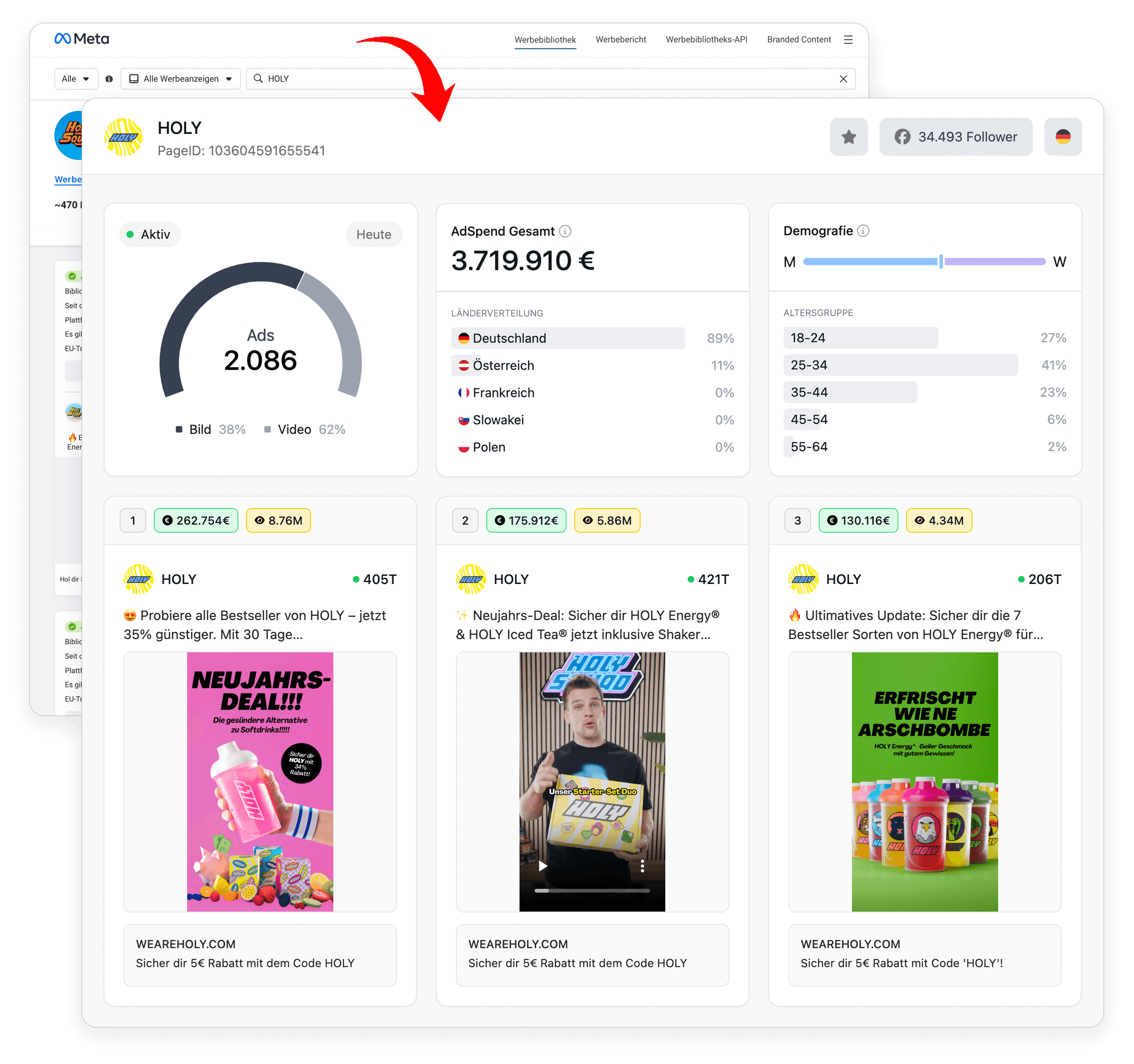
⭐ Genutzt von 600+ Brands & Agenturen
✅ #1 largest full-funnel ecom database
How To Find €100k / Day Advertorials & Landing Pages in Seconds
1. Search Landing Pages
Search 522,000+ landing pages & advertorials by keyword, niche or brand.

2. Sort by AdSpend
Estimated total ad spend to instantly see the biggest scaling winners.
3. See All €100k / Day Advertorials & Landing Pages In Your Niche
Reveal the exact advertorials driving six-figure revenue daily - ready to model.

 Discovery|Over 847,000 brandsNEW!
Search ads, brands & landing pages now
Enter a keyword and start your search
Just Signup for Free
Unlock Full-Funnel Intelligence.